Nvidia Scale-In Uses BlueField-4 to Isolate and Monitor AI Agents
- Cargo
- Machine Learning
- Shipped
- Shipper
- Mark Albertson
- Readers
- 327
Nvidia’s Scale-In combines BlueField-4, DOCA and OpenShell to monitor agent activity and enforce boundaries across AI infrastructure.
Nvidia’s Scale-In architecture puts a data processing unit outside the GPU workload in a position to monitor and help secure AI agents. The design pairs BlueField-4 hardware with DOCA software and Spectrum-X Ethernet, aiming to track activity across compute, memory and storage while keeping monitoring separate from the agents themselves.
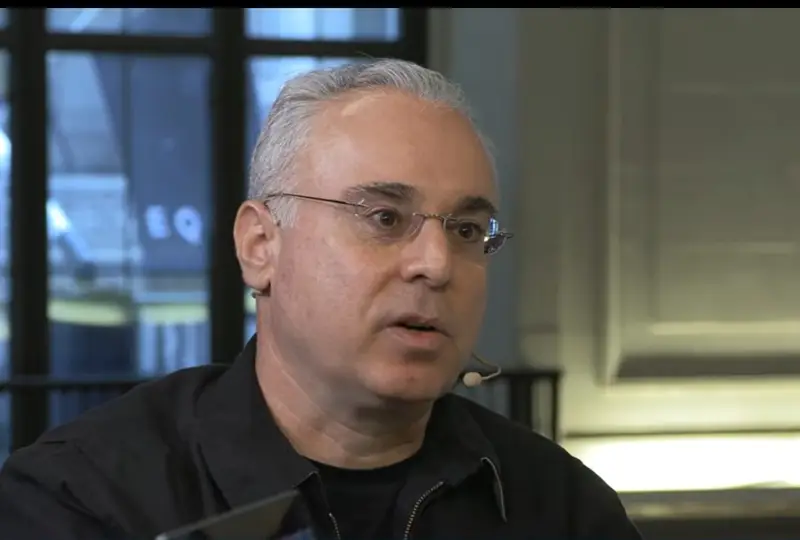
That separation addresses a practical challenge for AI factories running many agents at once: each agent may need access to infrastructure and data, but its actions should remain within defined boundaries. Nvidia senior vice president of networking Gilad Shainer described the requirement as containing agents in sandboxes and checking activity throughout the system, including on memory and storage. The aim is to make security controls part of the infrastructure that runs the agents, rather than relying only on the agents’ own software.
Monitoring outside the agent workload
BlueField-4 is the hardware foundation for Scale-In. Nvidia describes it as a fourth-generation data processing unit, or DPU, with in-silicon engines for security and data center tasks. The device collects telemetry from infrastructure components such as GPUs, CPUs, memory and storage. Because that monitoring runs out of band, it operates separately from the agents it observes.
That arrangement is intended to make it harder for an agent to affect the monitoring layer. Shainer said BlueField-4 can use the collected information to understand what agents are doing across the infrastructure. The architecture’s value therefore depends not just on detecting activity, but on having a separate place to gather signals from different parts of the system.
Telemetry alone does not establish that an agent’s behavior is safe or that every attempted boundary crossing will be stopped. The design also needs rules that define permitted access and mechanisms that can act when an agent exceeds those limits. Nvidia’s wider approach combines the independent hardware layer with software controls to cover those roles.
DOCA provides access to DPU capabilities
Nvidia DOCA supplies the software framework and APIs used to access BlueField’s acceleration and security engines. Developers can use it to build software-defined, cloud-native services that offload and isolate data center workloads. Nvidia positions DOCA for DPU workloads much as it positions CUDA for GPU programming: each gives developers tools to work with capabilities built into a different class of processor.
For Scale-In, the distinction between hardware and software matters. BlueField-4 provides the on-chip engines and an independent monitoring point; DOCA provides the software layer for using those resources. The architecture is connected over Nvidia Spectrum-X Ethernet, placing it within the networking infrastructure that supports the AI factory.
This creates a deployment dependency for teams considering the design: its controls are tied to Nvidia’s DPU, software framework and networking stack. The supplied details describe the architecture and its intended functions, but do not provide performance benchmarks, deployment costs or comparative results against other agent security approaches. Those figures would be needed to assess the operational trade-offs in a particular environment.
OpenShell adds runtime controls
Nvidia’s open-source OpenShell runtime is designed to govern agent execution, access and inference routing. Nvidia combines it with BlueField-4 so that runtime controls can work alongside monitoring conducted outside the agent environment. The separation is meant to address a limitation of relying on software running in the same environment as the agent: an independent layer can observe activity without depending on the agent to report it accurately.
Nvidia expanded this approach with its Open Agent Safety Platform, which combines OpenShell with Nvidia Sentry for out-of-band monitoring and hardware-based enforcement. Its later OpenShell Reference Architecture integrates Vera Rubin infrastructure, Vera CPUs and BlueField-4 for agent execution across enterprise systems.
In that architecture, Sentry runs on BlueField-4 using DOCA. Nvidia says it continuously monitors agent behavior and can quarantine agents that move beyond their defined software boundaries. This adds an enforcement response to OpenShell’s runtime controls: OpenShell governs execution and access, while Sentry supplies an independent monitoring and containment layer.
What teams should assess
The design’s central proposition is that agent security needs visibility across the infrastructure and a control point agents cannot directly influence. That is a sensible architectural goal for systems where multiple agents share compute and data resources. Whether it delivers the intended protection in practice will depend on how boundaries are defined, which telemetry is available, and how quarantine affects dependent workloads.
Teams evaluating Scale-In will also need to understand how it fits their existing infrastructure and software. Nvidia’s materials describe the components and their roles, but the available details do not establish how much processing overhead monitoring adds, how quickly Sentry responds, or how the system behaves when telemetry is incomplete. Those questions matter for production workloads, where containment actions can affect more than the agent that triggered them.
Scale-In’s direction is clear: use BlueField-4 as an isolated observer and enforcement point, then pair it with DOCA and OpenShell to connect hardware monitoring with agent runtime controls. The next useful evidence will be deployment data showing how those layers perform under real workloads, including the cost of monitoring and the consequences of quarantining an agent.
Shainer discussed the architecture with Dave Vellante in an interview for theCUBE + NYSE Wired: AI Factories – Data Centers of the Future series. Nvidia’s Scale-In overview, BlueField-4 details, DOCA documentation and OpenShell information describe the components of the approach.


