Nvidia Vera CPU Gains Nearly 39% from Olympus-Specific Software Tuning
- Cargo
- Machine Learning
- Shipped
- Shipper
- [email protected] (Anton Shilov)
- Readers
- 580
An SC26 matrix benchmark found Olympus tuned code raised Vera’s FP64 throughput use to 90.6%, showing why some workloads need architecture-specific optimization.
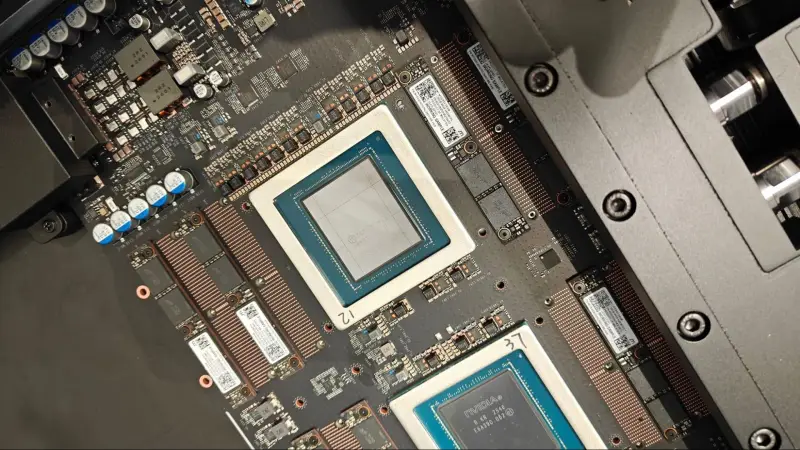
Nvidia’s Vera CPU has execution resources that existing software may leave underused. At Supercomputing 2026 (SC26), Nvidia presented a matrix multiplication benchmark in which code tuned for Vera’s Olympus cores raised their use of peak FP64 throughput from about 66.5% to 90.6%. The company says architecture-specific optimization can improve performance by nearly 39% in some compute intensive workloads.
That result comes with an important boundary: the test measured one small matrix multiplication workload, not a broad set of server applications. It shows that software written for other Arm based processors can run on Vera and gain from its hardware, while also showing how much performance a workload may leave available when its instructions and data layout aren’t suited to Olympus.
More core resources, with a different design goal
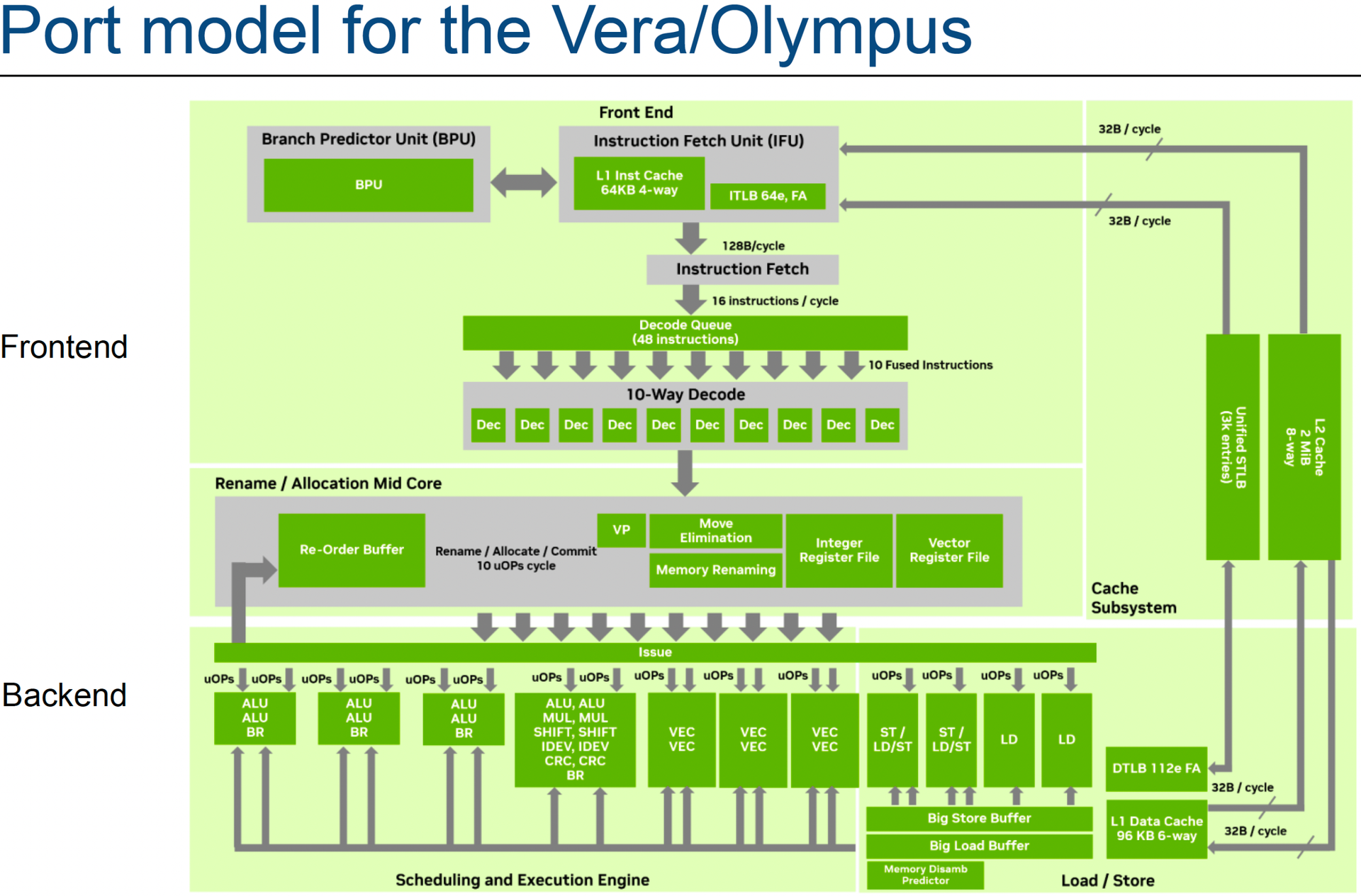
Vera replaces the Arm Neoverse V2 cores used in Nvidia’s Grace CPU with Nvidia’s own Olympus design. Each Olympus core has a 10 wide decoder, a neural branch predictor, a deep out of order execution engine, six vector execution units, four load pipelines and two store pipelines. Large private caches and prefetch mechanisms support those execution resources.
Nvidia chose 88 high performance cores per socket, with spatial multithreading for 176 total threads. That choice reflects a focus on performance per core as well as total throughput, rather than maximizing the number of cores. Hannah Coutand, who leads Vera CPU marketing at Nvidia, described the decision as a set of trade offs: allocating more of a chip to cores leaves less room to increase instructions per clock, or IPC.
The positioning follows that design. Nvidia presents Vera for agentic AI and other workloads that benefit from high per core speed, memory bandwidth and low memory access latency. Coutand said it isn’t aimed at general purpose use, such as hosting a web server, where other CPUs may be a better fit. She also described Vera as suitable for a range of workloads that value its particular strengths.
The company initially developed Olympus with data processing applications in mind. Nvidia says the same combination of core performance and memory behavior also fits AI related work. That makes workload characteristics central to evaluating Vera: its appeal depends less on a broad label such as “server CPU” than on whether an application can use its compute and memory capabilities.
A matrix test exposes the tuning gap
Nvidia’s researchers compared the cores using double precision general matrix multiplication, or DGEMM. They started with an assembly kernel from OpenBLAS, an open source linear algebra library. OpenBLAS includes a kernel for the Neoverse V2 cores in Grace, but not one specifically designed for Olympus.
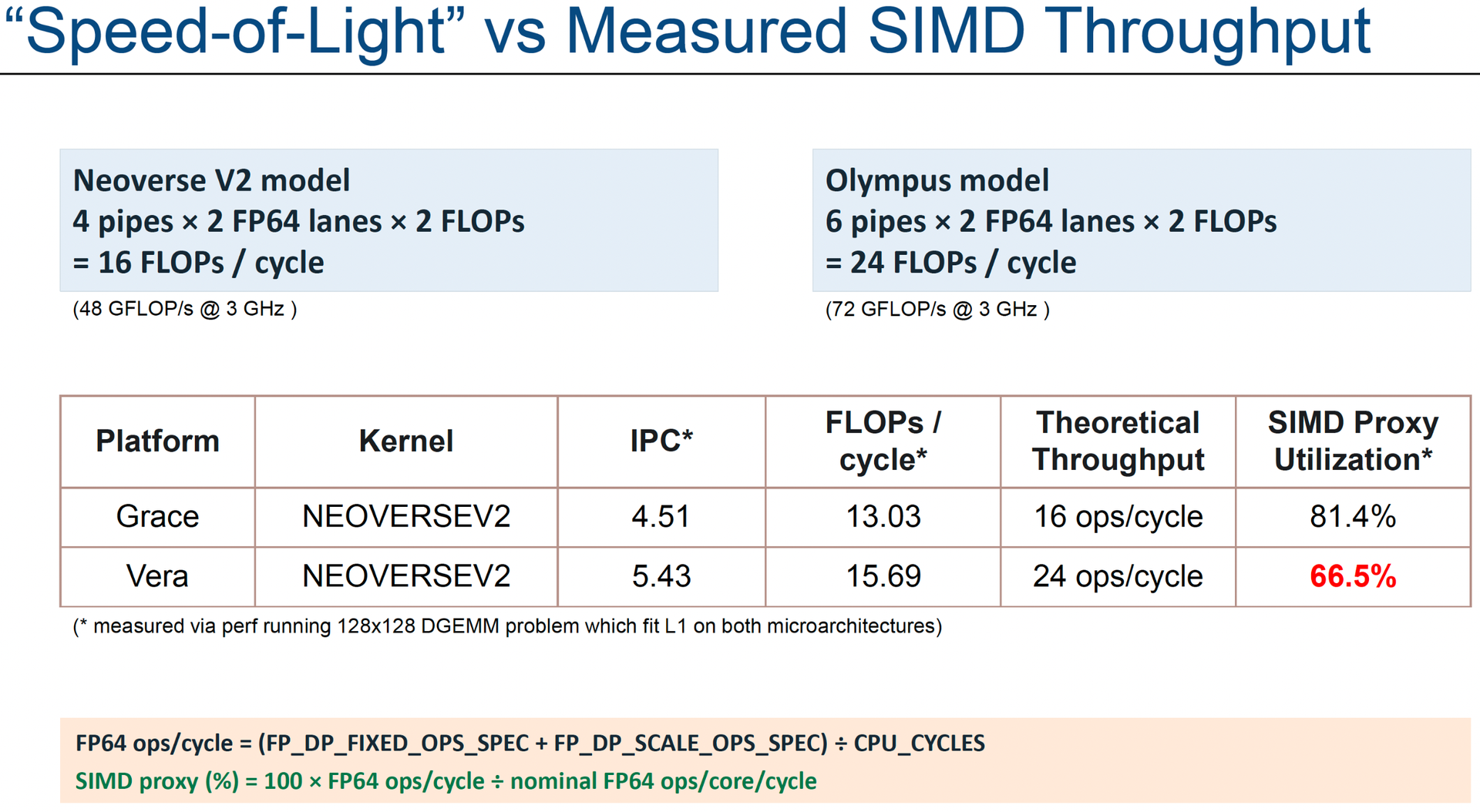
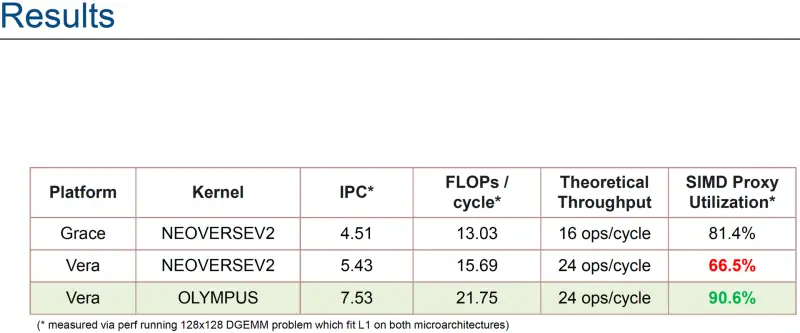
For the comparison, the team used miniKernelGEMM with a 128 × 128 matrix problem sized to fit in the L1 cache of both processors. With the Neoverse V2 kernel, Grace recorded 4.51 instructions per clock and 13.03 FP64 operations per cycle. Running that same code, Vera reached 5.43 instructions per clock and 15.69 FP64 operations per cycle, roughly 20% higher on both measures.
The gap widened when the researchers tuned the kernel for Olympus. Vera then reached 7.53 instructions per clock and 21.75 FP64 operations per cycle. On this test, that put Vera nearly 67% ahead of Grace on a per core, per clock basis. Nvidia’s reported peak is 24 FP64 operations per cycle for Olympus, compared with 16 for Neoverse V2.
The processor’s additional vector resources help explain why code tuning mattered. Neoverse V2 has four 128 bit SIMD pipelines; Olympus has six. Yet the kernel designed for Neoverse V2 used 81.4% of Grace’s peak FP64 throughput and only about 66.5% of Vera’s. Nvidia says changes to matrix tile organization, register allocation and instruction scheduling raised Olympus utilization to 90.6% of peak.

What the result does and doesn’t establish
The benchmark provides a concrete example of software affecting how much of a custom CPU’s execution capacity an application can use. It doesn’t establish that every Arm workload will need changes, or that other applications will see the same gains. The test was a single cache resident matrix operation, so it doesn’t capture behavior across larger data sets, different memory patterns or a wider mix of server tasks.
For teams considering Vera, the practical question is whether performance critical code can be profiled and tuned for Olympus, and whether the resulting gain justifies that engineering effort. Existing Arm optimized software may still benefit from Vera’s stronger hardware without a port, as the shared kernel’s results suggest. But Nvidia’s figures also indicate that compatibility alone may not reveal the processor’s full potential.
Nvidia has experience building software and partner support around platforms such as CUDA. That background could help encourage architecture specific work as Vera reaches more users. The next useful evidence will be results from workloads beyond matrix multiplication: they’ll show where Olympus tuning pays off, how often developers need to adapt existing code, and whether Vera’s per core strengths translate into practical gains across its intended applications.