AMD MI430X Targets Scientific Computing With Native FP64 and 432GB of HBM4
- Cargo
- Machine Learning
- Shipped
- Shipper
- Jeffrey Kampman
- Readers
- 658
MI430X pairs native double precision with 432GB of HBM4, targeting simulation workloads that can struggle with emulated FP64.
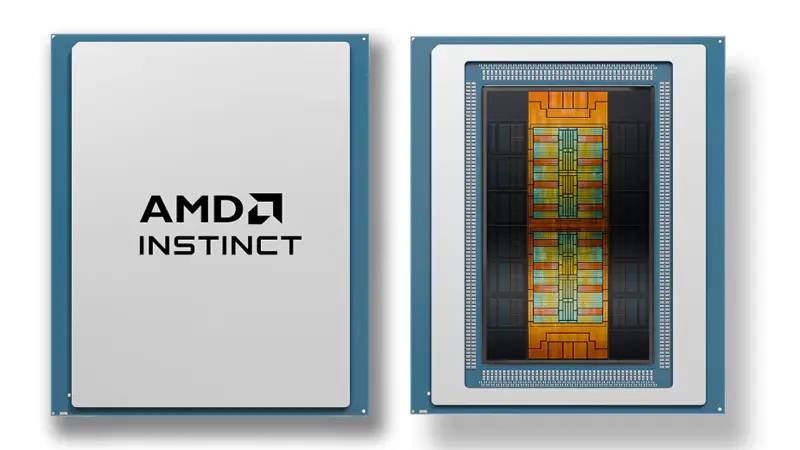
AMD’s Instinct MI430X is built around a capability that many AI accelerators have deprioritized: native FP64, or double-precision floating-point computation. For scientific simulations and other high-performance computing workloads, that choice can affect performance, memory use and the size of the system needed to run a job. AMD’s case for the MI430X is that emulating double precision on hardware optimized for lower-precision AI math doesn’t cover the range of work these users run.
At Supercomputing 2026 in Chicago, AMD is emphasizing that distinction as it presents the MI430X to supercomputing centers and research institutions. The company’s description of the accelerator centers on native FP64 processing, alongside substantial high-bandwidth memory capacity. The pitch addresses a specific tradeoff in accelerator design: dedicating more chip area to lower-precision matrix operations can raise throughput for AI workloads, while leaving less room for native double-precision computation.
Where emulation can fall short
Nvidia has turned to techniques such as Ozaki schemes to approximate FP64 operations on hardware without native FP64 support. AMD argues that these methods fit dense general matrix multiplication (GEMM) better than they fit the wider mix of scientific computing. In its application profiling, AMD says fewer than 10% of high-performance computing workloads use dense GEMM operations. The company describes dense linear algebra as the clearest match for Ozaki emulation.
That leaves many other workload types, including sparse iterative linear algebra, stencil computations, hydrodynamics, high-order finite element analysis, Monte Carlo methods, particle transport and classical molecular dynamics. AMD’s position is that these applications benefit from strong FP64 vector performance, which the MI430X provides natively.
Even when an application does use matrix multiplication, emulation performance can depend on the size of the matrices and how their operands fit the hardware. Small matrices may not offer the same opportunity to reach peak throughput as large ones, and poorly scaled operands can reduce performance. AMD says the MI430X’s native FP64 vector math avoids those operand-sizing constraints.
Memory use adds another consideration. AMD says Ozaki methods can require up to three times the capacity of native FP64 for an application. That increase can affect more than the memory allocation for a single job: because high-bandwidth memory capacity is tied to each accelerator, a system with less capacity available per GPU may need more GPUs and compute nodes to accommodate a workload. More nodes can bring added demands for networking, power, cooling and physical space.
Memory capacity shapes system design
AMD specifies 432GB of HBM4 per MI430X node, arguing that this capacity can let customers provision fewer accelerators and nodes. That figure makes memory a central part of the company’s pitch, alongside arithmetic performance. In simulations, the practical question is often whether a workload fits efficiently on the available hardware; the amount of memory can determine how a system is configured, even before peak compute rates become the deciding factor.

AMD is also positioning MI430X systems for AI inference used alongside research workloads. That makes them different in emphasis from the company’s Helios rack-scale platform, which uses MI455X accelerators from the same CDNA 5 architectural family. The distinction is visible in the published FP4 figures: AMD lists 9.2 petaflops of theoretical FP4 compute per MI430X, compared with 40.3 petaflops per MI455X.
The systems also differ in how many accelerators can work together within a scale-up domain. AMD says four MI430X GPUs connect over Infinity Fabric when paired with a sixth-generation EPYC host CPU. A Helios rack can link 72 MI455X accelerators. AMD describes the MI430X interconnect as better suited to latency-sensitive operations than to building a very large scale-up domain.
For four MI430X GPUs operating together, AMD lists 1.72TB of aggregate HBM4 capacity, 93.2TB/s of memory bandwidth and 12.3Tbps of scale-up bandwidth. Those specifications suggest a system aimed at workloads that can use a four-GPU node effectively, including research that combines AI inference with double-precision computation. Whether the inference capability is sufficient depends on the models and tasks involved; the MI430X’s FP4 figure is far below the MI455X’s, and its scale-up domain is smaller.
Early systems and the adoption question
AMD names four planned systems using MI430X: Discovery at Oak Ridge National Laboratory, Alice Recoque in France, LUMI-AI at Finland’s CSC, and Herder in Germany. Their selection gives the accelerator a defined role in scientific computing deployments where native FP64 and memory capacity matter. It also shows why a single accelerator design may not suit every large-scale computing task: systems optimized for simulation have different priorities from platforms built around large AI inference domains.
The key decision for prospective users is workload fit. Native FP64 can remove the workload and operand constraints associated with emulation, while the MI430X’s memory capacity may help limit the number of nodes required. Inference performance and scaling are more bounded than on AMD’s MI455X-based Helios platform. The MI430X’s value will therefore turn on whether its combination of double-precision performance, memory capacity and four-GPU scaling matches the scientific applications a system needs to run.