Qvyon’s Mimic Core Turns Sensor Recordings Into Physical AI Tests
- Cargo
- Machine Learning
- Shipped
- Shipper
- Kyt Dotson
- Readers
- 649
Qvyon’s Mimic Core converts camera, lidar and radar recordings into varied simulation tests for robots and autonomous vehicles.
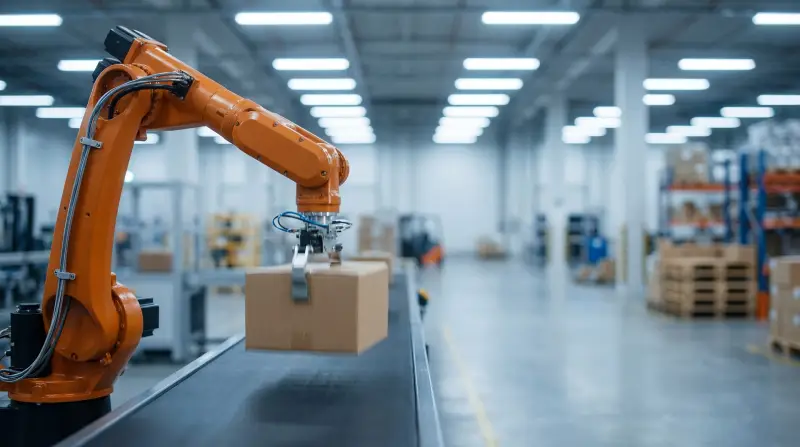
Testing physical AI in rare, hazardous situations is difficult to do safely in the field. Qvyon Technologies is entering that gap with Mimic Core, software that turns real-world sensor recordings into simulated scenarios for evaluating robots and autonomous vehicles before they operate in the world.
The company launched with $8 million in total funding. MaC Venture Capital led the round, with participation from BDC Capital, BKR Capital and Spotlight VP. Qvyon says the funding will support Mimic Core and its rollout in the United States, Europe and Japan.
From recordings to repeatable scenarios
Mimic Core starts with data captured by cameras, lidar and radar. It uses those recordings to reconstruct environments in 3D and represent how scenes change over time. Engineers can then generate variations on a recorded situation and test how an AI model, robot setup or vehicle responds inside a virtual environment.
The idea is to make one real-world recording useful across many tests. A development team might use a captured scene to explore different conditions and uncover cases where its system behaves incorrectly. That can reduce reliance on repeatedly collecting new field data, particularly when the situation to be tested is unusual or dangerous to recreate.
Qvyon points to situations such as a car pulling in front of a truck during a rainstorm, or a robot’s sensors becoming blocked or damaged on a production line. These cases put pressure on systems to interpret changing surroundings and act appropriately. Simulations built from recordings give engineers a way to probe such conditions before machines encounter them during normal operation.
That approach also ties testing to the environments and equipment a company actually uses. Co-founder and Chief Executive Frantz Saintellemy said the team’s experience building AI for vehicles showed how hard it can be to establish that a system is ready for the road. “Companies need to test what happens in their own vehicles and factories by using their own recordings,” he said.
Fit with existing virtual testing
Mimic Core is designed to work alongside virtual testing tools companies already use. Rather than replacing those tools, it provides more scenarios drawn from a company’s sensor data, helping engineers examine how their systems may perform under a wider set of conditions.
The platform also produces traceable datasets and validation evidence. That gives teams material they can use to assess and document system performance before deployment. The distinction matters in physical AI: a test result is more useful when engineers can connect it to the recorded scene, the variation they generated and the system configuration under evaluation.
The product’s value will depend in part on how well its reconstructed scenes preserve details that matter to a given system. Camera, lidar and radar data describe the same surroundings in different ways, and machines rely on those inputs to perceive their environment. Qvyon says Mimic Core uses the sensor recordings to create the simulated scenes and test AI models against the hardware they will drive in simulation. The available description does not provide benchmark results or quantified evidence of how closely those simulations match real-world behavior.
Cloud and self-hosted options
Qvyon offers Mimic Core as a software-as-a-service product and as a self-hosted solution for companies that want to keep the system on their own infrastructure. The cloud version is available through Qvyon Cloud with a 14-day guided evaluation. The company says customer data remains separate in its cloud product and is not used to train AI models for other customers.
For teams assessing the platform, those options raise practical questions beyond scenario generation: how it fits their existing simulation workflow, what computing resources it requires, and how recordings move through the system. Qvyon’s description does not specify pricing, hardware requirements or supported integrations. The guided evaluation offers a way for prospective users to examine the product against their own sensor recordings and testing needs.
Two products planned for later
Qvyon is also developing two related products. Mimic Validation OS is planned for the first half of 2027 and is intended to help companies measure and document test results. Mimic Learn, planned for late 2027, is intended to help improve AI using information from machines already in operation.
Those plans point toward a broader workflow: build scenarios from recorded environments, assess system behavior, document results and use operational information to inform improvements. For now, Mimic Core is the available product. Its practical test will be whether teams can use their own recordings to generate useful scenarios, find system weaknesses earlier and fit those checks into the virtual testing processes they already run.