Gemini Robotics 2.5 and AlphaGenome 2 Target Physical AI and Cell-Specific DNA Analysis
- Cargo
- Machine Learning
- Shipped
- Shipper
- Kyt Dotson
- Readers
- 685
Gemini Robotics 2.5 improves task speed and dexterity; AlphaGenome 2 adds cell-specific predictions and DNA methylation analysis.
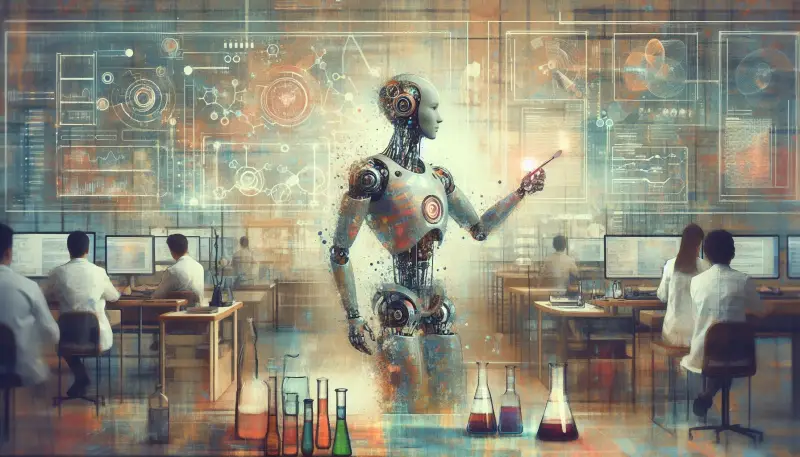
Google DeepMind’s latest releases address two different bottlenecks in applied AI: getting robots to perform useful work in changing physical settings, and predicting how DNA variation affects gene activity in particular cell types. Gemini Robotics 2.5 focuses on dexterity, task speed and reliability. AlphaGenome 2 adds more detailed predictions about cellular context and DNA methylation. Both are research tools whose value will depend on performance beyond controlled evaluations.
Robotics performance in physical settings
Gemini Robotics 2.5 is DeepMind’s most capable vision-language-action model to date, designed to serve as a control system for robots. The company says it tested the model on more than 200 distinct tasks and plans to scale its use further. In evaluations, reported task success rates ranged from 30% to 100%, depending on the task. Compared with the previous version’s baseline, tasks were completed 20% to 30% faster.
Those figures describe a broad range of outcomes, rather than a single overall success rate. The spread matters: performance on one task cannot establish how reliably a robot will handle another, especially in an unstructured environment. DeepMind’s stated aim is to help robots work in settings that change over time and alongside people, where objects, movements and task requirements may vary.
The update focuses on three areas. DeepMind says the model handles a wider range of tasks with greater accuracy, including using everyday tools and manipulating delicate, flexible objects. It also reports a 96% success rate in real-world proof-of-concept tests packing automotive parts at Mercedes-Benz. That result offers a concrete example of performance in an industrial setting, though it applies to the specific task and test described.
The third focus is physical steerability and safety. DeepMind says it has improved how the robot’s actions can be guided and introduced a new benchmark for testing jailbreaks. The provided results do not include a score for that benchmark, so they indicate an evaluation effort rather than a quantified safety improvement. For deployment, teams will still need to assess how a model behaves when instructions, surroundings or objects differ from its test conditions.
Robot platforms and deployment
Gemini Robotics 2.5 is built to work across multiple robot types. DeepMind names Apptronik’s Apollo 2 humanoid robots and the Franka Duo platform, which uses two-fingered parallel grippers. The model is rolling out through robotics partners including Agile Robots, Apptronik and Boston Dynamics.
Apptronik co-founder and chief executive Jeff Cardenas said Apollo 2 improved substantially after a few weeks of post-training with Gemini Robotics and that the gains carried over to Mercedes-Benz production with little drop-off. This is a partner’s account of its experience; the information provided does not include a separate comparison protocol or figures for the post-training change.
DeepMind links the model’s faster development to the capabilities of Gemini 4 Argon, which it describes as a frontier large language model released in late September. The company says those capabilities helped it expand the range and speed at which robots can learn skills and apply them in real-world scenarios. The practical test is whether that transfer holds across tasks and hardware. Results from one robot setup may not predict performance on another, even when both can run the same model.
AlphaGenome 2 adds cellular detail
AlphaGenome 2 addresses a different challenge: predicting how DNA sequences and their variations affect gene activity in human cell types. Every cell contains the same DNA, but cells activate different genes at different times. A heart muscle cell and an immune cell, for example, use that shared genetic material in different ways to produce the proteins and other components needed for their roles.
For researchers studying disease biology or drug targets, predicting those differences can help identify promising leads and prioritize experiments. AlphaGenome 2 adds finer detail about cell types and states, which may help distinguish effects that broader tissue-level predictions miss. DeepMind says the model can adapt directly to newly collected single-cell data without retraining, including when sample sizes are small. That capability was also highlighted by Sarah Teichmann, co-founder of the Human Cell Atlas and professor of Stem Cell Medicine at the University of Cambridge.
The Human Cell Atlas, a scientific effort that has mapped gene expression in millions of cells, contributed to the growing body of information about how cells use genes. But mapping gene activity does not by itself explain which DNA variations drive changes in expression. AlphaGenome 2 is intended to help make those connections by predicting experimental readouts of DNA function.
It retains predictions for gene expression, histone modification and chromatin accessibility, and adds DNA methylation. Methylation is one feature of epigenetics, the study of how factors such as environment and behavior can influence gene activity. Adding this readout may give researchers another way to examine how DNA function varies across cellular contexts. The announcement does not provide benchmark scores or a quantified comparison with the previous generation, so the size of the improvement is not established by the details available here.
What the releases establish
The two models have different adoption questions. For Gemini Robotics 2.5, the reported speed and packing results are encouraging indicators, but teams will need to measure reliability on their own tasks, hardware and operating conditions. For AlphaGenome 2, cell-specific adaptation and added methylation predictions could help researchers select experiments, but predictions remain leads to validate in the lab. DeepMind says the model is not intended for clinical or diagnostic use.
In both cases, the next useful evidence is performance across a broader range of real tasks and datasets, with results that make the limits visible. Robotics teams need to know how success rates vary as environments change; biology teams need to know when predicted DNA effects hold up in experiments. These releases point toward more targeted evaluation, with deployment decisions resting on evidence specific to each use.