Mercor Raises $750 Million to Bring Custom AI Agent Evaluation to Enterprises
- Cargo
- Machine Learning
- Shipped
- Shipper
- Duncan Riley
- Readers
- 552
Mercor’s $20 billion valuation round will fund custom benchmarks and simulated business environments for training and evaluating enterprise AI agents.
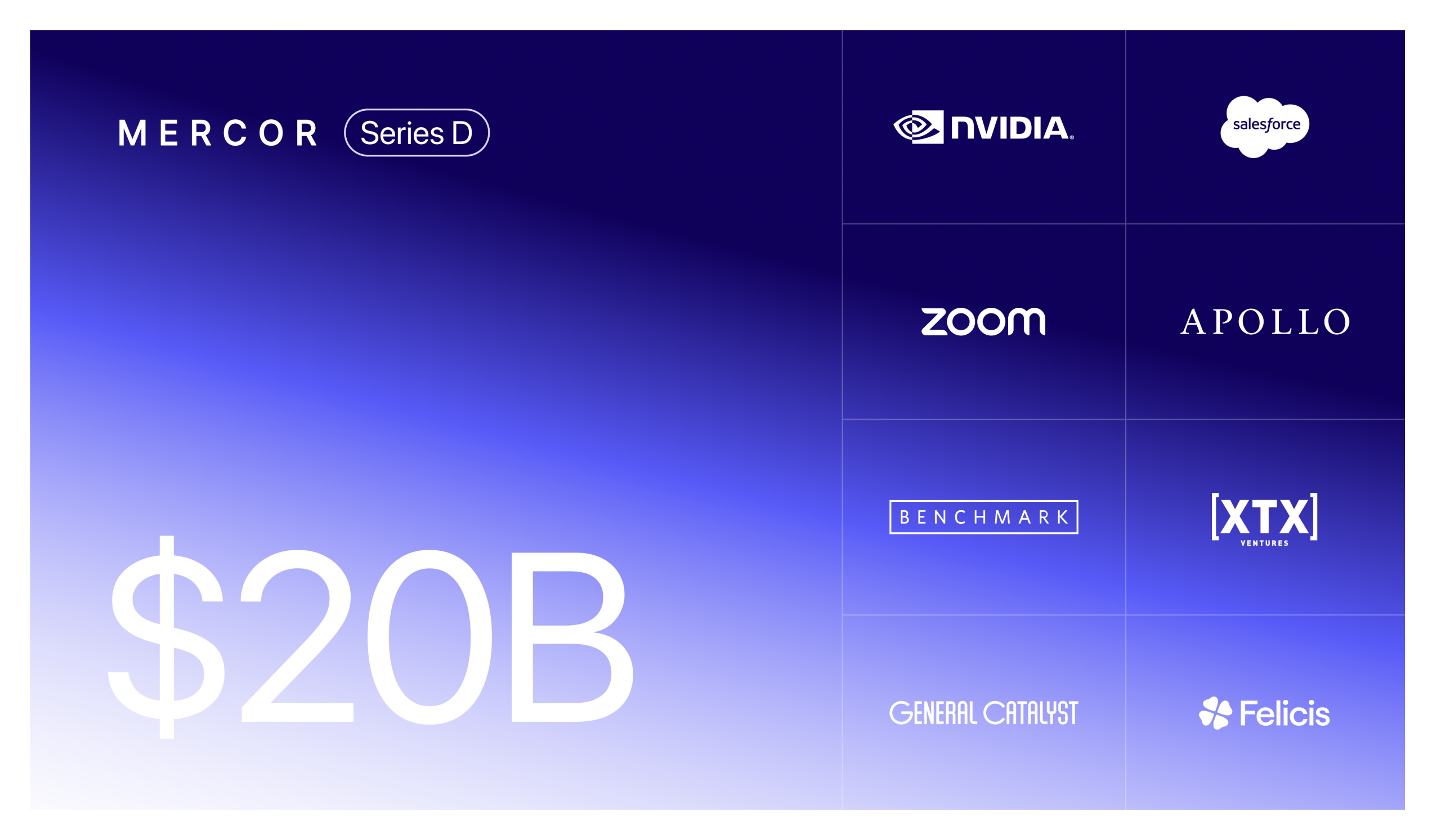
Mercor is positioning enterprise-specific evaluation as a key step between a capable AI model and an agent a company can trust with real work. The company has raised $750 million at a $20 billion valuation to expand its training and evaluation services beyond frontier AI labs and into businesses across industries.
The company’s approach starts with a practical problem: strong results on a public benchmark don’t show whether an AI system can handle a particular company’s workflows, internal standards and unusual cases. Mercor says it builds a separate benchmark for each enterprise customer, using that organization’s expectations to assess models. The results then inform post-training, the process of adapting a model after its initial training.
From expert data to company-specific tests
Mercor supplies human expertise for training and assessing AI models through a network of more than 5 million domain experts. Its work to date has largely served frontier AI labs. The company now aims to apply that experience to enterprise systems, where the quality of an agent depends on how it performs inside a specific business’s working environment.
That focus changes the evaluation question. Instead of asking only whether a model can complete a general task, a company needs to know whether an agent can follow its processes and handle the cases that arise in its own systems. Adarsh Hiremath, Mercor’s co-chief executive, said public benchmark scores can miss the systems, policies and edge cases that shape an individual business.
A tailored benchmark can make those requirements measurable. It gives a company a way to compare models against its own standards and to identify where post-training may be needed. The approach also makes evaluation dependent on the quality of the benchmark: it must capture the work that matters to the customer, including cases that are less common but consequential to the task.
Simulated applications extend the training process
Mercor is also building environments where AI agents can practise using software. The work comes in part from Deeptune, a New York startup Mercor acquired in July. Before the acquisition, Deeptune’s team had spent two years recreating hundreds of enterprise applications for agents to use in simulated settings.
Those environments give an agent a place to practise tasks that involve business software, rather than limiting training to isolated questions and answers. They could also let teams assess performance across workflows and unusual cases before relying on an agent in a company’s own systems. Mercor says the new funding will support research and evaluation infrastructure, including the creation of more such environments.
The source materials don’t specify how many customers use the benchmarks or simulations, which applications have been recreated, or how Mercor measures an agent’s performance within them. Those details will matter to enterprises deciding whether the method matches their workflows and gives them useful evidence about deployment readiness.
Funding and business momentum
Mercor did not identify a lead investor for the Series D round. Corporate participants included Nvidia, Salesforce and Zoom Communications. Returning investors Benchmark, Felicis Ventures and General Catalyst also took part. Other participants included Fundomo, G Squared, Glade Brook Capital Partners, Sapphire Ventures, StepStone Group, XTX Ventures and funds managed by affiliates of Apollo Global Management.
The round follows Mercor’s $350 million Series C in October 2025, which valued the company at $10 billion and was led by Felicis. The company’s blog post about the new round said it included a tender offer for employee shares. Mercor has not disclosed how much of the $750 million is fresh capital and how much relates to that offer, so the total should not be read as a confirmed figure for new operating funds alone.
Mercor has described rapid growth in its lab business. In a post on X, co-chief executive Brendan Foody said annualized revenue had passed $2 billion in June. He has argued that companies will need agents suited to individual jobs, and ways to train and evaluate those agents against their own work. That makes Mercor’s enterprise push an extension of infrastructure it says it spent two years building with frontier labs.
What enterprises will need to assess
Sapphire Ventures president, partner and co-founder Jai Das said frontier labs have been the main buyers of expert-driven training data so far. He expects enterprise demand to change as open models become capable enough for companies to build on, and described Mercor’s accumulated work with labs as difficult to replicate.
That expectation rests on two connected shifts: more capable open models give businesses more options for building AI systems, while company-specific benchmarks and practice environments address tasks that general evaluations may not cover. For customers, the practical question is whether Mercor can translate its experience with model developers into evaluations that reflect each company’s real work. The funding gives it resources to expand that effort; the usefulness of its approach will depend on how well its benchmarks and simulated applications represent the jobs enterprises want agents to perform.


