Object Agent Twins Turn Household Sensors Into Expressive AI Pets
- Cargo
- Machine Learning
- Shipped
- Shipper
- Julian Chokkattu
- Readers
- 341
OATs pair small E Ink avatars with household objects, using sensor readings to encourage care and track routines, though battery life remains short.
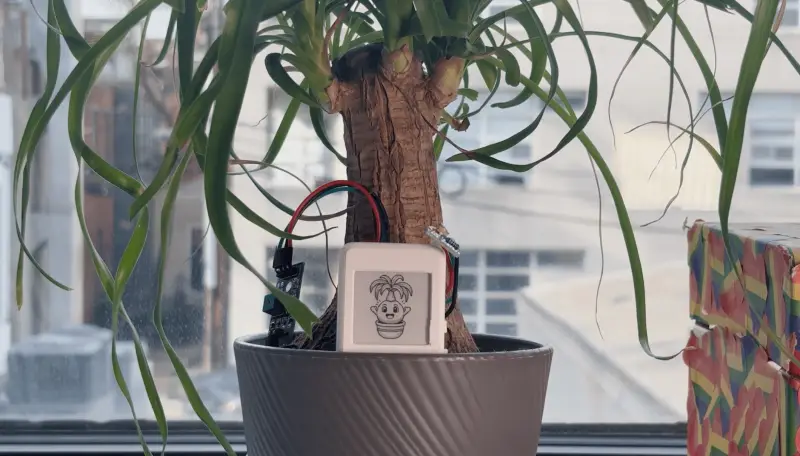
A plant that looks sad when its soil dries out, or a skateboard that perks up after a ride, is the premise behind Object Agent Twins, or OATs. The project turns sensor readings from everyday objects into simple emotional expressions on small E Ink displays. Its appeal is less about giving objects intelligence than about making their condition and use more noticeable.
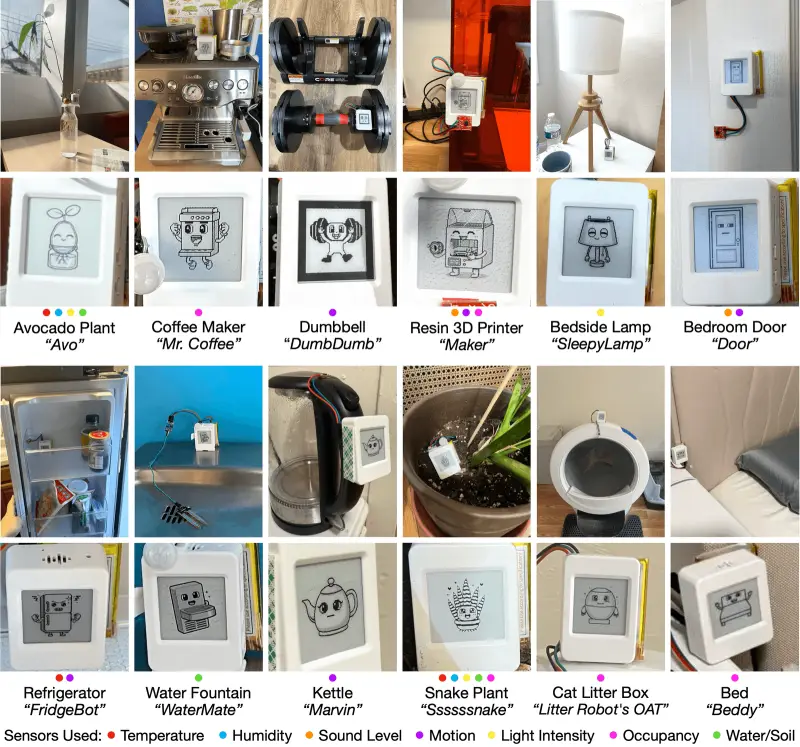
Daehwa Kim, a fifth-year PhD student in Carnegie Mellon’s Future Interfaces Group, developed OATs to bring interaction with digital agents beyond the phone screen. She presented the project at the ACM Symposium on User Interface Software and Technology in Detroit in early November, where it received two Honorable Mention awards. Kim describes the idea as transferring “the joy of caring” from virtual pets to physical objects.
Sensor readings become expressions
Each OAT combines an E Ink screen with internal and external sensors. Depending on the setup, those sensors can detect moisture, temperature, humidity, light, occupancy, or motion. The readings determine which expression the avatar displays, turning a measurement into a visual cue that can be understood at a glance.
Users configure an OAT through a web portal. They name the avatar, describe the object it will accompany, and choose the sensors relevant to that object. Google Gemini’s Nano Banana image-generation service creates a set of sprites for different states. The app then suggests “Positive” and “Negative” behaviors from the object’s description, and users can edit those triggers to fit their needs.
For a plant, for example, a trigger might connect a preferred humidity range with a happy or unhappy expression. The right settings depend on the particular plant: a dry-climate species and a plant that needs consistently moist soil shouldn’t respond to the same conditions. That flexibility matters because the avatar’s usefulness depends on the rules behind its expressions being appropriate for the object.
The main hardware module costs around $20, according to Kim. That figure describes the module, rather than a complete retail kit: OATs remain a research prototype, and Kim has not decided whether to turn the project into a product. The low component cost makes the concept accessible to experiment with, but it doesn’t resolve the practical work involved in packaging, setup, charging, and supporting a finished device.
Making use and neglect visible
Some setups make an object’s activity legible. Put an OAT on a coffee machine and its avatar can react when the machine grinds beans. Attach one to a skateboard, and a lack of detected motion over several days can leave the character looking lonely. When someone takes the board out, it responds with a cheerful face.
Kim says people who tried OATs used them in three broad ways: to show whether an object is being used, to alert people nearby to an object’s state, and to help users observe their own habits. A dumbbell, for instance, can display activity patterns that encourage its owner to exercise regularly. The feedback is deliberately social in tone: the user may feel they are letting down a pet if they leave the weights untouched.
That same approach can communicate information to people around an object. Kim gives the example of a 3D printer, where an OAT could indicate that the printer is operating and release of toxic fumes is a concern. In that role, the avatar acts as a visible status signal. The sensor and trigger still determine what it can communicate; the character does not independently assess the situation.
Visitors at the symposium proposed a range of objects and characters, from an animated conference badge to a panda avatar for an Owala water bottle. Kim’s online gallery collects examples of these sprites. The variety suggests that people can readily imagine personal uses, though a playful demo does not establish whether the reminders will change routines over longer periods.
The limits of attachment
Battery life is a clear constraint. OATs last around three to four days in typical use, according to Kim. Adding a sound-level sensor can cut that to about a day. The device charges through USB-C and uses a lithium-ion polymer battery. For a tool meant to stay attached to an object, frequent charging could undercut the convenience of a glanceable reminder.
There’s also a design question: when does an expressive interface help, and when might it make people assign too much understanding or agency to a system? Humanlike language and behavior around AI can shape how people judge and trust it. OATs keep their interactions narrow, limited to a set of expressions on an E Ink screen. That restriction helps make the character’s role more bounded, even as its emotional cues invite a personal response.
Kim argues that anthropomorphism can support behavior change, while cautioning against using it carelessly. People already name cars and bikes, she observes, but tend not to name their phones. OATs test whether a small character can make routine care more engaging without asking users to treat the underlying technology as a person.
For now, the project’s strongest contribution is a compact interaction pattern: connect a sensor condition to an understandable expression, then place that feedback where the action happens. Whether OATs become useful beyond demonstrations will depend on reliable sensing, longer battery life, and evidence that the characters help people sustain habits over time.