Vulcan Failure Destroys 40 Amazon Leo Satellites, Raising Questions About Service Timing
- Cargo
- Machine Learning
- Shipped
- Shipper
- Mark Tyson
- Readers
- 990
A Vulcan rocket anomaly left 40 Amazon Leo satellites short of orbit. Amazon’s remaining launches may add capacity, but the service timeline is less certain.
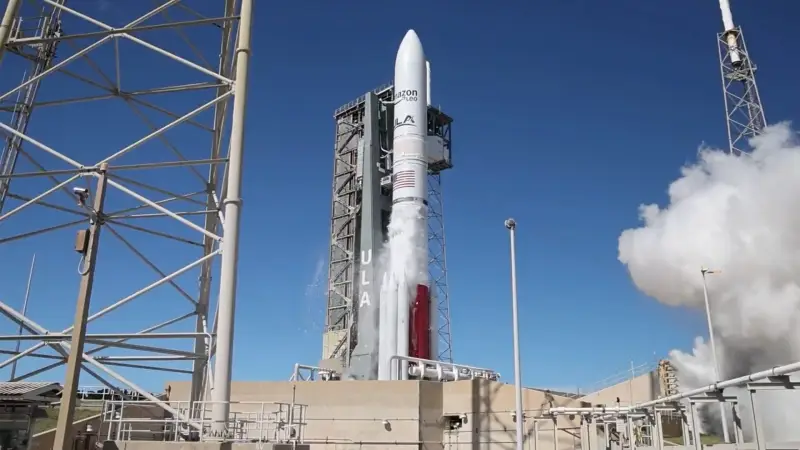
The loss of 40 satellites on a single Vulcan flight puts pressure on Amazon Leo’s rollout and leaves the cause of the failure unresolved. The rocket experienced an anomaly about 10 minutes after liftoff on Sunday, November 15, and did not deliver its payload to orbit. United Launch Alliance (ULA), which operates Vulcan, says it needs to analyze the flight data before it can identify what happened.
For Amazon, the immediate consequence is a smaller constellation than planned. The company has successfully placed 392 Kuiper communications satellites in orbit, according to ISPReview, while the cited estimate for basic global coverage is at least 500. Losing a batch of 40 therefore sets back the buildup toward that threshold. It also adds uncertainty to Amazon Leo’s planned move from commercial beta to a full service at the end of 2026.
What the flight data may reveal
ULA has not published a confirmed cause. Early telemetry points to possible problems involving the first stage: the BE-4 engines may have burned longer than planned, and the vehicle may have encountered an altitude issue near the point where its stages separate. Those are suspected fault areas, not established findings. The distinction matters: until investigators connect the telemetry to the failure, neither explanation can be treated as a diagnosis.
Vulcan had already been out of service for nine months while ULA investigated technical issues with its solid rocket side boosters and core BE-4 engines. Blue Origin makes the BE-4 engines. The new anomaly will require ULA to determine whether it relates to those earlier concerns or to a different part of the flight. The information available so far doesn’t answer that question.
ULA described Sunday’s event as its first total mission failure in the company’s 20-year history. That record gives the failure added significance for the launch provider, but it cannot establish how quickly Vulcan will return to service. The next step is a detailed review of flight data and corrective action; the schedule depends on what that work finds.
Amazon has other launches in its plan
The failed Vulcan flight doesn’t remove Amazon’s other launch options. A separate Ariane 64 Block 2 mission, designated LE-04, was scheduled to carry 36 more Amazon Leo satellites into orbit a week after the Vulcan launch. That flight could add to the constellation if it proceeds as planned, though it would not replace the 40 satellites lost on Sunday.
Amazon has reportedly manufactured 1,000 satellites, so the immediate constraint described here is not simply a shortage of hardware. Satellites still need to reach orbit, and a failure can affect when a particular launch vehicle is available to fly again. In this case, ULA’s investigation and any corrective work will shape how soon Vulcan can carry another payload. The source provides no revised Vulcan schedule.
That separation between manufacturing and deployment is central to reading the setback. A satellite on the ground contributes nothing to coverage; each one must be launched and placed into the intended orbit. Even a large stock of completed spacecraft cannot by itself offset a lost flight or guarantee a service date. Amazon’s other launch partners give the company additional routes to expand the network, but their schedules and successful delivery still matter.
The constellation remains far from its authorized scale
Amazon has approval for an initial constellation of 3,236 low Earth orbit broadband satellites, with a further 5,105 satellites planned for 5G service. The 392 communications satellites currently in orbit are a small share of the initial broadband total, and below the cited 500-satellite threshold for basic global coverage. The lost batch therefore matters to a network that is still being built, even if it doesn’t determine the outcome of the broader program on its own.
Scale also frames the competition. Satellite tracking sites cited in the report put Starlink’s in-orbit fleet above 11,200 satellites. That figure signals the difference in current constellation size; it doesn’t, on its own, establish comparative service quality, price, or availability. Amazon’s stated plan depends on adding satellites through multiple launches before its network can reach its intended footprint.
For now, the key indicators are concrete: whether Ariane 64 delivers its scheduled 36 spacecraft, what ULA concludes from Vulcan’s telemetry, and how those events affect Amazon Leo’s move beyond beta. Until ULA identifies the cause and explains the corrective steps, the end-of-2026 service target remains uncertain. The failure has delayed one piece of the buildout; the pace of the next launches will show how much that changes the larger timetable.