357 CPU Die Shots Reveal Processor Design From 1971 to 2024
- Cargo
- Machine Learning
- Shipped
- Shipper
- Mark Tyson
- Readers
- 386
A searchable gallery brings together 357 processor die images, with filters and views that help compare decades of chip design.
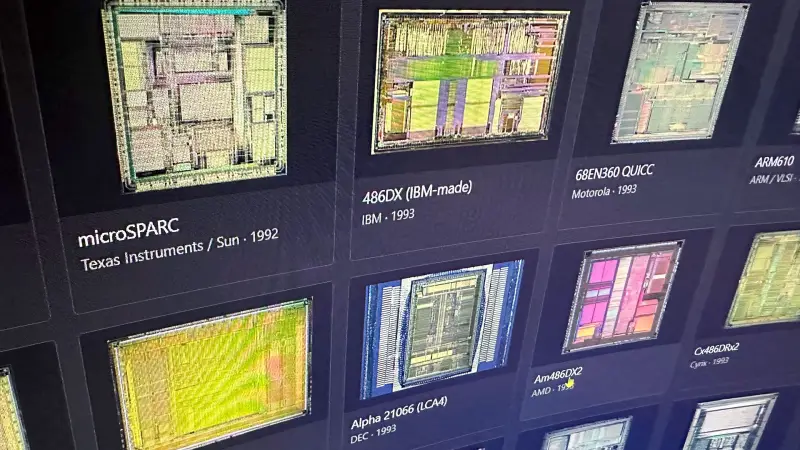
A collection of 357 processor die images offers a visual way to trace how CPU designs changed from 1971 through 2024. The gallery at sheets.works/data-viz/cpu-dies gathers detailed photographs shared by contributors including Pauli Rautakorpi, ZeptoBars, John McMaster and Fritzchens Fritz. Its value lies in making those images easier to find and compare: visitors can search by processor, browse by date, and switch between views that emphasize either the images or the chips’ physical dimensions.
A die image exposes the circuitry etched into a processor’s silicon. The photographs in this collection include macrographs and micrographs, giving viewers a closer look at chip layouts than a product exterior or specification sheet can provide. The gallery’s range makes it possible to move between familiar processors and less widely known examples, and to see the physical designs associated with different makers and eras.
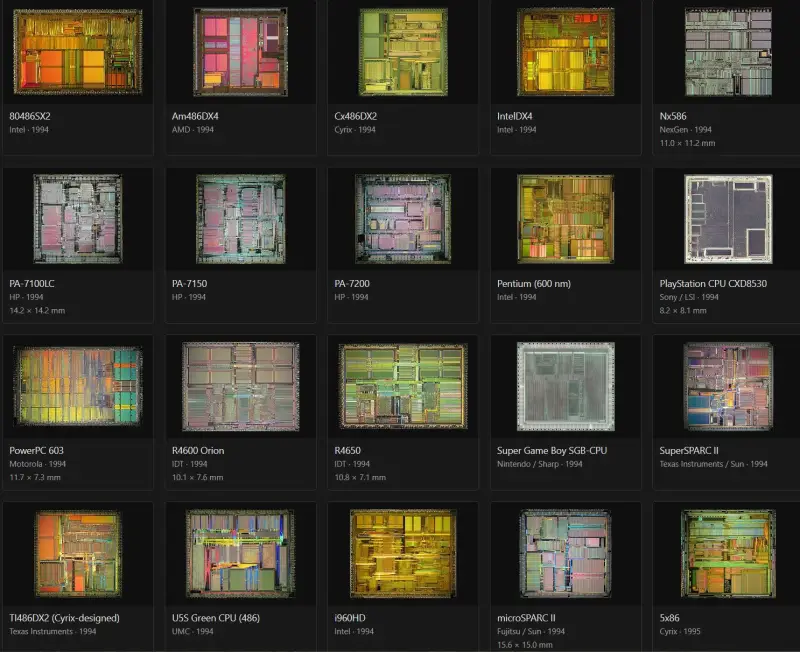
Three ways to browse the collection
The default gallery view orders processors from oldest to newest, which makes a chronological pass through the collection straightforward. A True Scale option gives images a physical size context, helping visitors see how the dimensions of one die compare with another. The table view trades large images for compact thumbnails and puts processor maker, year, die dimensions and photo license into a scannable format.
Each view answers a different question. The chronological gallery is suited to browsing across time; True Scale makes physical size easier to judge; and the table is useful when narrowing the collection by its listed details. These options also make the gallery more than a static set of images: visitors can change how they inspect the material depending on whether they’re looking for a particular processor or comparing examples.
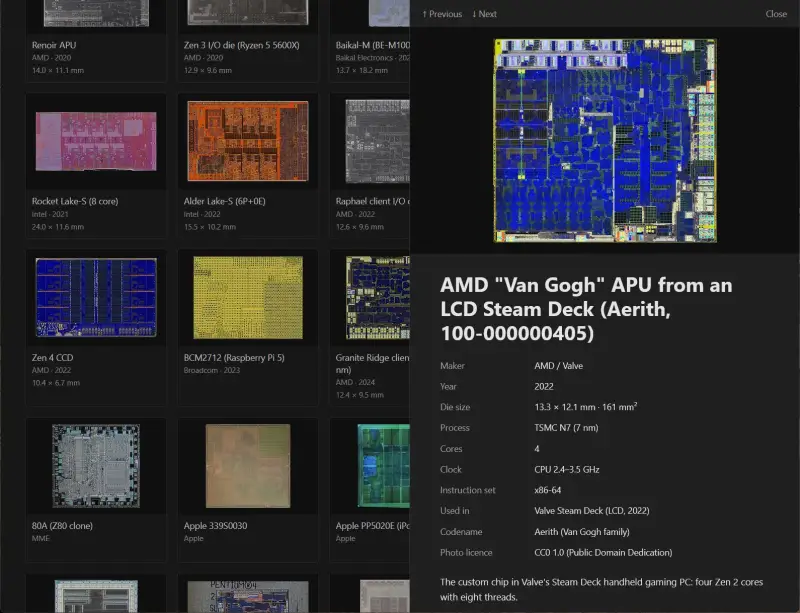
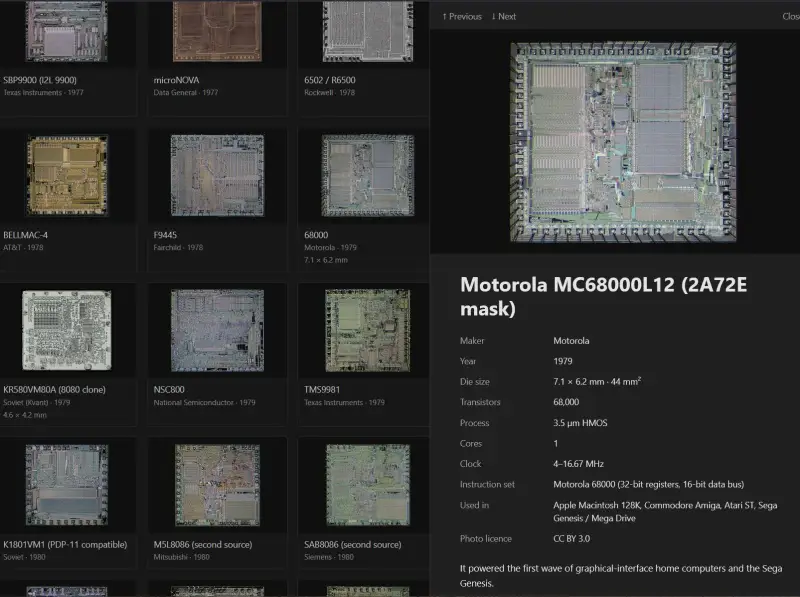
Search is another practical feature. Searching for 486 processors, for example, brings up 17 variants from AMD, Cyrix, IBM, TI, UMC, VLSI and Intel. That spread gives the collection particular value to anyone interested in the range of companies that produced chips in the same processor family. A thumbnail opens a larger image alongside design notes and photographer credits. For a closer look at the full image, opening it in a new browser tab can be more useful than the gallery’s enlarged preview.
A useful archive with room to grow
The gallery depends on images contributed for free by photographers, and its curator has brought those separate contributions into a single searchable resource. That work matters: a well-organized archive lets readers explore images that might otherwise be scattered across individual collections. The images also make the database useful to people with different goals, from revisiting a familiar processor to finding an example from a particular manufacturer or period.
Some records would be more useful with fuller technical details. Die area, for instance, isn’t available for every processor. More complete entries would make size comparisons easier to interpret, while added fields such as transistor count could support more searches and comparisons. The collection would also benefit from continued updates as contributors share additional die images.
The current selection already offers plenty to explore, but it doesn’t represent every processor generation equally. The Motorola 68000 and AMD Athlon XP stand out as personal nostalgia picks. Intel’s Ivy Bridge and Haswell generations, by comparison, appear less represented in the gallery. That imbalance is a reminder that the archive reflects the images available to its curator, as well as the history of processors themselves.
For developers, researchers and hardware enthusiasts, the gallery’s clearest contribution is practical: it turns a large set of detailed images into something people can search, sort and inspect. Its views help connect processor names and dates to visible silicon, while its gaps point to the records and images that would make future comparisons more complete.


