Noeri Raises $110 Million to Build Company-Owned AI Systems That Improve Workflows
- Cargo
- Machine Learning
- Shipped
- Shipper
- Mike Wheatley
- Readers
- 598
Noeri’s software studies company data and workflows, then proposes reviewed changes across models and tools. The startup launched with $110 million.
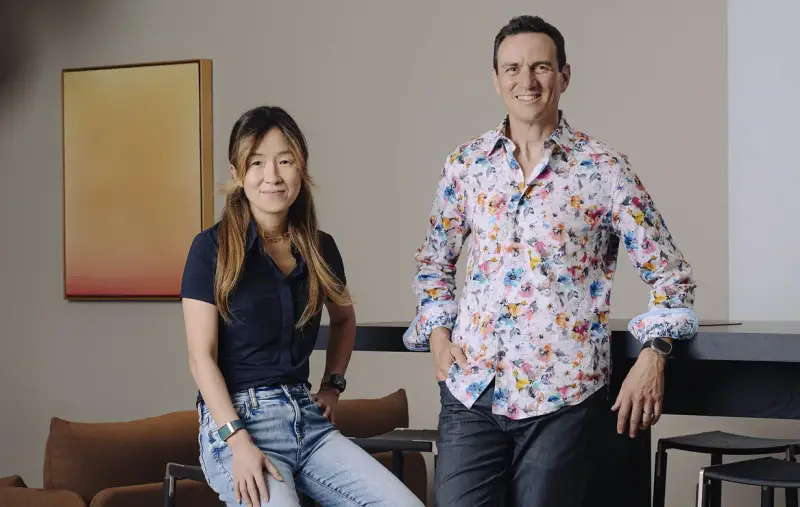
Noeri is betting that companies can improve AI performance by adapting systems to their own work, rather than relying on a single model for every task. The startup launched with $110 million in funding and software designed to learn from an organization’s data, workflows and business processes, then recommend changes for human review.
The funding round was led by Menlo Ventures, with Madrona Ventures, Kindred Ventures, Wing Venture Capital, NEA, Snowflake and Cisco Ventures also participating. Noeri’s co-founders are Yejin Choi and Carlos Guestrin, researchers whose separate work on model improvement and AI orchestration forms the technical basis for the company’s approach.
AI systems that can change their own workflows
Noeri describes its product as a “living” AI system: software that can observe how work gets done and propose adjustments as it learns. Those recommendations may change the instructions given to a model, introduce a different tool or assign a workflow step to another model. The intended result is a system better suited to a company’s specific tasks over time.
Proposed changes come with explanations and require human approval before taking effect. That review step gives teams a chance to assess what a suggested adjustment would change before it becomes part of a workflow. The process resembles the review of AI-generated code changes, though here the proposals concern how an AI system handles work.
This design puts ongoing adaptation under human oversight. Noeri’s software can recommend how a workflow might improve, but the company’s description does not suggest that those changes happen automatically. For organizations, the practical question will be whether the recommendations are clear and useful enough to review, and whether accepted changes lead to better results on real tasks.
The system works with both open-weight and proprietary models. Noeri says customers retain ownership of the workflows and AI systems they build. That flexibility is aimed at organizations weighing the cost of using highly capable models against the possibility of accepting weaker results from less capable, less expensive options. Choi told Bloomberg that Noeri wants to give companies another route: combine models and tailor their roles to the work.
Research behind the product
The idea took shape while Choi and Guestrin were helping a microbiology and immunology team at Stanford use OpenAI models more cost-effectively. Choi said they built a small AI model that learned to use older OpenAI models. On the team’s projects, the smaller model was fine-tuned to perform better than GPT-5, according to her account. The result pointed to a broader possibility: model selection and coordination could matter as much as choosing the largest available system.
Guestrin’s research includes a self-distillation technique in which a model learns from its own mistakes and uses those lessons to improve later responses. Choi’s work on agentic orchestration has explored how smaller models coordinating AI agents and tools can outperform much larger frontier models at lower cost. Noeri brings those research directions together: systems that can improve over time and route work through models or tools suited to particular steps.
The company’s name, Noeri, means “intelligence, in the plural.” It reflects the founders’ view that AI’s future need not depend on one model or a small number of dominant models. In a blog post describing the company’s mission, Choi and Guestrin compared reliance on a single centralized AI to building core operations around one consultant who also advises competitors, can change terms and cannot be brought in-house.
Guestrin has also argued for a more diverse AI ecosystem. His earlier work includes XGBoost, a machine learning tool used to improve model performance, and the startup GraphLab, later known as Turi. Apple acquired Turi in 2016; Guestrin subsequently joined Apple and led its machine learning and AI research organization.
Choi previously led common-sense reasoning research at the Allen Institute for AI, then joined Nvidia as a distinguished scientist in 2024. She left about a year later and joined Stanford in early 2025, where she and Guestrin helped start Noeri in May.
A growing case for tailored model stacks
Noeri’s view has company in the AI industry. Thinking Machines Labs has introduced Tinker, a cloud service for fine-tuning models, while Applied Compute works with customers to fine-tune AI systems. These efforts point to demand for ways to adapt models to specific work, though their methods and products differ.
Noeri says it is working with partners across multiple industries, including some of its investors. The founders selected investors partly to expose the system to a wide range of work. Menlo Ventures partner Venky Ganesan said the firm backed the company because its founders are doing research while applying it inside companies.
The idea has a clear practical appeal: organizations could mix models and tools, preserve ownership of their workflows and improve task performance without defaulting to the most expensive model for every step. The open question is how reliably Noeri can identify useful changes across varied business processes—and whether its recommendations deliver measurable gains after human review.