Nvidia Previews Rubin HPC GPU and New Scientific Computing Tools at SC26
- Cargo
- Machine Learning
- Shipped
- Shipper
- Maria Deutscher
- Readers
- 431
Rubin HPC is slated for 2028 with more than 50,000 CUDA cores; new CUDA-X tools target astronomy, biology, chemistry and quantum computing.
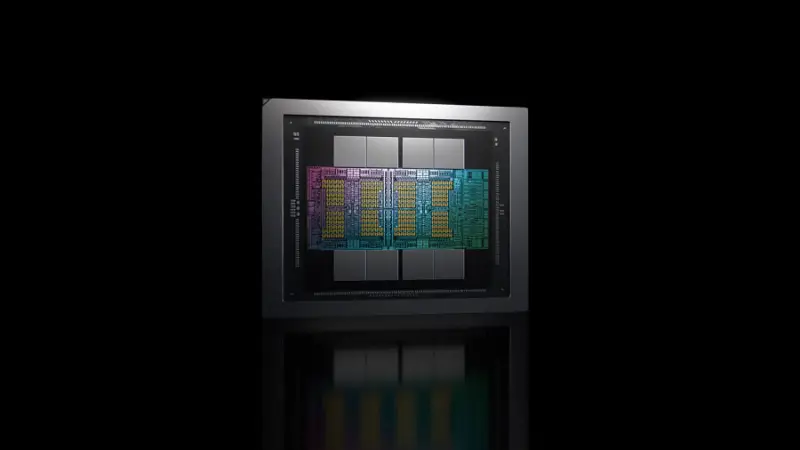
Nvidia’s SC26 announcements span two timelines for scientific computing: new software researchers can use now and Rubin HPC, a GPU planned for 2028. The chip’s headline specification is more than 50,000 CUDA cores, alongside a new NVLink generation and hardware features for sparse data. The software releases target astronomy, fusion research, cell analysis, scientific AI and quantum computing.
That split matters to research teams planning compute workloads. The libraries offer nearer-term ways to accelerate specific tasks, while Rubin HPC is a future hardware option whose practical value will depend on performance in real workloads, availability and system configuration. Nvidia has not provided a shipping date more specific than 2028 or benchmark results for Rubin HPC in the announcement.
Rubin HPC targets simulation and sparse datasets
Nvidia says its flagship Rubin GPU has 898 Tensor cores and more than 28,000 CUDA cores. The upcoming Rubin HPC card is expected to exceed 50,000 CUDA cores. Those cores support a range of parallel workloads, including scientific simulations as well as large language model computation. Nvidia also plans to equip the card with a new version of NVLink, its interconnect for moving data between GPUs and CPUs. The current version can transfer 3.6 terabits per second per GPU; no bandwidth figure for the new version was given.
Rubin HPC will also include what Nvidia calls “sparse data acceleration.” Sparse datasets contain many zero values, a pattern that appears in scientific work including biology and astrophysics. In telescope data, for example, zeros can mark areas where no stars were detected. Reducing the work spent processing such values could help with data-heavy pipelines, though the announcement doesn’t quantify the feature’s speedup or describe which formats and algorithms it supports.
Ian Buck, Nvidia’s vice president of hyperscale and high-performance computing, said faster simulations could let science and engineering agents test ideas and choose subsequent steps more quickly. That frames Rubin HPC as compute for iterative research workflows: run a simulation, inspect the result and use it to guide another run. The value for a particular lab will depend on whether its models and data can make effective use of the GPU’s parallelism and interconnect.
CUDA-X adds tools for astronomy and cell analysis
Several additions to Nvidia’s CUDA-X software suite are aimed at specialized research workflows. For astrophysics, cuPhoton.xBeam is designed to analyze observations from the Event Horizon Telescope network, a group of observatories used to study black holes. Nvidia says tasks that historically took a month can be completed in eight minutes with the library. That is a large claimed reduction in processing time, but the announcement doesn’t specify the task, hardware configuration or comparison method behind the figure, so research teams will need workload-specific measurements to judge how it applies to their pipelines.
A companion library, cuPhoton.xLens, is intended to simulate plasma used by fusion reactors to generate electricity. Together, the two tools address different needs: extracting information from astronomical observations and modeling plasma behavior. Their usefulness will depend on how well they fit existing research code and what data and computing resources they require; those deployment details were not provided.
For biology, Nvidia is open-sourcing cuSpa, which accelerates cell polygon calculations. Researchers use these calculations to examine cell structure and interactions. Open sourcing can let teams inspect and adapt the implementation, but the announcement did not specify its license or report performance figures. An existing cell analysis tool, rapids-singlecell, is also available to Nvidia users in a containerized format, which packages software and its dependencies for deployment.
Nemotron for Science packages models and workflows
Nvidia’s Nemotron for Science bundle combines the Nemotron 3.5 Super VL model with post-training workflows and chemistry question data. The model has 124 billion parameters and activates about one-tenth of them at a time. It is partly based on Mamba-2, an architecture Nvidia describes as more hardware-efficient than the widely used Transformer design.
The bundle is intended to help researchers adapt the model to specific scientific tasks. It includes prepackaged post-training workflows and nearly 50,000 chemistry-related questions that can support model training or evaluation. That gives teams starting materials for specialization, but a question set alone doesn’t establish how well a model performs in research practice. The announcement provides no benchmark scores or details on the questions’ coverage, so users will need to evaluate the model against their own tasks and data.
Buck described the bundle as a way to build specialized agents that can reason through scientific problems and use CUDA-X tools. In practice, that approach connects language-model outputs to software that performs domain-specific computation. The quality of the resulting workflow will depend on both the model’s answers and whether the tools return reliable results for the task at hand.
Quantum software and a shared development platform
Nvidia also expanded CUDA-Q, its software suite for connecting quantum hardware with conventional GPUs and CPUs. The additions include building blocks for quantum software development and an algorithm intended to mitigate qubit errors. Quantum systems rely on conventional processors to manage qubits, so software that coordinates both kinds of hardware is part of the broader effort to build usable quantum computing workflows. Nvidia did not report an error-reduction figure or describe the algorithm’s operating limits.
Nvidia is working with IBM and Fermilab on a modular quantum codesign platform. The planned environment will pair Nvidia DGX B200 systems with IBM quantum hardware, with the aim of helping researchers develop qubit error-correction algorithms and other quantum software. The announcement doesn’t provide a completion date or performance results.
Across the announcements, the clearest near-term opportunities are the domain-specific libraries and packaged research workflows. Rubin HPC remains a longer-range hardware prospect, with its 2028 shipping plan and core count offering an early indication of scale rather than evidence of measured performance. For research teams, the next useful signals will be reproducible benchmarks, software and hardware requirements, and demonstrations on representative scientific workloads.


