Box Adds Nvidia Models and Agent Controls to Its Enterprise AI Platform
- Cargo
- Machine Learning
- Shipped
- Shipper
- Mike Wheatley
- Readers
- 346
Box pairs Nvidia retrieval models with workflow tools and agent safeguards, aiming to ground enterprise agents in permission-aware company content.
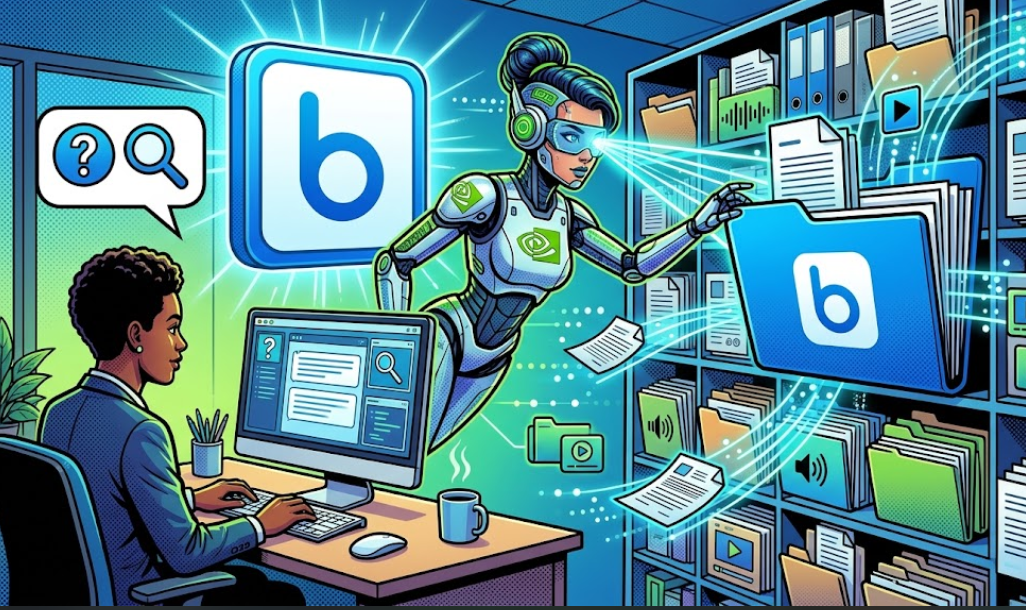
Enterprise agents can only act reliably when they can find the right company information and respect who is allowed to see it. Box’s latest additions put that problem at the center of its AI platform: a retrieval engine built with Nvidia models, tools for coordinating workflows, and controls for detecting risky agent behavior.
Announced at BoxWorks 2026, the additions address a practical barrier to workplace automation. Much of the information agents need sits in unstructured material such as contracts, software documentation, manuals, email, customer communications and research archives. These files can hold useful context, but organizations need agents to retrieve it without crossing existing access boundaries.
Retrieval built for mixed enterprise content
Box Content Retrieval is designed to turn this scattered content into an indexed knowledge base that agents can search and use. It uses Nvidia’s Nemotron Retriever embedding models to index material including scanned documents, images, audio and video, combining multimodal and hybrid search techniques.
Box reports that the engine improves search accuracy by 20% and can reduce token consumption by up to 90%. The company also says agents can respond to worker questions around four times faster when they can retrieve relevant context through the system. These are Box’s reported figures; the announcement doesn’t provide benchmark conditions or a detailed evaluation method.
Access control is part of the retrieval design. Box says agents retain the native permissions attached to each file, so they can only retrieve content their users are allowed to view. That boundary matters because a search system that surfaces restricted material could undermine the trust needed for wider agent use.
Box CEO Aaron Levie said the Nvidia work is intended to create “a new intelligence layer for enterprise content” and give customers faster ways to ground AI in business information. The approach also reflects a broader infrastructure choice: bring models to the content already held in the platform, then expose that content through permission-aware retrieval.
Open-weight models inside Box AI
The expanded relationship also brings Nvidia open-weight models into Box AI, including Nemotron 3 Ultra. Box positions these models as a lower-cost option alongside proprietary systems from providers such as Anthropic and OpenAI. The announcement gives no pricing figures, so the cost difference will depend on how the models are offered and used.
Levie said Nvidia’s models have been trained with domain-specific knowledge for specialized work. Box’s examples include financial analysts querying loan applications within strict access boundaries, and legal teams finding contract precedents by conceptual meaning instead of relying on keyword matches. These examples point to a useful distinction: model availability alone doesn’t solve enterprise search, but pairing models with relevant content and permissions may make specialized tasks easier to build.
Levie described open-weight models as complementing closed models while supporting broader adoption. For teams, the practical question will be how each model performs on their own documents, workflows and access requirements, as well as what deployment costs look like.
Natural-language workflow building
Box’s agent strategy also includes Box Architect, a separate tool expected to enter beta later this year. It is intended to let business workers build, test and deploy agentic processes using natural language. Architect can connect Box tools including Extract, Automate, Apps and Forms, and can work with a selection of open and closed models.
Box describes a contract review workflow that compares incoming agreements with a firm’s previously approved playbooks, then routes clauses flagged as high risk to an attorney. Another example is client onboarding at a bank: Forms collects an application, Extract checks identity documents, and Doc Gen and Sign create and complete an agreement.
These examples depend on coordinating several steps and handing exceptions to people. That’s the part that could make workflow tools valuable: an agent can move routine work between services while sending uncertain or sensitive cases for review. The quality of the result will still depend on how well teams configure the process and how reliably the system recognizes the cases that need attention.
Constellation Research analyst Holger Mueller said the partnership could help Box connect more closely with public cloud providers and noted that enterprise documents contain useful context for AI applications. Deep Analysis analyst Alan Pelz-Sharpe described integrated agent workflows as a way to coordinate content understanding, process steps and analysis within one governed system.
Monitoring agent behavior
Box is also adding security controls to address agents that act beyond their intended scope. The company says its new detection tools can flag activity such as bulk data removal, large-scale file deletion or account takeover for review. Administrators will be able to use classification-based policies to limit which files agents can access, apply MCP guardrails to control which third-party tools they can use, and detect actions that exceed defined limits.
The availability schedule is split. Nvidia Nemotron models in Box AI and agent security controls are available now to Enterprise Advanced and Shield customers. Box Context Retrieval and advanced threat detection are scheduled for general availability early next year for those subscribers. Box Architect is expected to enter beta later this year.
Together, the releases show Box treating retrieval, workflow coordination and monitoring as connected parts of enterprise agents. The key test will be whether organizations can apply them to real processes while keeping access limits intact and making agent actions visible enough to review.