Fable 5.2 Builds a Procedural Underwater World for the Browser in 97 KB
- Cargo
- Machine Learning
- Shipped
- Shipper
- [email protected] (Bruno Ferreira)
- Readers
- 973
A browser demo by Maksymilian Dendura uses procedural graphics and shaders to create an underwater scene, showing both the promise and limits of AI coding.
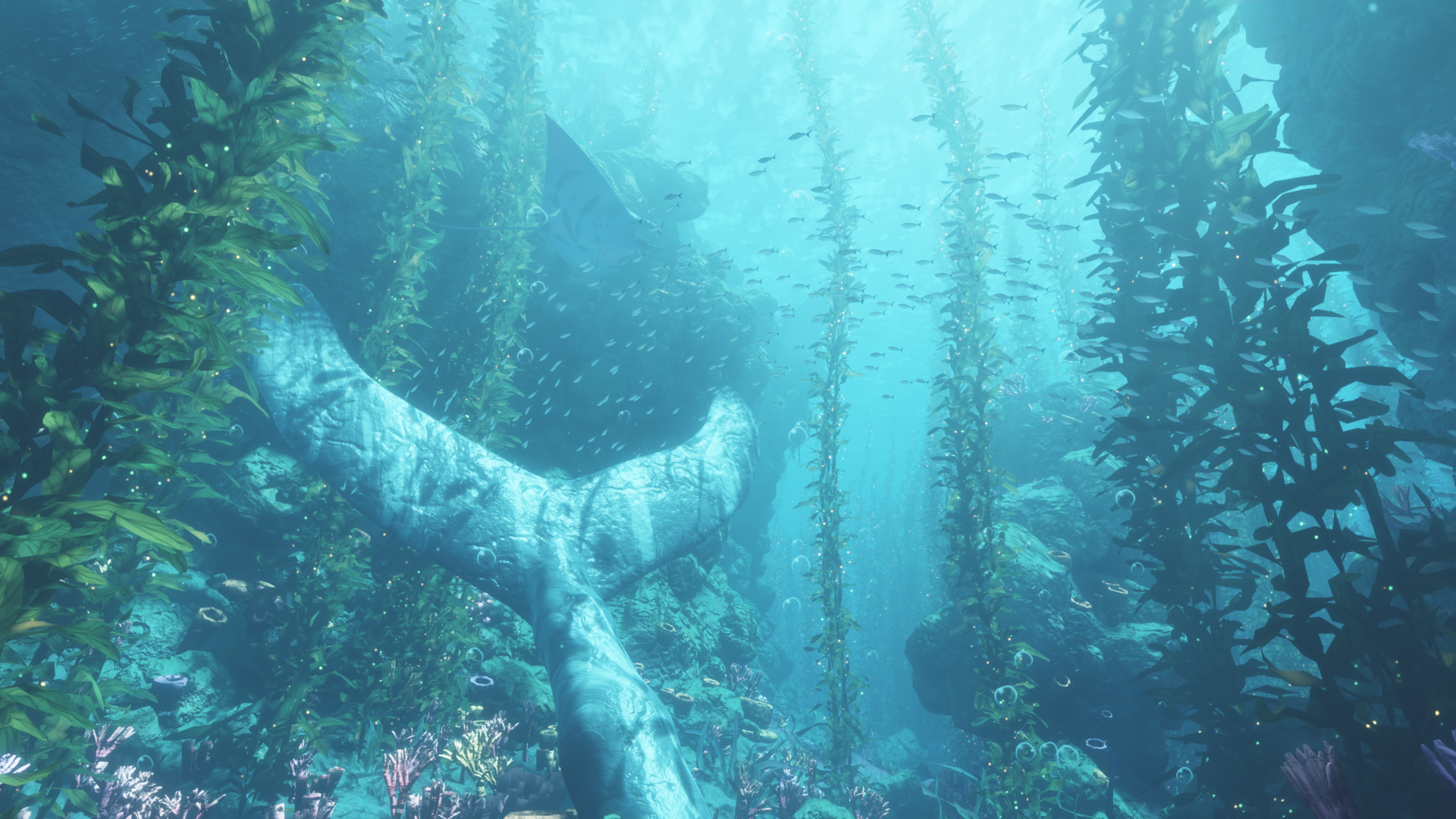
Abyssal Garden is a compact browser graphics demo: Maksymilian Dendura used Claude Fable 5.2 to create a procedurally generated underwater scene in 97 KB of JavaScript and HTML. Its significance is less about matching a full game than about how much visual work an AI coding agent can produce from a short, open-ended brief. The [demo](https://noniv.github.io/abyssal-garden/) runs in a browser using WebGPU and WebGL.
The scene doesn’t rely on a collection of prebuilt 3D models and image textures. Instead, it generates its space and textures through mathematical procedures when the page loads. That approach keeps assets small, though it shifts work to the computer running the demo and places limits on the kinds of detail the system can produce. Its appearance also depends on the generated geometry, the shader effects, and the choices made during implementation.
How the scene fits into a small file
Procedural generation describes a method for creating content from rules or calculations rather than storing each element as a separate asset. It can produce repeated forms efficiently; games, for example, may use it to create trees or grass. But it takes careful design to make generated structures look intentional. The method has tradeoffs, too: it can be harder to control a specific shape or appearance than when working with hand-built models.
Shaders provide another way to get visual effects without adding a large library of assets. These small programs change how geometry or textures are rendered, which can help create effects such as shine. In Abyssal Garden, shaders handle visual effects and some of the texturing. Together, generated content and shader work let the demo create a rich-looking scene from a very small code footprint.
The browser is part of the technical story. WebGL and WebGPU let developers render graphics through browser interfaces using JavaScript. That means the demo can run without a separate game installation, although the experience still depends on the browser, graphics hardware, and the support available on a given system. The reported performance also comes with a specific hardware reference: Dendura says it reaches 180 frames per second at 1440p on an RTX 5070 Ti. That figure describes his setup; it doesn’t establish what other devices will deliver.
A short prompt, with human judgment in the loop
The prompt that initiated the project is about 40 lines long when wrapped for display. It describes a specific goal while leaving room for choices about how to build the scene. That makes the result a useful example of an agent taking on a broad implementation task: it must translate a visual brief into working code, choose techniques, and connect those pieces into a browser experience.
The prompt alone doesn’t establish how much work the agent completed without intervention. Dendura may have refined the result through additional rounds, and the final look reflects artistic judgment as well as code generation. Still, a small brief producing a coherent, playable-in-the-browser visual environment shows how much implementation an agent can take on when the task has a clear direction and a visible result.
There’s a practical boundary here. A polished scene isn’t the same thing as a complete game. Abyssal Garden occupies a small space and has little interaction, logic, or physics. Those omissions matter: a full game needs systems, content, and behavior that this demo doesn’t attempt to provide. The project demonstrates rapid creation of a visual experience, not an end-to-end game development process.
Small demos have older roots
The size of the project also connects it to the demoscene, a long-running practice of making compact audiovisual demonstrations. In that tradition, programmers and artists try to produce striking visuals and sound under strict limits on file size or computing resources. The 97 KB result is notable as an AI-assisted browser demo, though the scene is large by the standards of the smallest examples.
Older demos show what careful, highly optimized programming can achieve. Elevatedn, released in 2009, has a related visual style and includes music in just under 4 KB. A browser version occupies 4,777 bytes. Hartverdrahtet, from 2012, creates a complex 3D space in 4 KB. And the 2004 first-person-shooter prototype .kkrieger fit meshes, textures, music, and sound effects into 96 KB.
Those comparisons put the achievement in focus. Dendura’s demo doesn’t set a size record; its distinction is that an AI agent helped turn a compact prompt into an appealing, browser-based scene with procedural graphics. For developers, the next question is how reliably this workflow extends beyond bounded visual tasks—toward projects with more interaction, tighter performance targets, and larger bodies of content.