NVIDIA Rubin HPC Targets Data Movement Bottlenecks in Scientific Computing
- Cargo
- Machine Learning
- Shipped
- Shipper
- Dan Ernst
- Readers
- 971
Rubin HPC pairs more than 50,000 CUDA cores with sparse data acceleration and seventh-generation NVLink; availability is expected in 2028.
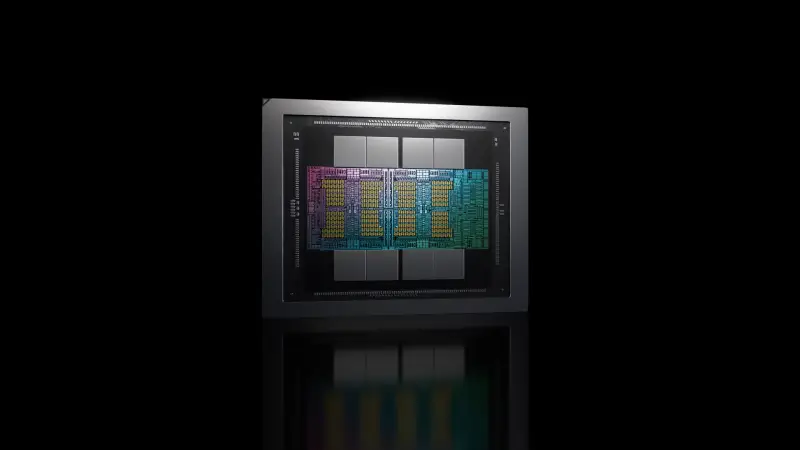
NVIDIA’s Rubin HPC is designed to speed up a part of scientific computing that can limit the value of adding more compute: moving useful data to the processors. The GPU, announced at SC26 as part of the NVIDIA Vera Rubin platform, targets simulation and data processing for science, engineering and analytics.
The intended payoff is shorter simulation cycles. Researchers and engineers can use those cycles to evaluate candidate materials, molecules and designs, then refine their next experiments or prototypes. As agents help teams explore more possibilities, the number of simulations needed to assess those ideas can rise too. Rubin HPC is NVIDIA’s attempt to increase the computing capacity available for that work while addressing how quickly data reaches the GPU.
The GPU has more than 50,000 CUDA cores on a single device, a sparse data acceleration capability, and seventh-generation NVIDIA NVLink for GPU-to-GPU connectivity. Those are the hardware details NVIDIA has disclosed; the announcement gives no benchmark results, prices, power figures or performance comparisons with earlier systems. So the stated design goals are clear, while the size of any real-world speedup remains to be measured.
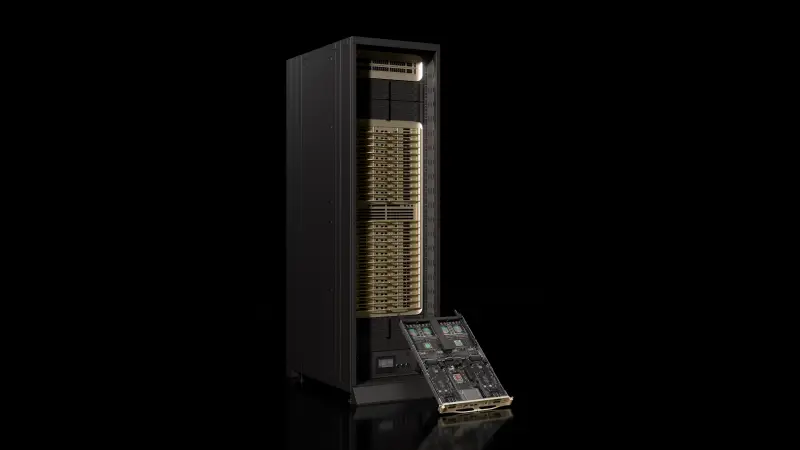
Why data movement matters
Many scientific workloads repeatedly pull a small set of values from a much larger dataset, perform a calculation and repeat that process across many data points. Climate models, engineering simulations, genomic analysis and financial risk calculations all include examples of this general pattern. When data is scattered or sparse, a processor may spend time waiting for the values it needs, even when it has substantial arithmetic capacity.
That makes core count only part of the performance picture. More cores can raise potential throughput, but they need a steady supply of data to keep working. NVIDIA says Rubin HPC is built to scale data movement and compute together. Its sparse data acceleration capability is intended to help with the data access patterns common to these workloads, while NVLink supports communication between GPUs. The practical result will depend on how well the hardware matches each application’s data layout and how much of the workload can run in parallel.
The announcement points to sparse matrix operations, stencil computations, sorting and reductions as recurring patterns the design aims to accelerate. These operations appear across scientific and engineering software, but their performance depends on implementation details: data size, memory access, communication between devices and the methods used to divide work. A purpose-built GPU can help where those patterns dominate execution time; it won’t make every stage of a simulation equally fast.
Agents add demand for simulation
Agents can propose or examine more candidate solutions, but proposals still need evaluation. In science and engineering, simulation provides a way to test ideas against models of complex systems before committing time to laboratory experiments or physical prototypes. Faster simulations could let a team get feedback sooner, discard weak candidates earlier and direct hands-on work toward options that appear more promising.
That workflow depends on more than the GPU. Researchers need suitable models, reliable data, software that can use the hardware and enough computing capacity to run the desired number of evaluations. The announcement doesn’t quantify how many more simulations Rubin HPC could support, or how much it would shorten a particular research loop. Its central claim is about enabling faster GPU-accelerated simulation; the gains for a given team will hinge on workload and system configuration.
NVIDIA also points to its CUDA-X libraries, which provide optimized implementations of algorithms used in simulation and analytics. Libraries can reduce the amount of low-level implementation work teams need to do and help software use the GPU’s capabilities. Their value, however, depends on whether the needed algorithms are covered and whether applications can incorporate those implementations.
What to watch before deployment
The clearest next evidence will be measured performance on representative workloads. Useful comparisons would show how Rubin HPC handles sparse operations, multi-GPU communication and full application runs, alongside the systems researchers use today. Power use, system cost, software support and the effort required to port or tune existing code will also shape whether a faster GPU changes research throughput in practice.
Ian Buck, NVIDIA’s vice president of hyperscale and high-performance computing, said faster simulation can help agents test ideas and guide their next steps. That describes the intended feedback loop: propose, simulate, refine. The engineering question is whether the hardware and software can make that loop faster across the workloads teams actually run, rather than only on selected operations.
Rubin HPC is expected to be available in 2028. Until performance data and system details emerge, its more than 50,000 CUDA cores and focus on data movement offer a direction for scientific computing, not a quantified measure of results. The key test will be whether the combined design lets researchers run useful simulations sooner and make decisions with less waiting between iterations.


