Intel Takes Back Overall x86 CPU Share as AMD Sets Mobile and Server Records
- Cargo
- Machine Learning
- Shipped
- Shipper
- [email protected] (Anton Shilov)
- Readers
- 979
Q3 2026 x86 shipments fell as PC demand weakened, but server growth continued. Intel gained overall share while AMD reached new highs in mobile and servers.
Q3 2026 exposed a sharp split in the x86 processor market: PC shipments weakened, while demand for server CPUs continued to climb. Intel regained overall x86 share from AMD for the first time since Q2 2025, helped by a strong rebound in desktop processors. AMD still extended its longer-term gains in notebooks and servers, reaching record shares in both segments.
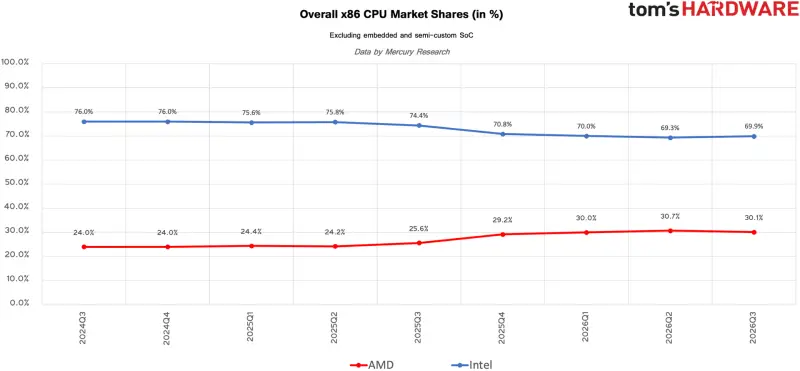
Mercury Research puts AMD’s overall x86 share at 30.1%, down 0.7 percentage points from the previous quarter but up 4.5 points year over year. Intel held 69.9%. Across all CPUs, including IoT and SoCs, AMD had 33.9% and Intel 66.1%. The figures describe processor shipments, which typically happen months before the chips appear in completed systems.
PC weakness pulls shipments lower
The industry shipped 68.93 million x86 CPUs in the quarter. AMD and Intel together supplied 60.8 million client processors and 8.13 million data center processors, according to figures cited by Jon Peddie Research. Client shipments fell from 62.93 million in Q2 and roughly 65 million a year earlier.
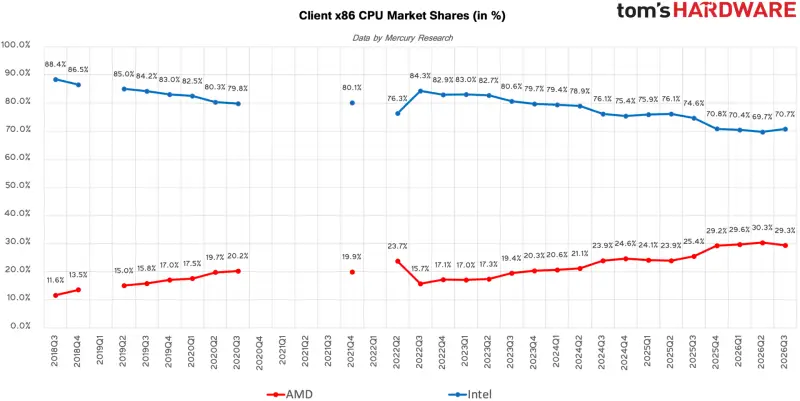
The sequential decline was concentrated in notebooks. Mobile CPU shipments fell by more than 10% from Q2, after an unexpectedly strong prior quarter. Mercury Research analyst Dean McCarron said the earlier strength may have reflected PC makers bringing purchases forward from Q3. Desktop shipments recovered, while server and embedded processors continued to grow.
Higher component costs, especially for memory, weighed on PC demand. Jon Peddie Research president Jon Peddie also pointed to lean inventories at PC makers and weak demand from do-it-yourself buyers. AMD’s semi-custom SoC and embedded shipments faced an additional headwind from shrinking game console business.
Looking year over year, shipments fell in the major PC segments, while server processors were the exception. Server CPU shipments grew by more than 20%, their strongest annual growth rate in nearly five years. Mercury Research attributed the expansion to ongoing investment in AI infrastructure, which is lifting demand for conventional data center processors as well as workstation-class CPUs used in smaller departmental systems.
Intel’s desktop rebound shifts the client balance
Intel’s overall gain came from desktops. Its share of client x86 CPUs reached 70.7%, compared with 70.1% a year earlier. AMD’s client share was 29.3%, down from a record 30.3% in Q2 but four percentage points above its Q3 2025 level.
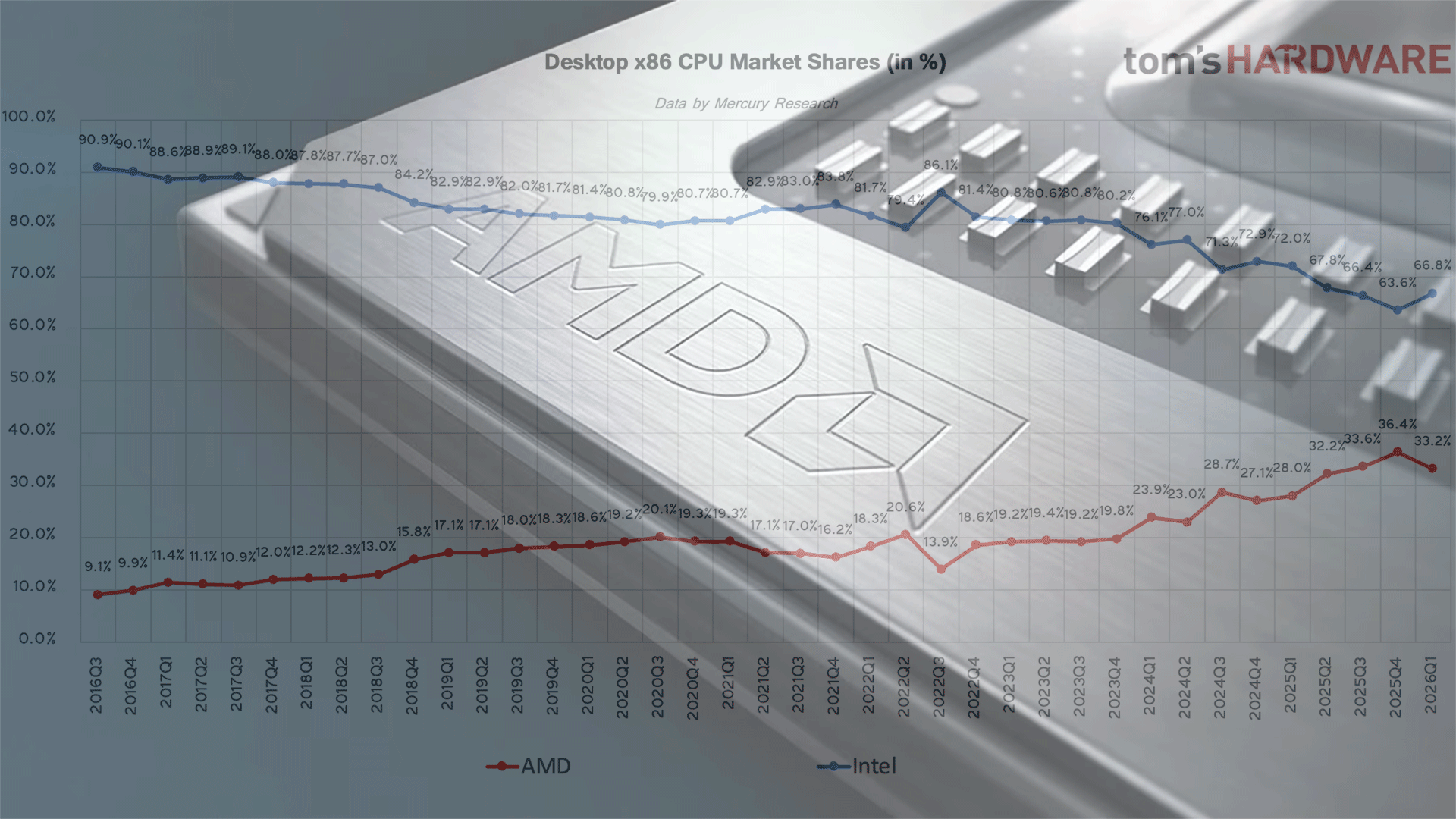
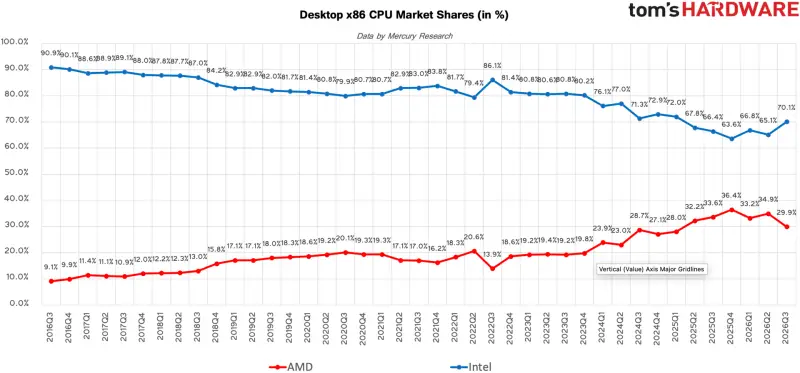
The change was much more pronounced in desktop systems. Intel’s desktop share rose to 70.1%, gaining five percentage points in a quarter and standing 3.7 points above its year-ago share. AMD fell to 29.9%, down from 34.9% in Q2 and 33.6% in Q3 2025. Desktops were the only major x86 segment in which AMD lost share both sequentially and year over year.
Mercury Research suggested that lower notebook demand may have let Intel direct more silicon toward desktop processors, a segment where supply had been tight for both vendors. AMD’s greater exposure to gaming PCs may also have worked against it: that market faced limited graphics card availability and high prices for components such as memory and SSDs.
Intel’s desktop result was enough to reverse its overall share trend for the quarter, even as AMD continued to improve over the year. That distinction matters: the quarterly shift reflects a change in the product mix and shipment timing, while the year-over-year figures still show AMD with a larger portion of the x86 market than it had in 2025.
AMD advances in mobile despite a shrinking market
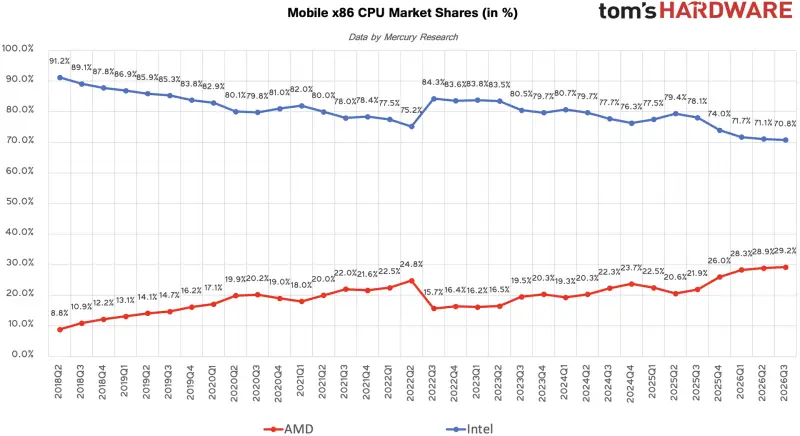
Notebook shipments weakened for both companies, but AMD’s fell slightly less than Intel’s. AMD’s mobile share edged up to a record 29.2%, from 28.9% in Q2 and 21.9% a year earlier. Intel remained the larger supplier, with 70.8%, although that was down from 71.1% sequentially and 78.1% year over year.
The sequential gain was small; the longer comparison is more striking. AMD added 7.2 percentage points in mobile share over the year, the largest year-over-year gain among the segments shown in Mercury Research’s figures. The result came as the notebook market contracted, rather than during a broad shipment expansion.
For the next quarter, both Intel and AMD expected client CPU shipments to fall by more than 20% sequentially. Rising memory and other component costs threaten to push up PC prices and further soften demand. The shipment outlook also needs seasonal context: Q4 processors are intended for systems that ship in Q1, a traditionally weak period, so some of the expected decline reflects the calendar.
Server growth keeps AMD’s share rising
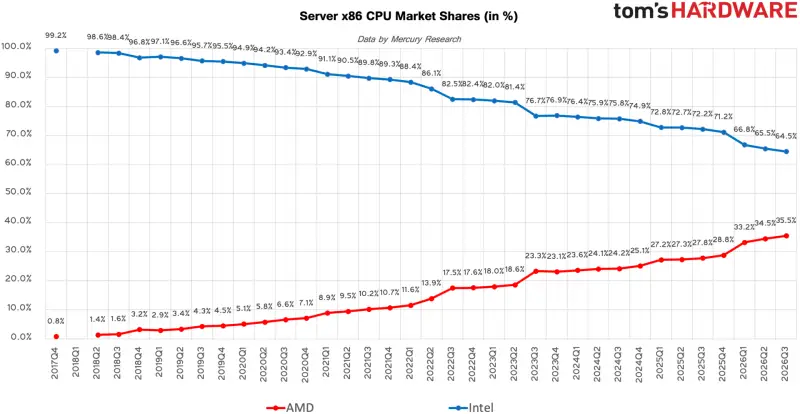
Server processors presented a different picture. The 8.13 million data center CPUs shipped in Q3 supported another quarter of strong growth, with units up more than 20% year over year. AMD reached a record 35.5% share, gaining one percentage point from Q2 and 7.7 points from a year earlier. Intel retained 64.5% of the segment.
AMD’s gains were more restrained when the comparison focused on its EPYC processors and Intel’s Xeon SP line. On that basis, AMD had 46.8% of units, up 0.4 percentage points sequentially. That was its smallest quarterly gain in a year; its average increase over the preceding three quarters had been 3 points.
McCarron said Intel appeared to have increased shipments of Xeon SP processors, slowing AMD’s advance in core data center CPUs. Even so, the broader server market outlook remained positive for both suppliers, supported by demand for CPUs alongside AI accelerators and other infrastructure. The Q3 figures leave the market with two distinct trends to watch: whether PC component prices deepen the client slump, and whether server demand continues to lift shipments while AMD pushes further into Intel’s larger share base.