A $450 Ender 3 Bioprinter Opens Lower-Cost Research on Living Materials
- Cargo
- Machine Learning
- Shipped
- Shipper
- [email protected] (Jhet Borja)
- Readers
- 422
A modified Ender 3 prints bacteria and alginate in support gels, offering ELM researchers a lower-cost route to shape and study living materials.
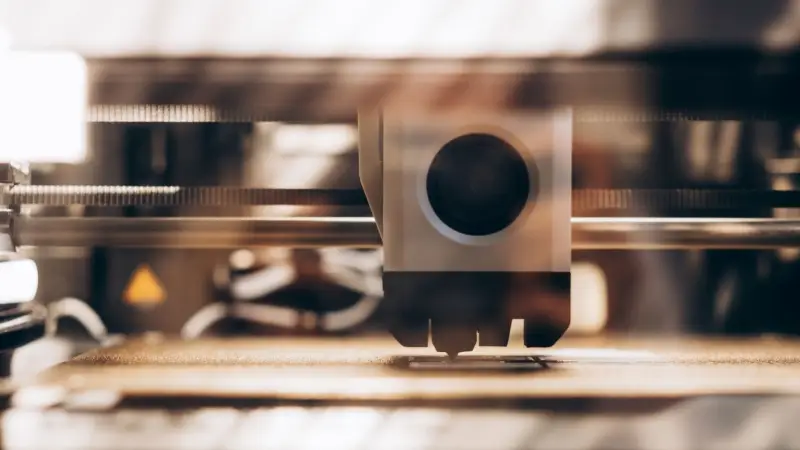
A modified Ender 3 turns a common filament printer into a $450 tool for shaping engineered living materials (ELMs). The University of Rochester team’s setup combines a syringe pump, bacteria and alginate bio-ink, and a gel support medium. Its significance is practical: specialized bioprinters can cost more than $100,000, while this system reuses most of a familiar desktop printer’s structure.
The work, published by biologist Anne S. Meyer and colleagues in ACS Applied Polymer Materials in August, addresses two obstacles to ELM research. The equipment can be expensive, and printed materials may fail to hold their intended shape. The team tackled both by adapting an Ender 3 and developing support slurries that keep the living material in place during printing and incubation.
Adapting a desktop printer
Most of the Ender 3 remains intact. The researchers replaced its filament print head with a syringe pump assembled using custom 3D-printed PETG parts. The pump holds a 10 mL glass Luer-lock syringe, and a plunger mechanism controls the movement of material through the nozzle. This lets the machine dispense a liquid bio-ink instead of thermoplastic filament.
The design process still follows a recognizable 3D-printing workflow. The team created the object in SolidWorks, exported it as an STL file, and prepared the print in Slic3r. The printer’s settings needed substantial adjustment for the syringe and its 0.254 mm needle. The extrusion multiplier was set to 0.004; at a print speed of 23 mm/s, the reported flow rate was 2 mL/h.
Those figures show why adapting a printer involves more than attaching a syringe. Filament printers are built around pushing a solid strand through a heated nozzle. Here, the machine must move a small amount of liquid at a controlled rate while tracing a shape inside a material that supports the print. The customized head, plunger control, nozzle size, and slicer settings all form part of the printing system.
Keeping living prints in shape
The bio-ink combines bacteria with alginate. Rather than printing it in open air, the researchers deposited it inside one of two gel supports: agarose or gelatin. The support material helps a soft structure retain its shape while the bacteria remain alive. Calcium ions in the slurries cross-link the alginate strands, turning the printed material into a more stable structure that surrounds the bacteria.
The choice of support depends on what happens after printing. Agarose is used when a print needs to be incubated over time; the researchers report that ELMs printed in it stayed viable for four or more weeks. Gelatin is used for prints that need to be extracted. That distinction gives researchers options for studying a material in place or removing it for further handling.
Support media are a key part of this approach, rather than a disposable detail. A print that loses its geometry may be difficult to evaluate or use, even if its bacteria remain viable. By combining alginate cross-linking with a surrounding gel, the setup aims to preserve both the form of the object and its living component. The reported viability period applies to the agarose-supported prints described in the study; it does not establish how every design or bacterial formulation will perform.
What lower-cost access could enable
ELMs use living organisms as part of a material’s function. The paper focuses mainly on bacteria and on exploring materials they can produce. Potential research directions include biofilms for antimicrobial treatments, bacteria that break down plastics, and materials relevant to wastewater treatment. Bacterial cellulose is another area of interest because its structural properties could support work on biodegradable alternatives to conventional plastics.
These are areas the technology could help researchers investigate, not demonstrated outcomes of the printer itself. The reported result is a relatively inexpensive platform for depositing bacteria and alginate into supported shapes. A lab pursuing a particular application would still need to develop and assess its own organisms, bio-ink, geometry, and operating conditions.
The cost difference may matter most for teams that need to explore print designs and material recipes before investing in specialized equipment. Using an off-the-shelf printer frame and open-source software can lower the equipment barrier, while the custom syringe assembly and tuned settings provide a starting point for extrusion-based experiments. The $450 figure describes this build; the available description does not break down recurring costs or establish how much time and expertise assembly and calibration require.
There are also practical questions for further work. The described setup depends on support gels, and the choice between agarose and gelatin changes how a print is handled afterward. Researchers will need to match the support and printing conditions to the material they want to study, then check that the printed structure and organisms behave as intended. The paper’s results offer a method to build on, rather than a universal recipe for every ELM.
Making bioprinting less expensive could broaden the range of experiments that labs can attempt with living materials. The immediate value is a working path from CAD design to bacteria-containing prints using modified desktop hardware. If researchers can adapt the method to new organisms and material recipes, it may also inform future work on printable bacterial materials, including possible bioplastic feedstocks for conventional FDM printers.