Malaysia Weighs GPU Import Disclosures and Power Charges for Data Centers
- Cargo
- Machine Learning
- Shipped
- Shipper
- [email protected] (Anton Shilov)
- Readers
- 551
Malaysia is considering GPU import reporting and charges on unused power capacity, but electricity use alone can’t verify accelerator inventories.
Malaysia is considering new reporting rules for data centers that would connect AI accelerator imports with facility locations, operators, customers and electricity use. The proposal aims to keep imported hardware in domestic facilities and make it harder to route restricted processors onward to other destinations. Its practical value will depend on how authorities verify equipment: power data can flag inconsistencies, but it can’t establish a GPU inventory by itself.
Reporting would continue after project approval
Investment, Trade and Industry Minister Datuk Seri Johari Abdul Ghani said some companies had rented space in Malaysian data centers, imported GPUs legally and then shipped the hardware abroad. Malaysia’s Digital Ministry is reviewing existing legislation to determine whether local authorities can act against companies that re-export processors covered by U.S. export restrictions. Johari said the country wants AI accelerators imported into Malaysia to be used there.
The proposed law would require data center operators to report how many GPUs they import, how much power they consume, where their facilities are located, and the identities of both operators and hyperscale customers. The reported power figure is expected to refer to rated consumption, though the proposal as described does not specify the measurement method.
The planned oversight would cover facilities throughout their operating lives, rather than end once a project receives approval. That could give authorities a continuing view of whether imported equipment is being installed and used at the sites operators identified. It would also create a recurring reporting burden for companies that run facilities, particularly those whose hardware fleets and customers change over time.
Unused capacity could carry a bill
A separate measure would charge operators for all the electricity capacity they reserve, even when their facilities draw less power. Under the example Johari described, an operator reserving 100 megawatts but using 50 would still pay for the remaining 50 megawatts.
The proposal is meant to discourage companies from booking capacity they may not need for another one to three years. That matters because reserved electricity can constrain planning for other data center projects and grid users while sitting idle. A charge tied to reservations could push operators to request capacity closer to the timing and scale of their actual deployments.
The measure could also make it harder to claim that a large GPU import supports a Malaysian facility if the site’s power demand remains low. But that signal would be indirect. A gap between reserved capacity and actual consumption can have several operational explanations, and the number of GPUs at a site cannot be read from its electricity bill alone.
Why power figures won’t establish GPU counts
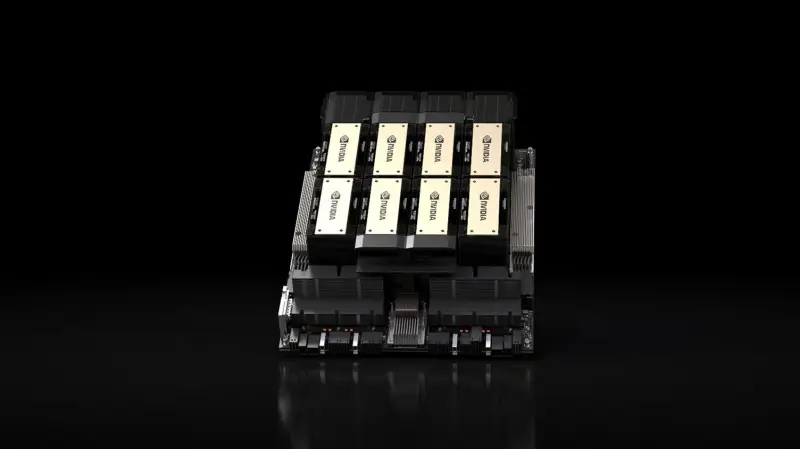
Accelerator models draw different amounts of power, and their rated limits don’t necessarily match consumption under real workloads. Nvidia’s H100 and H200 SXM GPUs are rated at 700 watts, while its B200 SXM accelerators are rated at 1,000 watts. Actual draw can vary, so even a reliable facility-level power reading would not reveal how many units are running or which models are installed.
The rest of a data center’s equipment adds further uncertainty. CPUs, memory, storage and networking gear all consume electricity, and the facility’s power usage effectiveness (PUE) affects how much incoming power supports computing equipment rather than cooling and other overhead. Without details about server configurations and facility efficiency, estimates based on total power use would be imprecise.
Timing complicates the picture, too. A gap between reported GPU imports and power consumption might reflect equipment that has not yet been deployed; the source does not specify how long such a lag might be. Conversely, a facility’s power draw can rise or fall as workloads change, even if its accelerator inventory stays the same.
Power reporting therefore looks most useful as a screening tool: it could identify patterns that merit closer examination, while leaving the actual equipment count unresolved. Physical inventory audits or a system for tracking individual processors would offer stronger verification. Johari did not say whether the planned rules would require operators to report GPU models and serial numbers or allow on-site inspections.
Malaysia’s expanding data center base
Johari said Malaysian authorities were prepared to share information with U.S. counterparts about facilities holding particular GPUs when asked. He did not describe how such requests would be handled or what technical records operators would need to provide.
Malaysia has become a major data center destination in Southeast Asia as cloud providers and AI infrastructure companies expand in the region. Johari said authorities had approved 117 data center projects, with 55 already operational. A larger installed base creates more facilities in which imported hardware can be deployed, while also increasing the challenge of monitoring equipment and power use across sites.
The effectiveness of the proposal will turn on the details: how often operators report, how imported GPUs are matched to facility records, and whether inspections or serial number tracking backstop electricity data. Without those checks, power consumption can point to a discrepancy, but it cannot show on its own whether a particular accelerator is present, active or still in Malaysia.