Goal-Driven Agents Need Planning, Feedback and Clear Operating Boundaries
- Cargo
- Machine Learning
- Shipped
- Shipper
- James Davis
- Readers
- 414
Goal-based agents choose and schedule their own tasks, making tool controls, human feedback and persistent memory central to reliable operation.
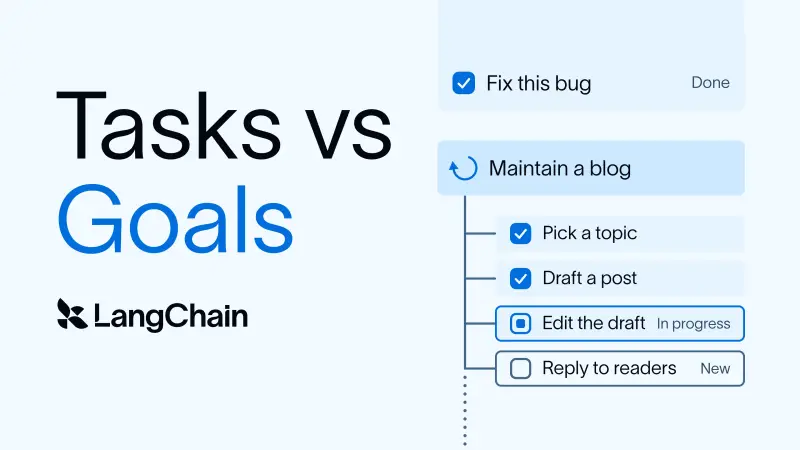
Giving an agent a goal changes the work you delegate. Instead of asking it to write one email or fix one bug, you might ask it to keep commitments on track or maintain a blog. That broader instruction shifts decisions about which tasks to do, when to do them and how to judge progress from the user to the agent.
The change has practical consequences for how these systems are designed. A goal-driven agent needs to break outcomes into work, choose among tools, request missing information, learn from feedback and decide when to act—or when to leave things alone. Delegation becomes less about composing a larger prompt and more about setting direction and boundaries for ongoing work.
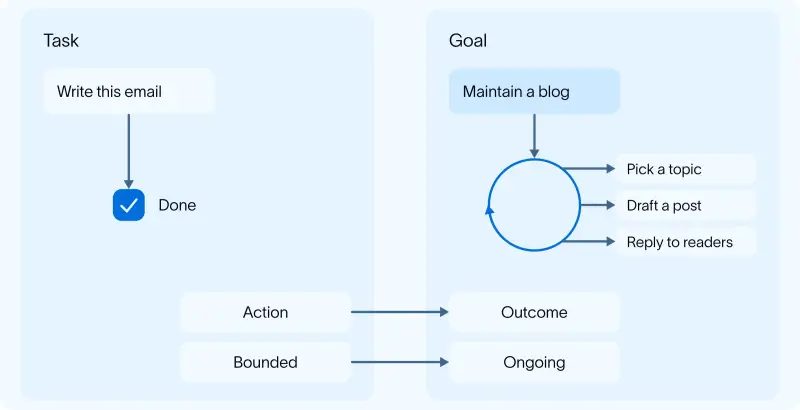
Planning becomes part of the agent’s job
With a bounded assignment, the user names the action. With a goal, the agent has to work out a sequence of actions that could move toward the outcome. It may draft a task list, complete some items, revise that list as circumstances change and continue over time.
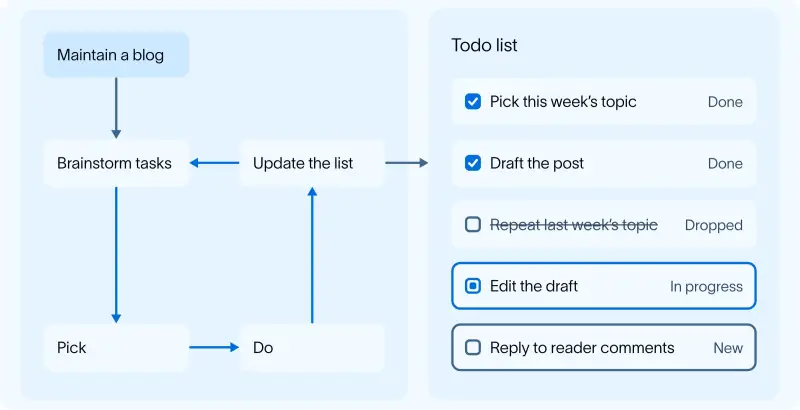
That makes task selection a core capability, rather than a detail hidden behind the prompt. The agent needs to propose useful next steps and adapt its plan instead of recycling the same suggestions. People also need visibility into that plan: a to-do list or similar view can show what the system intends to do and make its choices easier to correct.
Prompting and context design matter here. The agent needs enough information to generate relevant options, while still being able to consider alternatives. A plan that looks plausible at first can become outdated, so the system should be able to update its tasks as it learns more.
Broader goals make tool use harder to predict
For a narrow request such as sending an email, the likely tools are easy to anticipate. An agent may need access to email and perhaps a calendar. A goal such as reducing coordination work while keeping commitments on track is less specific. Depending on the situation, the agent might need email, text messaging, search, a browser or other tools.
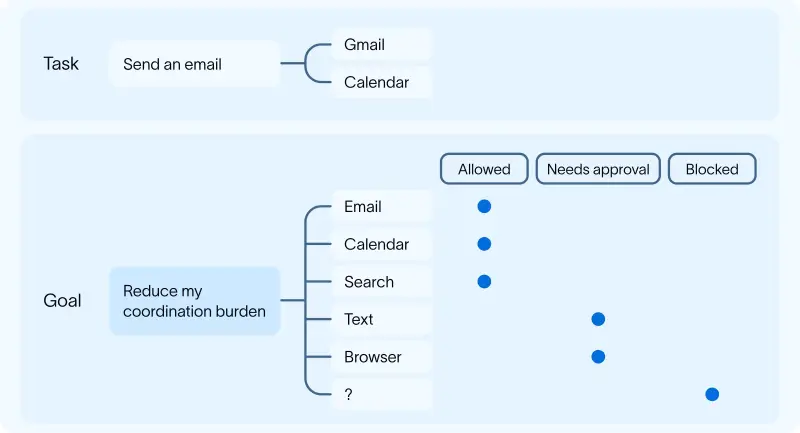
This uncertainty raises the value of controls over tool access. A system should make it possible to define which tools an agent can call, since an open-ended goal can lead it toward actions the user did not anticipate. The plan and the available tools need to work together: limiting access sets boundaries, while visibility into proposed tasks helps people understand how the agent is using those boundaries.
Background work needs a route back to people
When a user assigns a task in a conversation, the agent can ask for missing details right away. An agent working toward a continuing goal may encounter the same uncertainty while no one is watching. It therefore needs a dependable way to ask for clarification, through a suitable interface or messaging channel, and to make clear which decision is blocking progress.
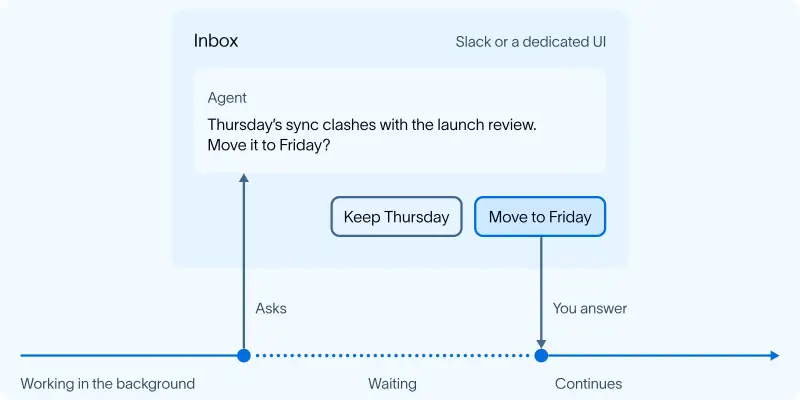
That communication channel also shapes how much oversight the system requires. If every small ambiguity prompts a question, delegation creates more work instead of less. If the agent proceeds through decisions that materially affect the goal, it may act on assumptions the user would have corrected. Good interaction design gives people a way to respond when needed and helps the agent distinguish routine choices from consequential ones.
Progress needs measures and human correction
An ongoing agent needs some way to tell whether its work is helping. A metric can make progress easier to track automatically, but a single number may not capture what the user values. Optimizing a measurable target without checking its meaning can lead the agent away from the actual goal.
Human feedback can supply that missing judgment. Teams can define measures that help the agent assess progress and give users a way to correct its interpretation of success. Goals are easier to manage when they are designed so that people can give specific feedback about what is working and what should change. The goal engineering approach describes this as part of designing goals around feedback.
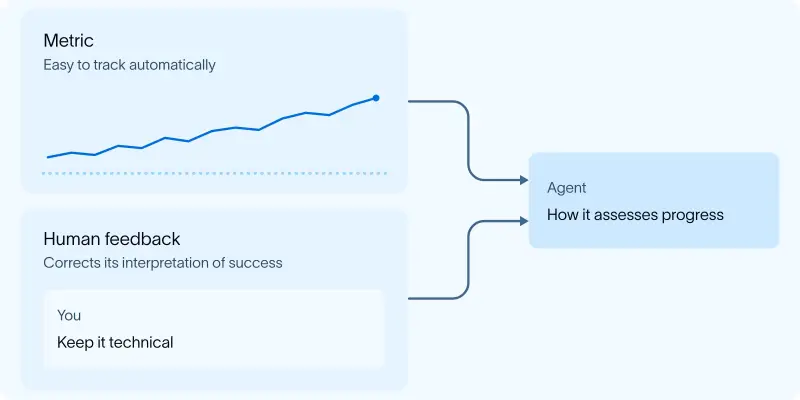
Feedback should influence the agent’s next decisions, not simply close out one interaction. That calls for a clear way to collect input and a defined connection between that input, the goal and the agent’s future plans.
Triggers need stopping rules
A task-based agent usually runs until it finishes the requested work. A goal-based agent may instead wake periodically or in response to events. Possible mechanisms include heartbeats at regular intervals, recurring or one-off scheduled jobs, and event streams.
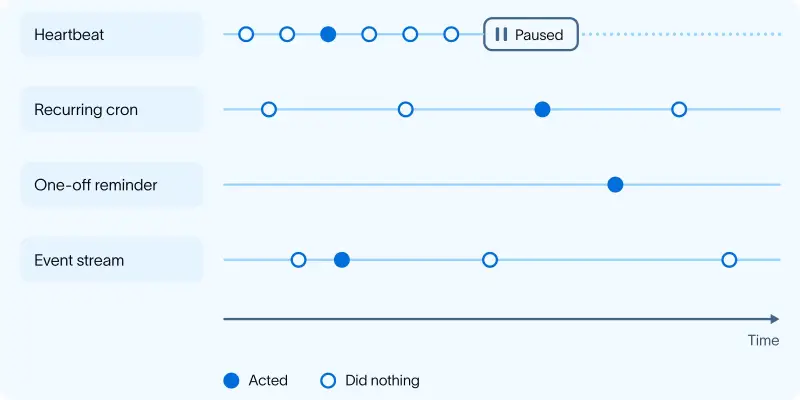
Starting the agent is only part of the problem. It also needs to decide whether a trigger warrants action, and it needs a way to pause or ignore triggers. Repeatedly asking a user the same unresolved question on every scheduled run is a sign that the system lacks a useful stopping rule. Some checks should end with no action at all; an ongoing responsibility does not require constant activity.
Memory turns feedback into future guidance
For a one-time task, the user can provide the needed context at the start. With a continuing responsibility, that arrangement becomes burdensome: decisions and preferences need to carry across runs. If a user rejects a blog topic, for example, that response should inform later topic choices rather than affect only the current draft.
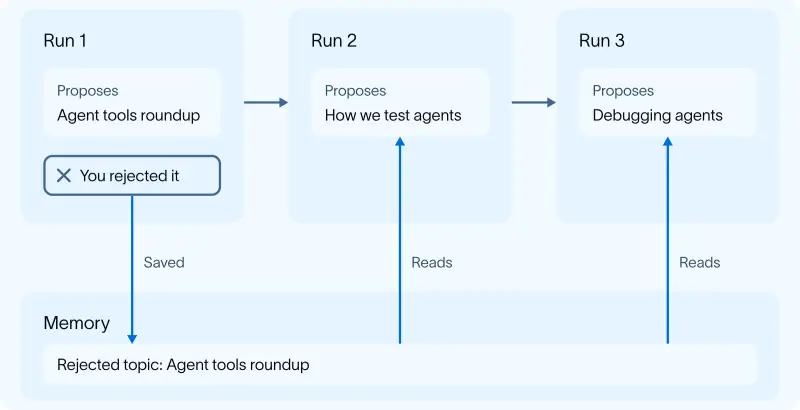
Memory is useful when it preserves relevant decisions and feedback in a form the agent can apply later. Retaining information alone is not enough; the system needs to retrieve the right context when planning new work and avoid making the user repeat instructions that still apply.
The practical shift is a change in delegation. Users set the intended outcome, define boundaries and review progress; agents select tasks, choose when to work and carry useful feedback into later runs. Whether that arrangement saves time depends on whether the system makes its plans visible, asks for help at the right moments and recognizes when the best next step is to wait.