LangSmith Makes the Agent the Center of Development and Oversight
- Cargo
- Machine Learning
- Shipped
- Shipper
- Joseph Martinez
- Readers
- 996
LangSmith links agent traces, evaluations, deployments and ownership in one record, with type specific dashboards and support for external runtimes.
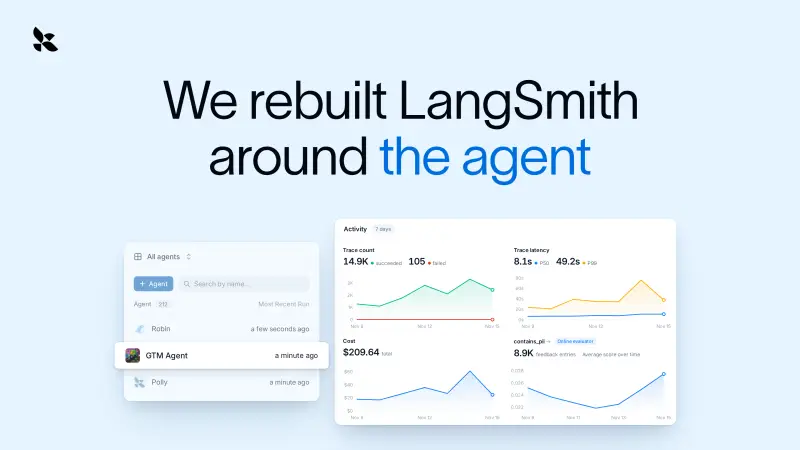
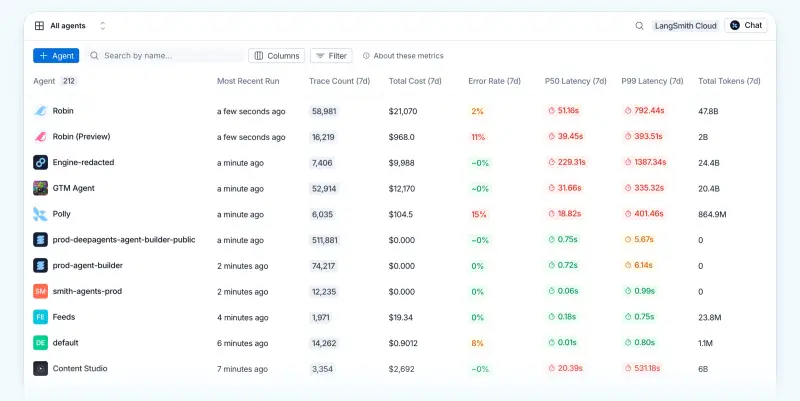
LangSmith’s redesign puts a single agent record at the center of building, operating, evaluating and managing agents. The practical change is a shared view of an agent’s traces, evaluations, deployments and environments, even when teams use different frameworks or run agents outside LangSmith.
That addresses a growing operational problem: organizations can have coding agents in engineering, customer facing agents in product, and productivity agents across other teams. They may use different models, tools and hosting platforms. Engineers end up moving between separate systems for tracing, monitoring and deployment, while platform teams struggle to find each agent’s owner, understand its costs and investigate performance changes.
LangSmith’s approach is to make the agent, rather than an isolated trace project or deployment, the organizing record. That gives teams a common way to inspect and manage agents across their development lifecycle without requiring every team to adopt the same stack.
One record across the lifecycle
The platform connects four activities: building, running, improving and governing agents. Developers can describe an agent through the natural language builder in LangSmith Studio, write code using LangChain’s open source harnesses, or use another framework. They can run an agent on LangSmith Agent Server or keep its existing runtime.
For improvement work, traces sent to LangSmith can connect an agent to tracing, evaluations, datasets, annotation and Engine. For organization wide visibility and controls, the agent registry and LLM Gateway provide management features. Opening an agent record brings these related resources together, reducing the need to search across separate product areas.
Development environments also sit under the same agent ID. Teams can compare local, development, staging and production versions in one place, which makes it easier to see whether a change affected performance. The platform remains composable: teams can connect externally hosted agents to LangSmith for evaluation and management while retaining their existing runtime and workflows.
Teams that build and run agents on LangSmith can connect more of the lifecycle. For example, Engine can check a proposed fix against an Agent Server preview before the change reaches production. The intended workflow is to find an issue, test a correction, ship it and verify the result using linked tools.
A shared identity and data model
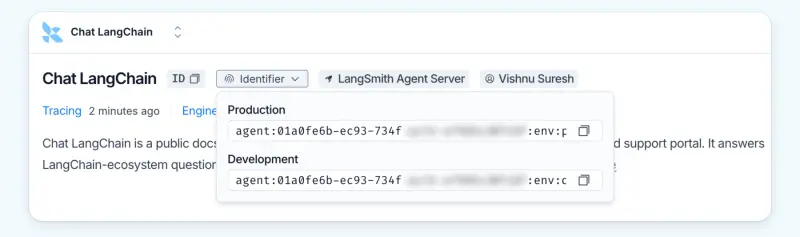
Previously, traces were organized in a flat project hierarchy. Traces from the same agent in different environments were not tied to a common agent record. The new model groups environments and traces under one record so that stages of the lifecycle can be connected.
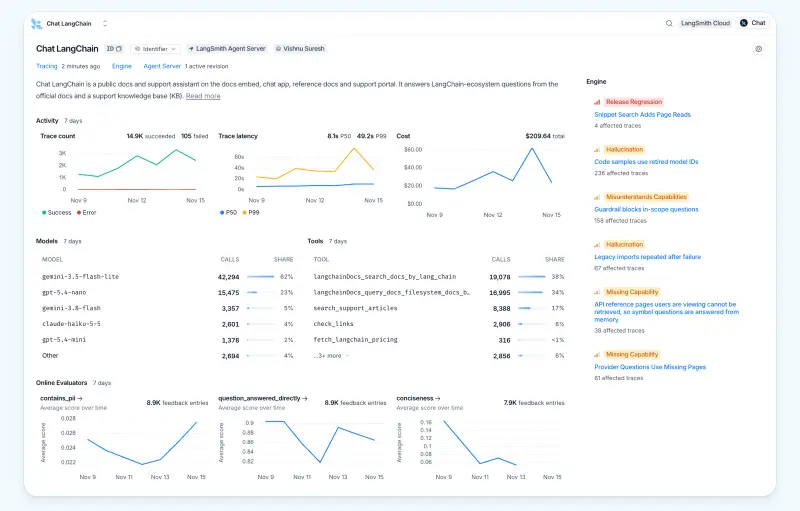
Each record has three core properties: a named owner responsible for the agent, a globally unique and immutable ID, and a type that determines which information, data connections and evaluation criteria appear in its dashboard. The owner gives teams a person to contact when an agent needs attention; the ID provides a stable reference as it moves between environments.
Agent types shape evaluation
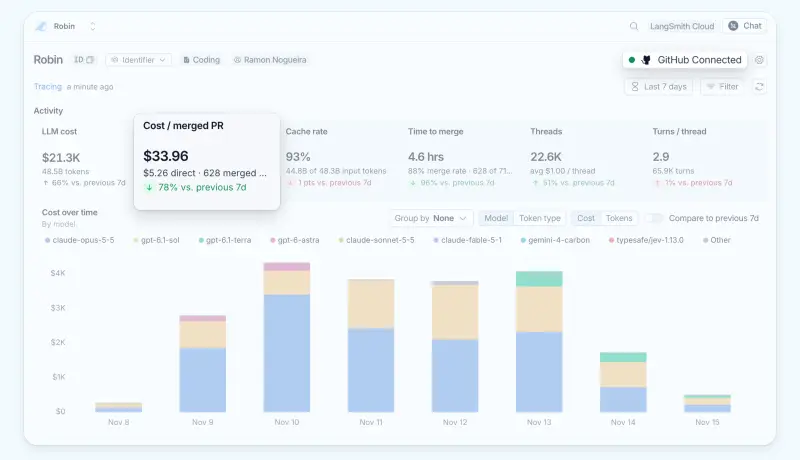
A single scoring approach won’t fit every agent. A coding agent can be evaluated by whether its code is merged, while a customer support agent may need to meet latency expectations. LangSmith’s agent types are intended to make those differences visible in the record and to provide dashboards around each agent’s work.
The general purpose agent dashboard includes a description, recent activity, online monitoring, commonly used models and tools, and failures surfaced by Engine. Coding agent dashboards show measures such as merged pull requests, token cost and the kinds of work completed. The views are preconfigured, so assigning a type provides a starting dashboard without requiring teams to build custom views first. Using the same measures for agents of one type also makes comparisons between them more consistent.
Types can connect relevant data as well. The coding agent type can link a GitHub repository to track downstream outcomes of agent use. LangSmith currently offers general purpose and coding types, with voice agents planned. For voice systems, the relevant signals can include latency and audio quality as well as whether the agent resolves a customer’s issue.
Visibility across different runtimes
Agents can enter an organization through engineering projects, business software and tools employees adopt on their own. Requiring all of them to move to one platform may not be practical. LangSmith says it can register agents running on platforms that support OpenTelemetry Protocol (OTLP), including systems from cloud providers and research teams.
Once connected, an external agent can be assigned an owner, ID and type and measured alongside agents built by the organization’s engineers. Costs and quality metrics roll up to the agent across environments. If an agent’s costs rise, platform teams can see its traces and contact its named owner to investigate.
What comes next
LangSmith’s stated direction is to connect more work to the agent record. Its described workflow includes using Engine to red team an agent, find failures and watch for regressions; reviewing production traces in a custom annotation app; and sending reviewed examples into evaluation datasets. Strong agent trajectories could also inform model fine tuning aimed at improving performance and lowering costs. The company says these components are available today and that it is working to connect them more closely.
Planned additions include more agent types, with voice among those being developed, and organization level dashboards. Workspace dashboards are available now; broader dashboards are intended to show performance measures and trends across a company. LangSmith also plans to let teams register agents in their identity provider, extending the agent ID into existing identity management and audit processes.
The redesigned LangSmith is available in cloud, BYOC and self hosted environments. Teams can start in LangSmith Studio or connect an agent they already run. Its usefulness will depend on how well teams can connect their runtimes and produce comparable data; the unified record gives them a place to begin.