Securing AI Infrastructure With NVIDIA BlueField and Continuous Verification
- Cargo
- Machine Learning
- Shipped
- Shipper
- Itay Ozery
- Readers
- 358
NVIDIA BlueField separates infrastructure controls from host workloads, while Eclypsium checks hardware, firmware and configuration for changes over time.
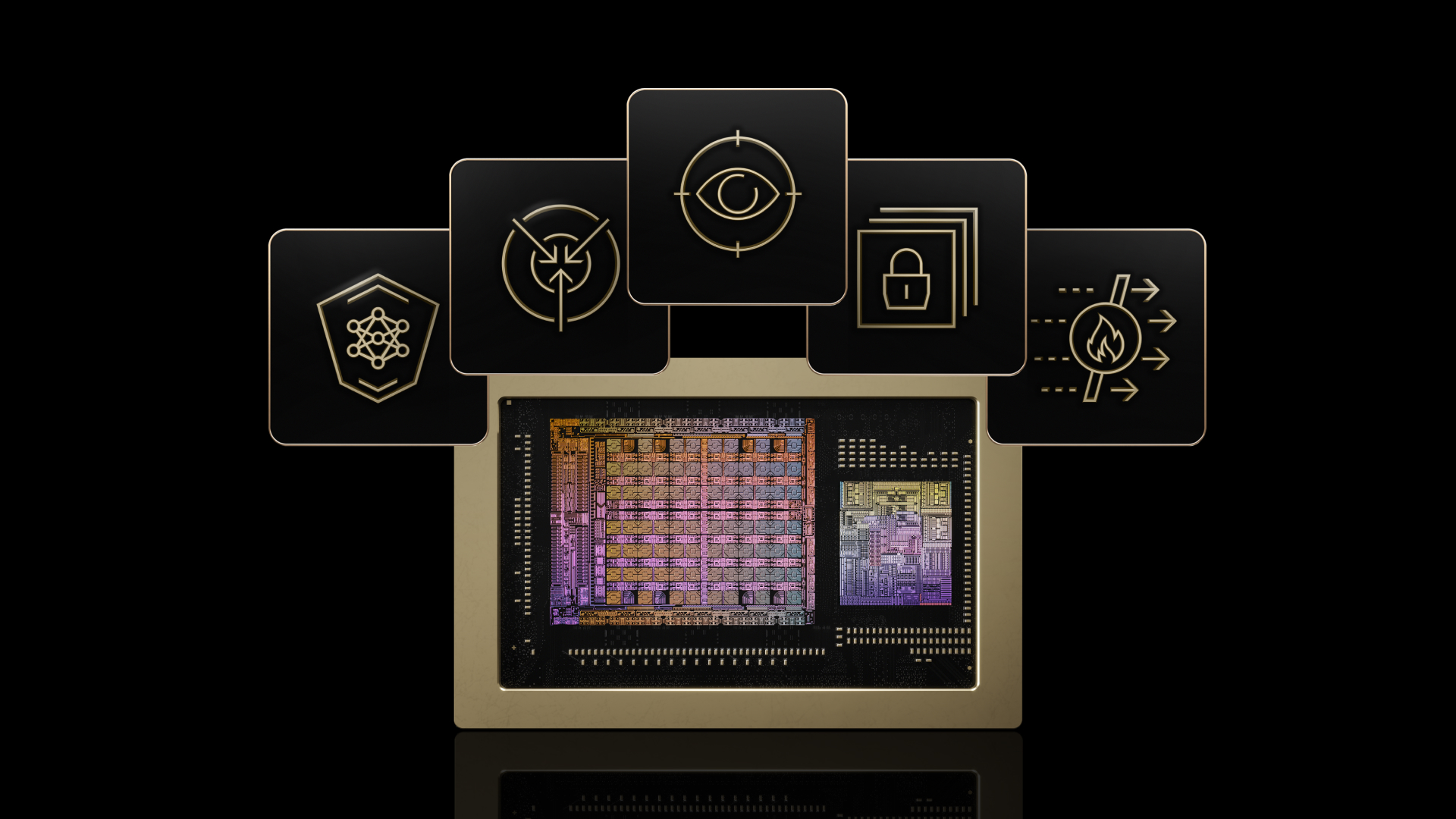
AI security depends on more than the model and the application around it. Compute, networking, storage, firmware and management systems all shape what an AI workload can access and how it behaves. As AI agents gain access to sensitive data and tools, infrastructure components with privileged access become part of the security boundary.
NVIDIA BlueField data processing units (DPUs) are designed to run infrastructure services separately from host workloads. NVIDIA’s platform protections can be paired with Eclypsium’s hardware and firmware assessment, configuration analysis and monitoring. The combination aims to give operators both mechanisms to protect platform integrity and independent evidence about the state of the systems underneath their AI workloads.
That distinction matters because a system’s intended configuration can change. Vulnerabilities, unauthorized modifications, supply chain compromise or persistent threats may undermine assumptions about a device long after deployment. Trusted infrastructure therefore calls for evidence that systems are in a known good state, remain configured as intended and can be reassessed as they change.
BlueField as an independent control point
BlueField combines networking, programmable computing and in-silicon acceleration. Its dedicated compute resources can run infrastructure services independently of applications and operating systems on the host. That separation creates distinct trust domains: operators can manage underlying infrastructure resources separately from the workloads using them.
The DPU also has a privileged role in the system. It includes Arm CPU cores, an operating system, firmware and a management controller, and can move data directly into host and GPU memory. Those capabilities make it useful as an independent control point, while also making it an asset that operators should include in security models, inventories and monitoring.
BlueField runs NVIDIA Sentry, which is part of the NVIDIA OpenShell Reference Architecture. The DPU’s role in this architecture raises the importance of securing the device itself: a control intended to protect agent execution depends on the integrity of the infrastructure that runs it.
BlueField’s defenses span hardware, firmware, operating systems, software and device management. They include a hardware root of trust, authenticated boot, hardware-enforced isolation, protected key management, secure firmware updates, rollback protection and device attestation. These controls serve different purposes: for example, authenticated boot checks components as the system starts, while attestation provides evidence about measured platform state.
Security also involves the product development and support process. NVIDIA describes practices that include threat modeling, architecture and code reviews, automated security analysis, vulnerability management, fuzzing and offensive security research. No complex computing platform is immune to vulnerabilities, so software and firmware updates and vulnerability response remain part of the security picture throughout the supported product lifecycle.
Configuration depends on the trust model
Infrastructure operators do not all need the same boundaries. A hyperscale cloud serving multiple tenants has different requirements from a single tenant AI cluster or an air gapped environment. Those differences affect administrative privileges, management interfaces, device access and how systems should isolate workloads from infrastructure services.
Unlike a conventional network adapter, a DPU has dedicated compute that can run infrastructure services and policies independently of the host. BlueField’s programmable design lets operators decide which capabilities to enable, which interfaces to expose and how infrastructure access should work. For example, a cloud provider can place tenant workloads and the host operating system in one trust domain while keeping provider controlled infrastructure services in another.
BlueField also supports configurations that can be locked into cryptographically attestable trust profiles. This can help an operator establish and verify the intended boundaries. The practical point is that available features do not need to be exposed in every deployment. A secure setup depends on choosing a trust model and configuring the platform to match it, while accounting for performance and operational needs.
Direct memory access (DMA) illustrates why configuration needs verification. DPUs, GPUs and management controllers can read or write system memory directly. Eclypsium research highlights host protections such as IOMMU translation, PCIe access control services and address translation services. These settings help constrain device memory access, but operators need to check how they are configured rather than rely on assumptions.
Verification across devices and over time
Eclypsium’s AI Infrastructure Assurance checks hardware and firmware against known good baselines, identifies vulnerabilities and insecure settings, and monitors device and firmware posture. It is also intended to detect configuration drift, unauthorized changes and threats that persist below the operating system. Its broader assessment capabilities can help teams identify infrastructure components and evaluate firmware and configuration risks across an environment.
That scope matters because AI systems depend on more than GPUs. DPUs, management controllers, networking equipment and other components all contribute to the security posture. Operators can use BlueField’s built in controls to protect platform integrity, then use Eclypsium’s assessment capabilities to look for unexpected changes or firmware risks. The combination provides an additional way to check infrastructure state independently.
It also makes security a lifecycle practice. Devices move through manufacturing, provisioning, deployment, operation, updates, recovery and eventual reassignment or decommissioning. BlueField protections include secure provisioning, authenticated firmware updates, rollback protection and attestation. Assessment and monitoring can complement these by tracking components, firmware risks, vulnerabilities and configuration changes across the same lifecycle.
Operationally, that means tracking each DPU, GPU and management controller as an asset, including its firmware, configuration and owner in vulnerability management. Management interface telemetry, such as baseboard management controller and Redfish logs, can contribute to monitoring. Since these components can persist through an operating system reinstall, teams should reassess them after incident response and before assigning hardware to a new tenant.
No single check tells the whole story. Secure boot authenticates components during startup; attestation reports measured platform state; configuration assessment helps evaluate deployment choices. Boot measurements do not show every change in runtime behavior, and a hash or signature for a model file does not verify that the copy executing in memory behaves identically. Runtime checks can add visibility into later changes.
Independent observations also help. Comparing host settings, PCIe topology, management controller firmware and change history can make an inconsistency more visible. This does not guarantee that compromise will be detected, but it gives defenders more than one view of a device’s state to evaluate.
Research exposes gaps in model file checks
NVIDIA and Eclypsium have examined how compromised infrastructure could affect a model’s behavior while leaving stored model integrity checks intact. In their demonstration, the model file, its hash and its signature remained valid, even though the model running in memory behaved differently. The example shows a limit of artifact checks: they say something about the file on disk, but not necessarily about the state of the executing workload.
The underlying concern applies across accelerator designs. GPU systems, alternative accelerators and custom ASICs all rely on privileged components, including host processors, accelerator firmware, management controllers and smart network interfaces. These components sit beneath the model and may access the memory where it runs. Research and evaluation can help identify assumptions that fail at those layers, then inform product protections, deployment guidance and operating practices.
NVIDIA says it evaluates reported findings and provides updates or guidance as appropriate. The companies also describe work through the Open Secure AI Alliance, where researchers, technology providers and security teams can develop shared evaluation methods, verification checks and defenses. The goal is to turn findings about infrastructure into practices that operators can apply across systems.
Infrastructure security for agent execution
AI agents add another reason to protect the layers beneath the workload. They can reason, access sensitive data, use tools and take actions for people and organizations. Protecting them requires controls that can observe behavior and govern access independently of the agent itself.
NVIDIA’s OpenShell Reference Architecture extends hardware isolated infrastructure protections to agent workloads. BlueField-4 provides the infrastructure foundation for NVIDIA Sentry, a security software framework built on NVIDIA DOCA. Operating independently of the host and beyond the agent’s reach, Sentry is designed to monitor agent behavior out of band and enforce policies in silicon in real time, helping detect and contain threats. This adds an infrastructure layer alongside OpenShell’s software execution boundaries.
The resulting operational approach links several forms of control: verify hardware and firmware, establish the intended trust boundaries, govern what agents can access and do, and monitor for changes that could weaken those protections. BlueField supplies platform controls and an independent execution boundary; Eclypsium adds assessment and monitoring across hardware and firmware. For teams deploying agents at scale, the key question is whether those controls continue to provide evidence as systems, configurations and workloads change.


