LangSmith BYOC Expands to Azure and Google Cloud Alongside AWS
- Cargo
- Machine Learning
- Shipped
- Shipper
- Michael Garcia
- Readers
- 440
LangSmith BYOC keeps traces, prompts and deployments in a customer’s cloud account while LangChain operates the data plane; AWS is GA, Azure and Google Cloud are in beta.
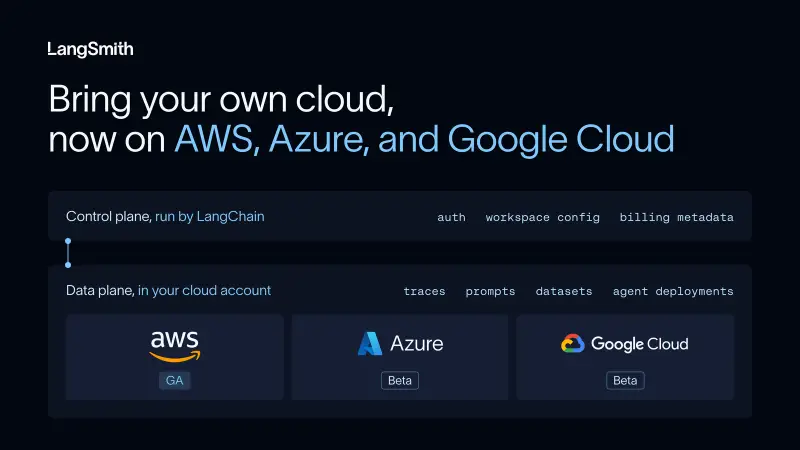
LangSmith’s Bring Your Own Cloud (BYOC) deployment now supports AWS, Azure and Google Cloud, giving teams a way to keep traces, prompts, datasets and agent deployments in their own cloud accounts while LangChain operates the platform’s data plane. AWS is generally available; Azure and Google Cloud support is in beta. The split is designed for teams that need control over where their data resides but want to reduce the engineering work required to run LangSmith themselves.
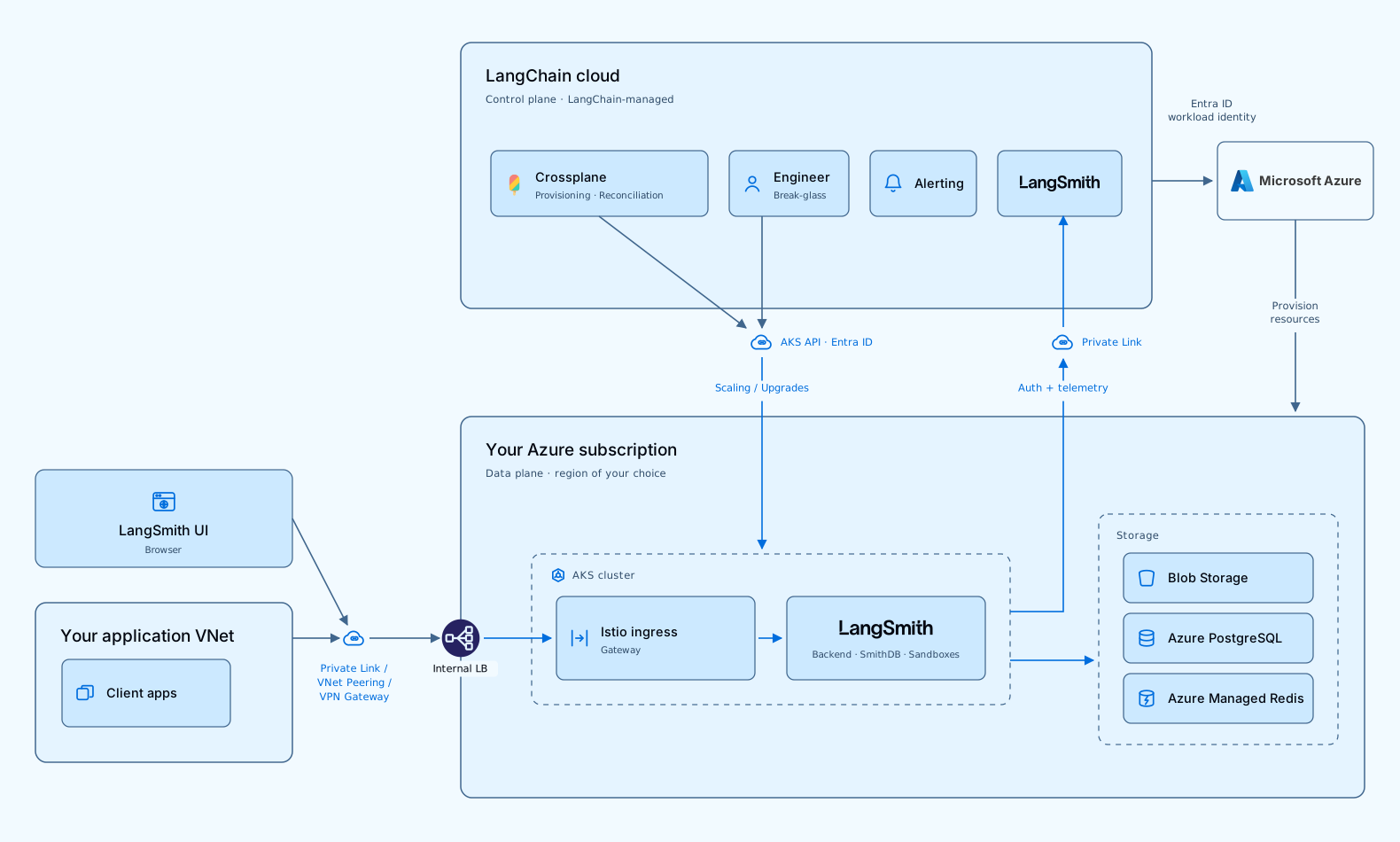
The central tradeoff is operational. With self-hosting, an organization controls the deployment but must maintain stateful services, databases, schema changes and software rollouts. BYOC keeps the data plane inside the customer’s cloud environment while LangChain manages orchestration, scaling and platform updates. Teams still own the cloud account and its data, but they take on less of the ongoing platform maintenance.
Separate control and data planes
LangChain operates the control plane, which contains authentication, organization and workspace configuration, billing metadata, hashed API keys and static interface assets. The customer’s data plane holds the sensitive and operational content: traces, prompts, datasets, experiments, agent deployments and workspace secrets. That division lets LangChain manage the service while customer data remains in the customer’s cloud account.
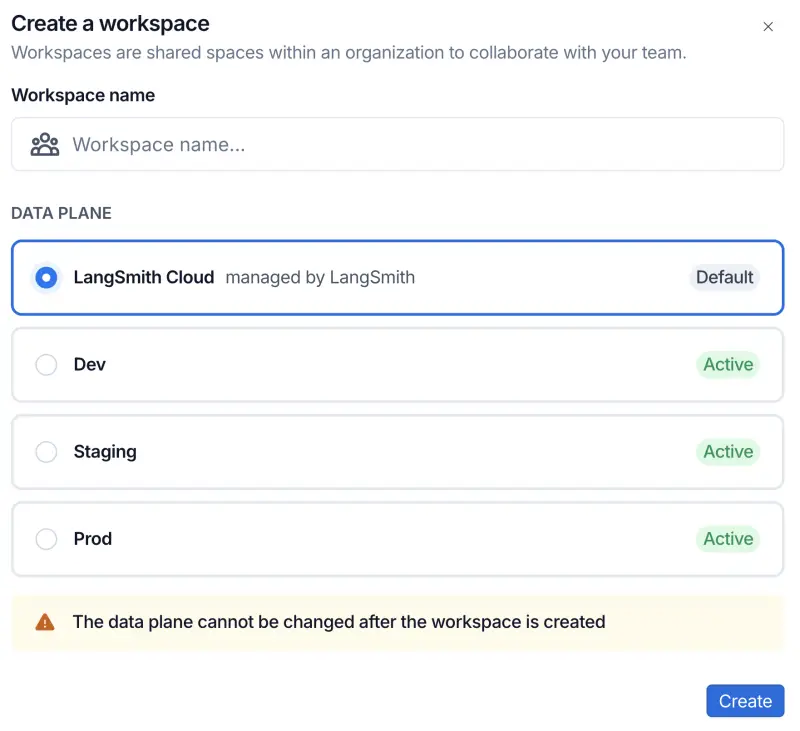

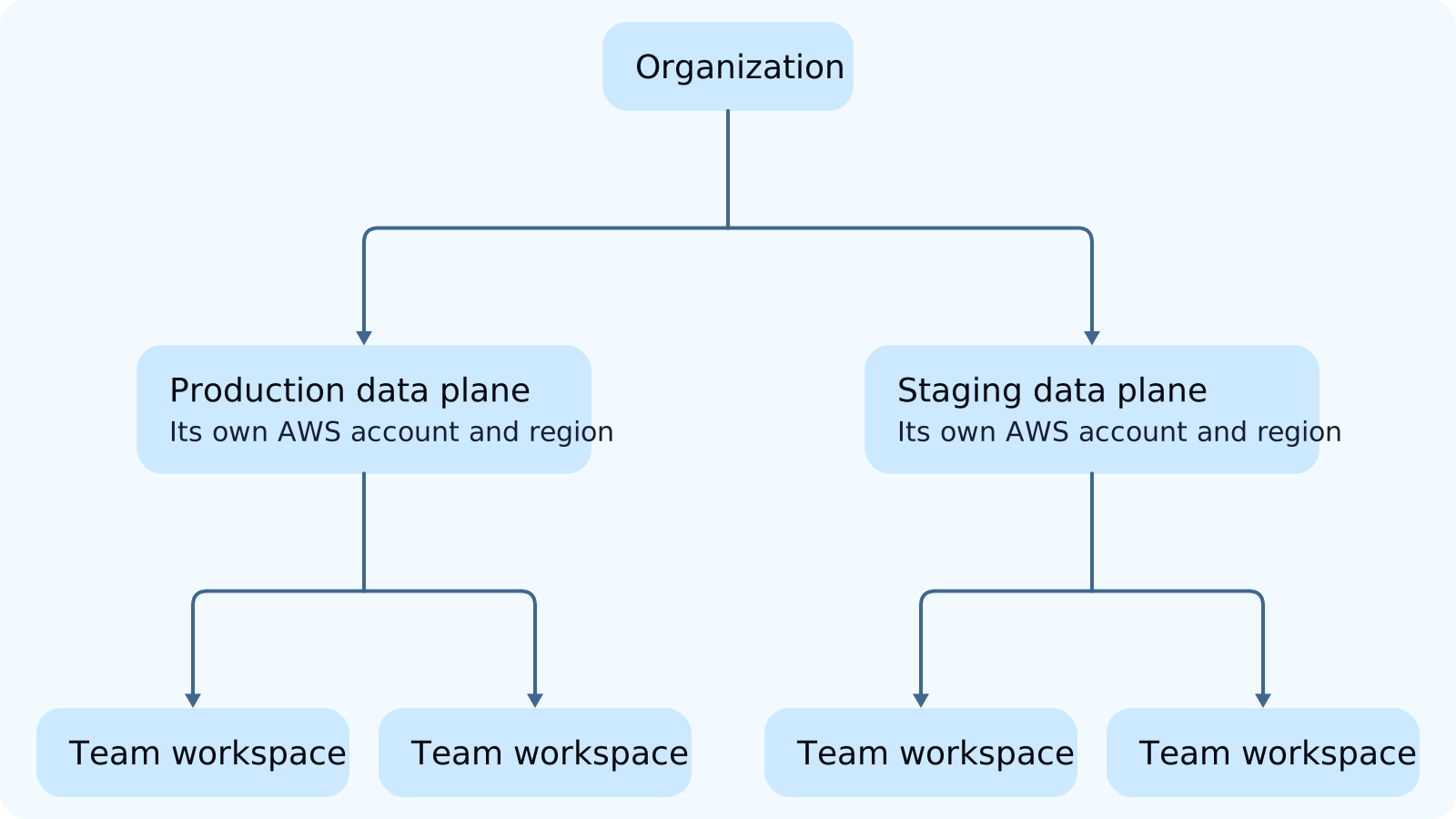
An organization can create multiple data planes, each in a separate account or region, with workspaces inside each plane. That structure can map to production and staging environments, regional boundaries or separate business units. For example, a platform team could place production and staging in separate AWS accounts while another unit runs its own deployment on Azure. Each group’s traces stay in the account it controls.
This model gives teams room to organize deployments around their existing cloud and environment boundaries. It also means each data plane has its own placement and configuration decisions, so organizations should plan how they will divide workspaces and workloads across accounts and regions.
What LangChain operates
Self-hosted LangSmith has served teams that need data to remain within a tightly controlled environment, but operating it requires platform staff to patch stateful services, configure databases and handle schema migrations. Updates to execution components can also involve coordinating downtime and managing Helm rollouts across environments.
BYOC moves much of that operational work to LangChain. The data remains in the customer’s virtual network, while LangChain handles scaling, schema updates and runtime dependencies. Teams that value complete control over every part of the deployment can continue to self-host; BYOC is aimed at those that want data residency within their account with less maintenance responsibility.
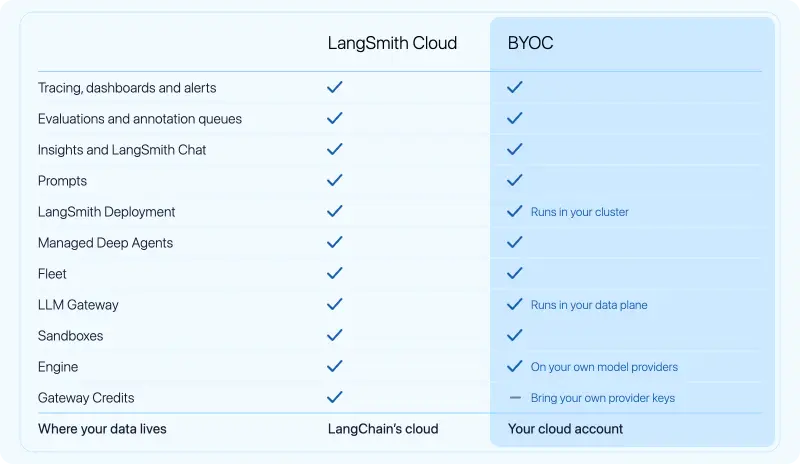
LangChain reports that AWS customers have highlighted continuous upgrades, access to new LangSmith features soon after they arrive on LangSmith Cloud, and automatic scaling as benefits. These are operational claims rather than published performance benchmarks: the announcement provides no latency, availability or cost figures for comparing BYOC with self-hosting.
Cloud-specific deployment details
The underlying setup varies by provider because each cloud has distinct networking and identity components. The core LangSmith capabilities remain shared: traces, trajectories, evaluations and insights run on the data plane; LangSmith Deployment runs in the customer’s cluster; and Engine works over customer data with customer-selected model providers. The LLM Gateway also runs in the data plane and supports customer-supplied provider keys. BYOC data planes on all three clouds support Managed Deep Agents endpoints and sandboxes for isolation within the private cloud.
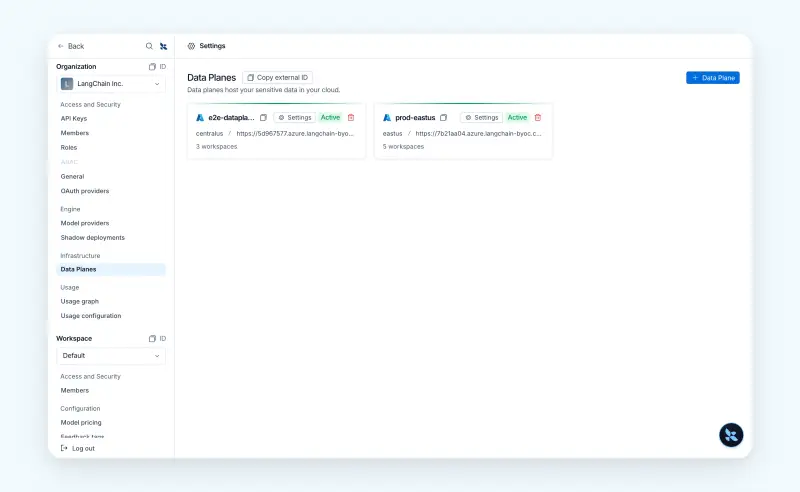
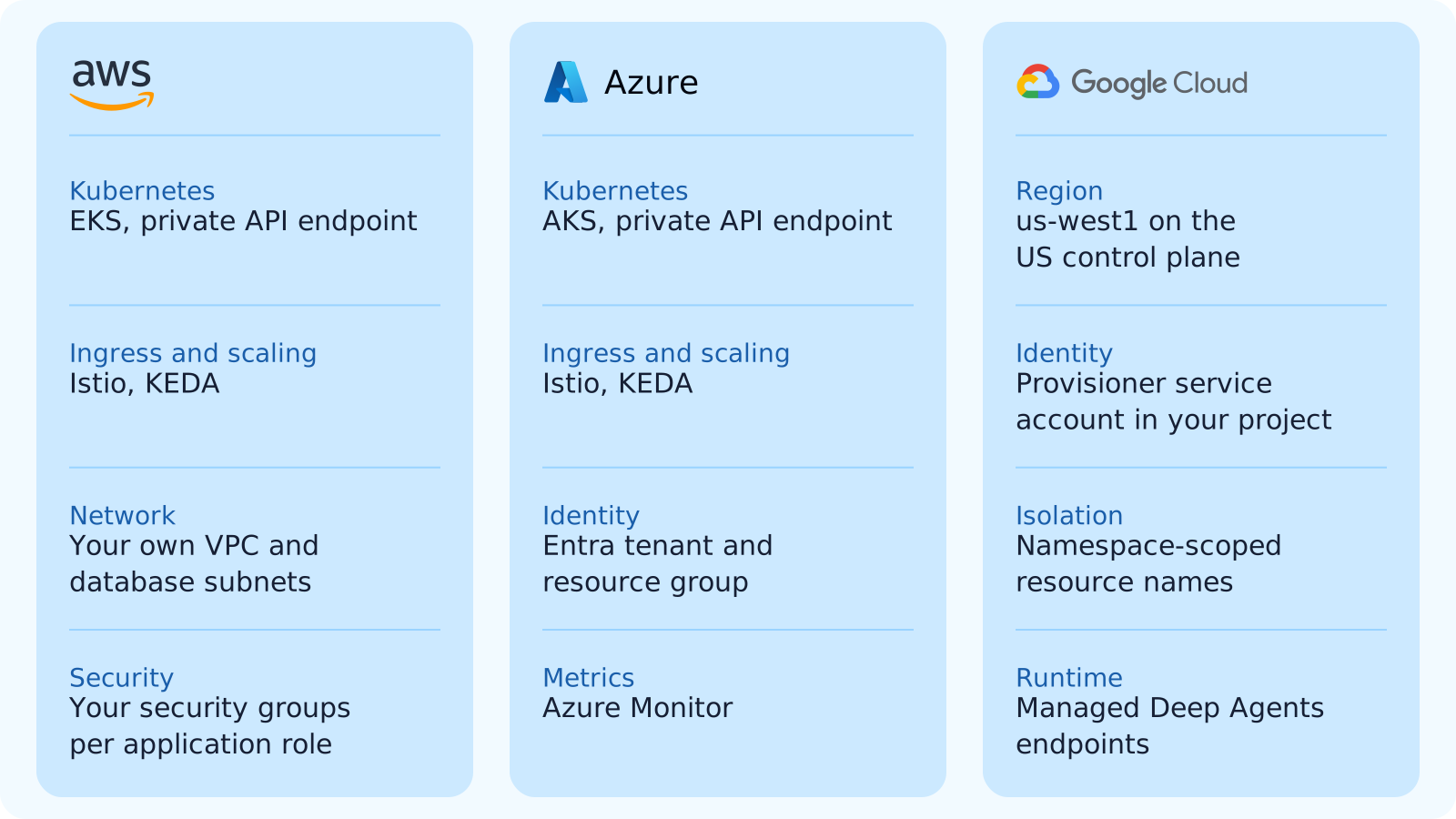
Azure: The data plane runs in a dedicated virtual network and uses a private Azure Kubernetes Service (AKS) API endpoint. LangChain deploys Istio for ingress routing and KEDA for event-driven scaling using Helm, with system telemetry sent to Azure Monitor. Azure support is in beta.
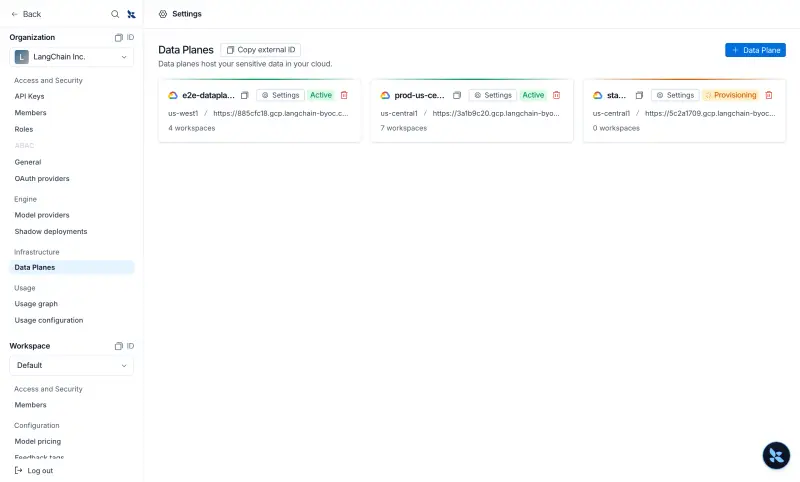
Google Cloud: At launch, data planes can run in any Google Cloud region and are managed from LangSmith’s US control plane. Resources use names scoped to their namespace to avoid collisions with existing infrastructure. Google Cloud support is in beta.
AWS: The data plane runs inside an existing virtual private cloud, with the database placed in subnets selected by the customer. Security teams can attach their own security groups to application roles, allowing the deployment to fit established ingress and egress inspection rules. AWS is generally available.
Migration from self-hosted
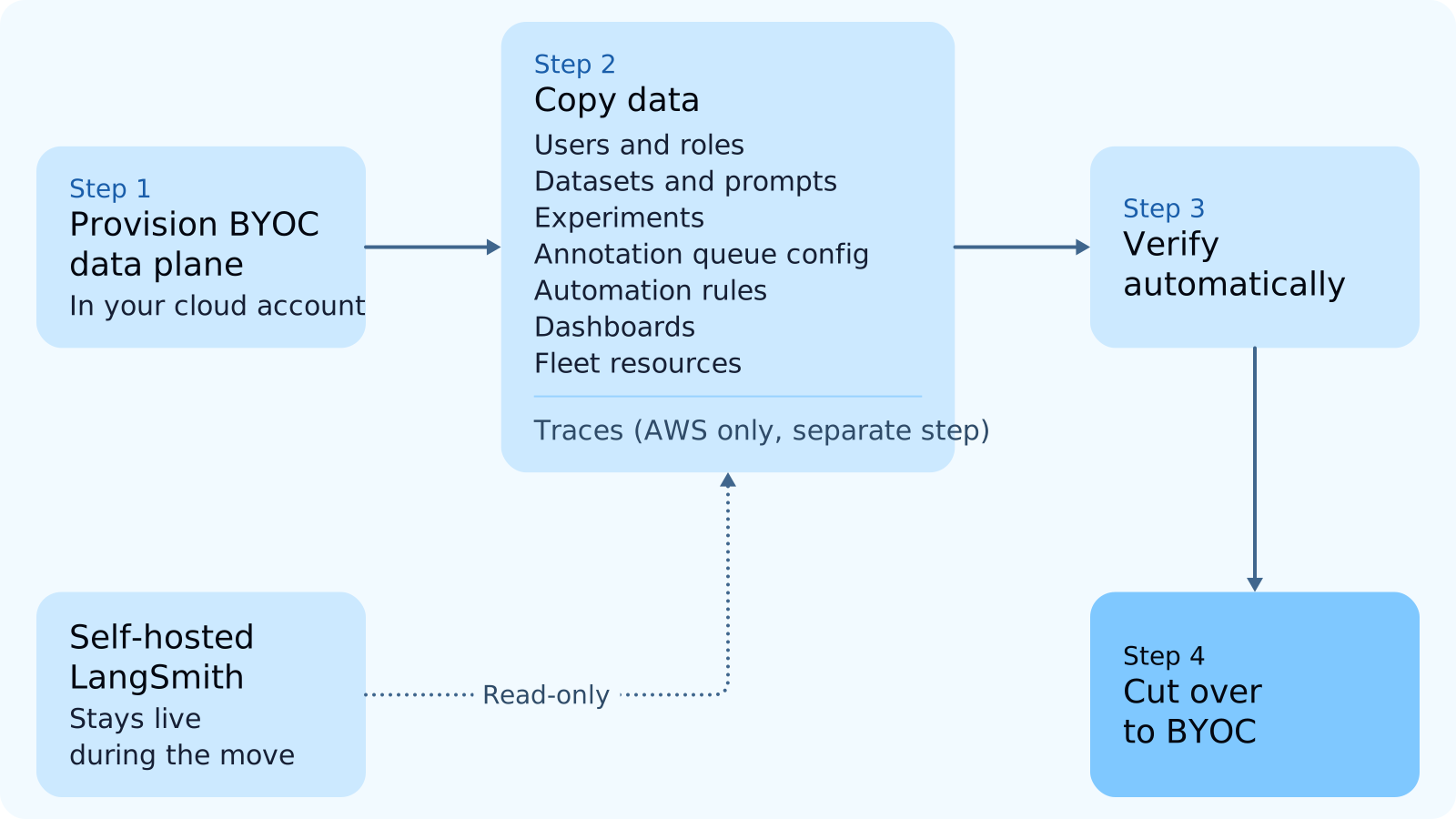
Existing self-hosted customers can move to BYOC in two stages. First, the BYOC data plane is provisioned. Then, an open-source migration tool transfers workspace resources from the self-hosted instance without causing downtime or changing data on that instance. Across all three clouds, the tool handles users and roles, datasets, experiments, prompts, annotation queue configuration, automation rules and dashboards.
Traces, runs and feedback are migrated separately by LangChain using internal tooling. Trace migration is currently available on AWS. That distinction matters for teams planning a move: the open-source tool covers a defined set of workspace resources, while the transfer of historical execution data follows a separate process.
Deployment choices and constraints
LangSmith supports open-source frameworks including LangChain, LangGraph and Deep Agents. Its LLM Gateway connects to 11 model providers out of the box, as well as endpoints compatible with OpenAI or Anthropic interfaces. LangChain also provides public Terraform modules for the cloud deployments and an open-source migration tool. These components give teams deployment and integration options, though the announcement does not specify pricing, resource requirements or service-level figures.
Teams evaluating BYOC will need to weigh the operating split against their own requirements: data stays in their account, but LangChain runs the control plane and manages the data plane. Cloud availability also differs by provider, and migration of traces is currently documented only for AWS. Those details make provider status, data placement and migration scope the practical points to confirm before choosing a rollout plan.
BYOC data planes can be provisioned on AWS, Azure or Google Cloud through LangChain’s sales team. The architecture, shared responsibility model, migration process, usage guidance, FAQ and Create Data Plane API are documented for teams assessing deployment and integration.