Agent Loop Engineering: Four Layers for Reliable, Improving Workflows
- Cargo
- Machine Learning
- Shipped
- Shipper
- William Brown
- Readers
- 507
A four loop design connects tool using agents to verification, event triggers and trace driven improvements, with humans overseeing judgment and sensitive actions.
Reliable agents depend on the systems around the model: tool access, output checks, event triggers and a way to learn from past runs. LangChain describes these pieces as four stacked loops. The first three automate and deliver work; the fourth uses run data to improve the agent’s harness over time.
The framework builds on “loopcraft,” an approach associated with Swyx that treats loops as composable parts of an agent system. Its practical value is in making reliability a system design problem. A model can take actions, but teams still need to define what counts as a good result, when work should start and how failures should change the setup.
Start with the tool calling loop
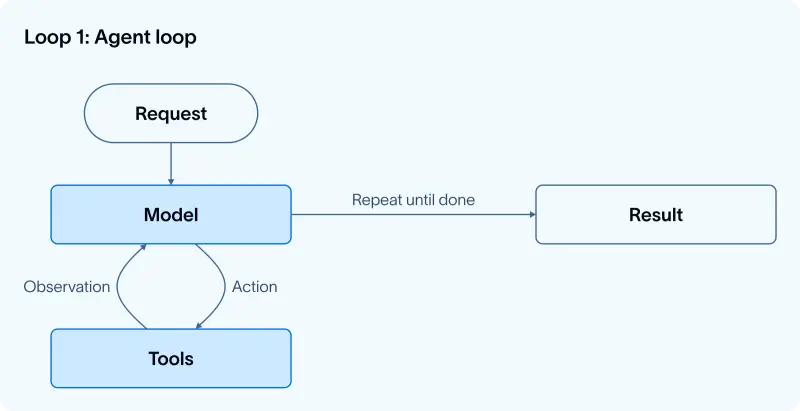
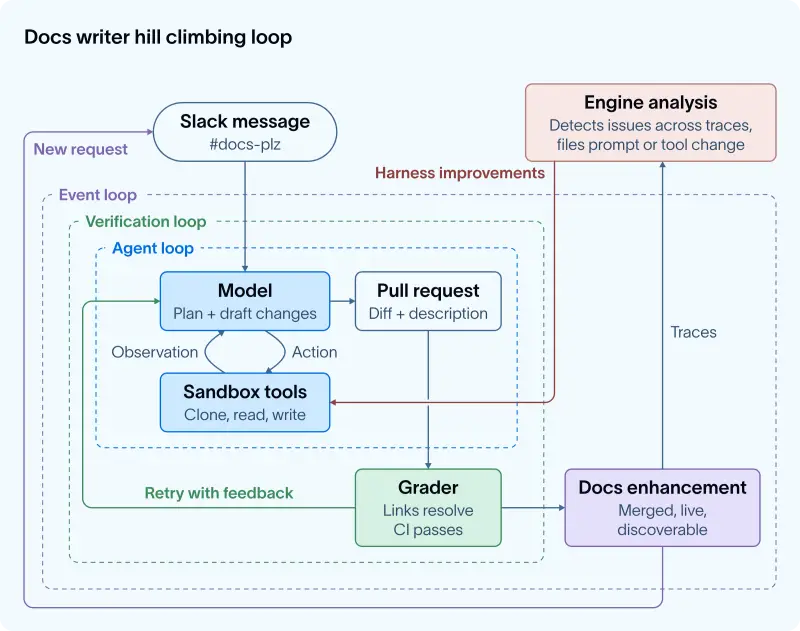
The basic agent loop gives a model context, lets it call tools and repeats the process until the task is complete. LangChain’s create_agent provides this pattern for a chosen model and set of tools. Those tools let the agent act on external systems.
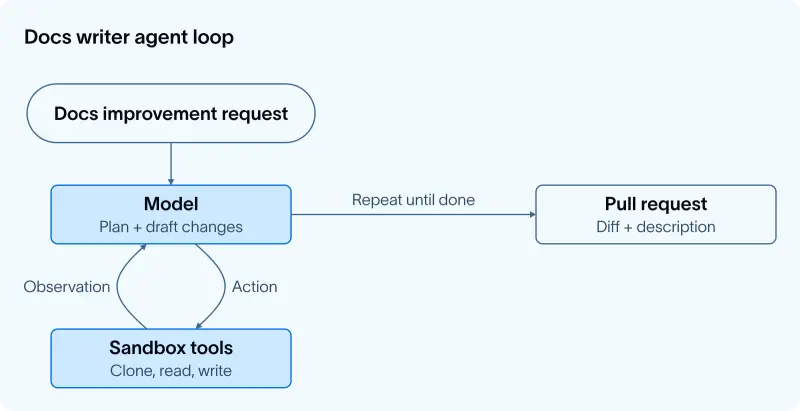
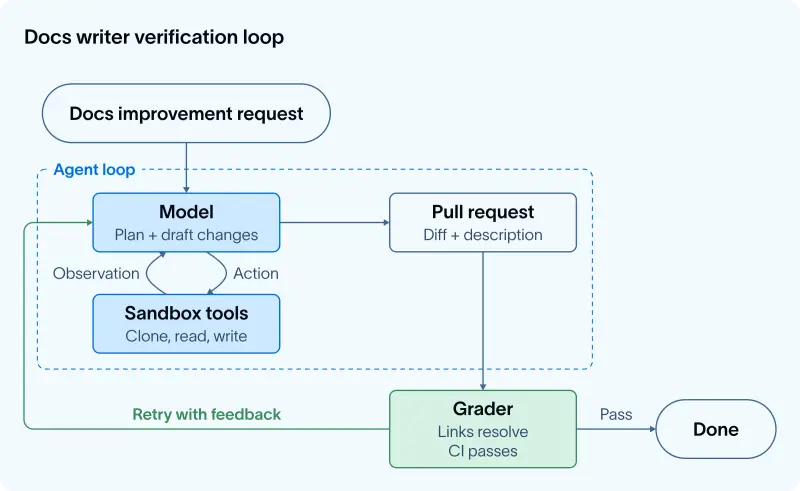
A documentation agent illustrates the workflow. Given a request to improve documentation, it can plan and draft changes, clone repositories, inspect files, edit docs and open a pull request. That sequence can automate substantial work, but the first pass may still contain errors or exceed the scope of the request.
Verify outputs with a grader
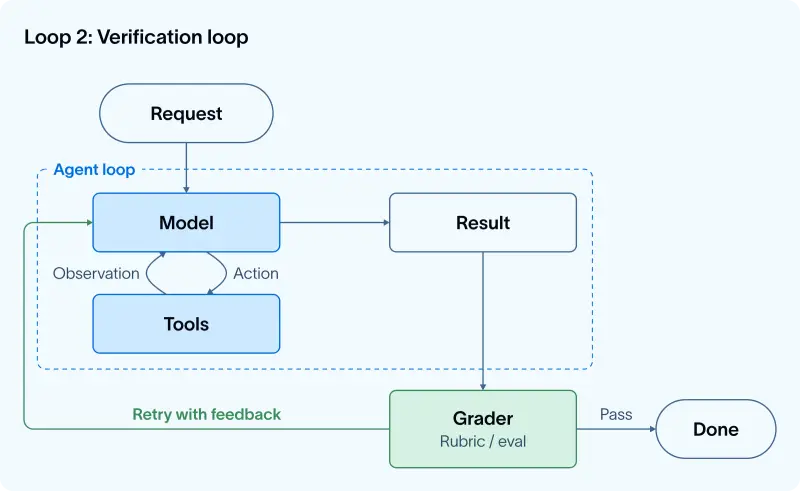
A verification loop checks the agent’s result against a rubric and returns feedback for another attempt when the work fails. The grader can use deterministic checks or an agent based evaluator, such as an LLM as a judge.
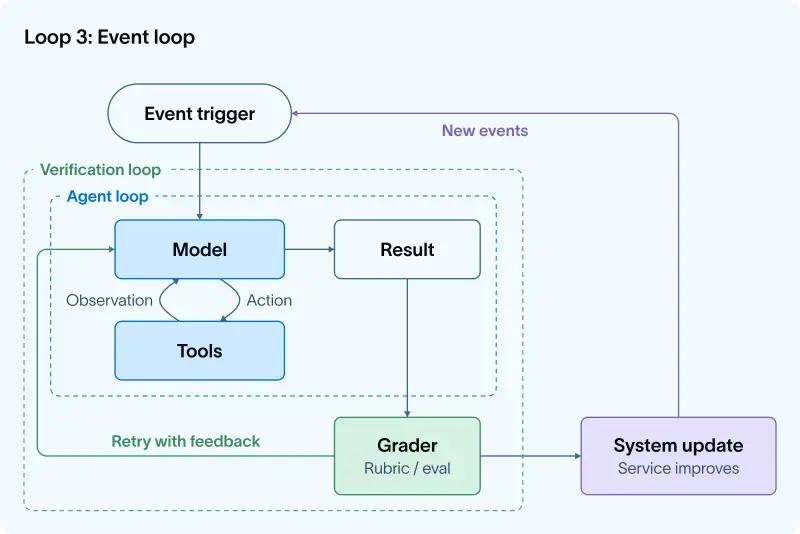
LangChain offers RubricMiddleware for this pattern, or developers can connect checks through an after_agent hook on create_agent. For the documentation workflow, automated checks can test whether links resolve, continuous integration passes and the change stays within the request’s scope.
That feedback loop can catch repeatable failures without a person inspecting every routine detail. It also adds latency and cost because failed work may need another model run. The tradeoff makes sense when correctness matters more than a fast first response, a common requirement for production workflows.
Run agents from events
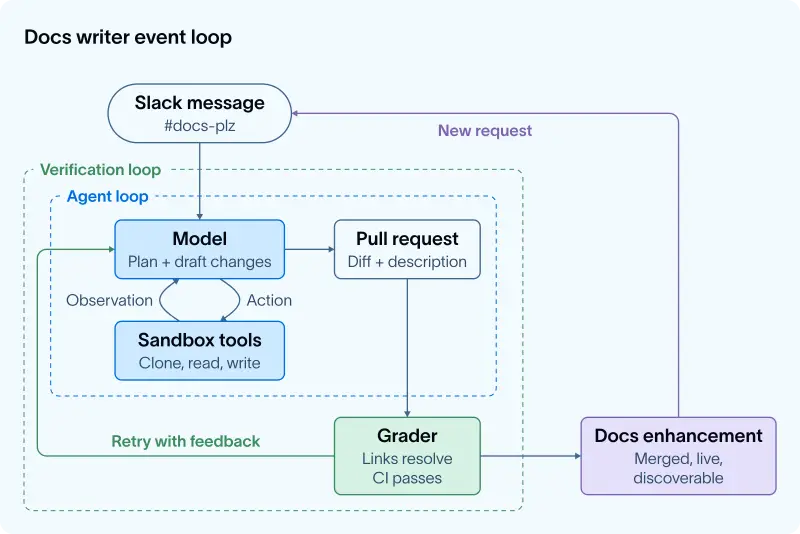
The third loop connects an agent to the system where it operates. A new document, webhook or scheduled trigger can start a run, making the agent a continuously available component rather than a tool someone must invoke by hand.
Cron schedules and webhooks are among the trigger options supported by LangSmith Deployment. Scheduled “heartbeats” in OpenClaw are one example of using recurring triggers for a proactive assistant.
LangChain says its internal documentation agent runs through Fleet, a no code agent builder. Fleet’s channels and schedules support event and time based starts. In one workflow, a message in the team’s #docs-plz Slack channel triggers the agent.
Use traces to improve the harness
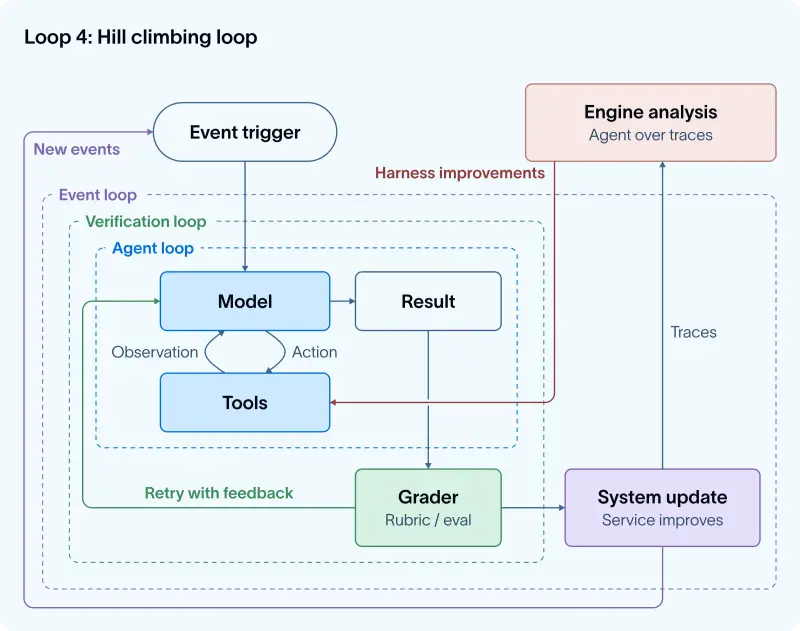
The fourth loop aims to improve how the agent works. Each run produces a trace recording the model’s actions, tool calls and grader feedback. An analysis agent can inspect those records for recurring problems, then prompt changes to the harness, such as adjustments to prompts, tools or grading rules.
LangSmith’s Engine is described as a trace analysis agent for this role. In the documentation workflow, it reviews run traces and can file an issue when several runs point to a similar problem in a prompt or tool. The key design choice is that the outer loop feeds changes back into the inner agent setup. Each cycle can make later runs more effective.
Prompt and tool adjustments are a starting point. Teams using open weight models could also use traces or evaluation results as signals for reinforcement learning fine tuning. Memory and retrieved skills are other parts of an agent system that could be improved through the same feedback pattern. Which component to optimize depends on what the traces reveal.
Keep people involved where judgment matters
Automated checks are suited to explicit criteria, such as whether a link works. They cannot reliably judge every question of audience, framing or context. Human review remains useful where experience and taste affect the result, and it becomes essential for sensitive actions such as financial transactions or database operations.
LangChain’s open source frameworks support human review at several points: requiring approval before an agent calls a sensitive tool, using a person as the grader for a sensitive workflow, reviewing outputs before they reach an end user, and checking harness changes before deployment. These checkpoints let teams reserve human attention for decisions that automated tests cannot settle.
Four loops, four jobs
| Loop | Function | LangChain example |
|---|---|---|
| Agent | Calls tools until a task is complete | create_agent |
| Verification | Scores results against a rubric and retries with feedback | RubricMiddleware |
| Event driven | Starts runs from schedules or incoming events | LangSmith Deployment or Fleet |
| Hill climbing | Analyzes traces to improve the harness | LangSmith Engine |
The first two loops focus on completing and checking individual tasks. Event triggers embed those tasks in a larger workflow, while trace analysis creates a route for recurring failures to change the system itself. That makes the fourth loop a practical next step for teams that already have agents in production: collect useful traces, look for patterns and turn the findings into reviewed changes. Human judgment remains part of the system, especially when the criteria are hard to encode or the action carries meaningful consequences.


