Google Cloud A5X Brings NVIDIA Vera Rubin Systems to Reinforcement Learning and Agent Workloads
- Cargo
- Machine Learning
- Shipped
- Shipper
- Uttara Kumar
- Readers
- 721
Google Cloud’s A5X instances pair Vera Rubin hardware with high-speed networking and liquid cooling for reinforcement learning and agentic workloads.
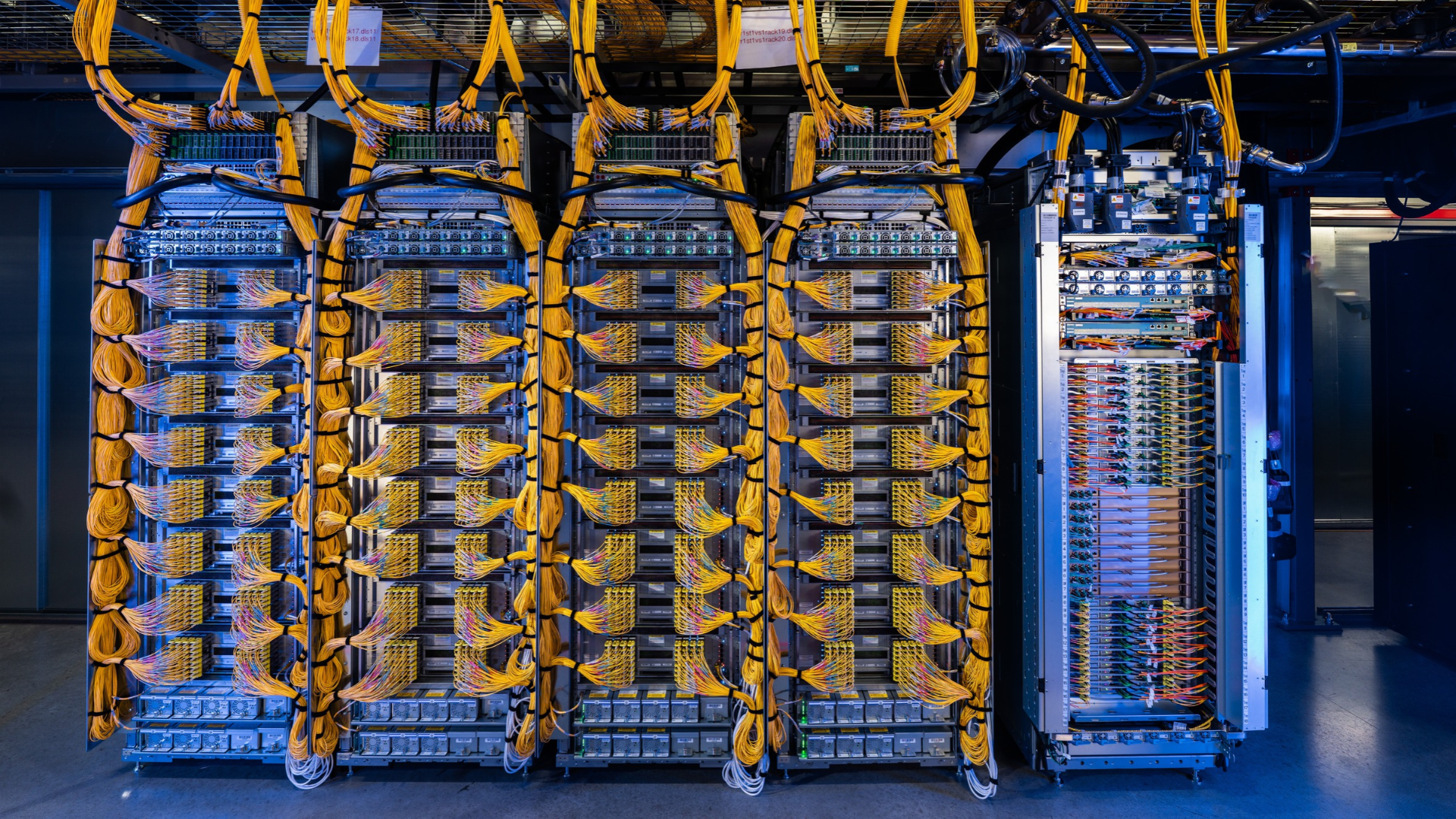
Google Cloud’s A5X instances are designed to keep a demanding learning loop close to its compute: agents generate experience, evaluate results and use those results to update models. The platform combines NVIDIA Vera Rubin NVL72 systems with NVIDIA ConnectX-9 SuperNICs, Google Cloud Virgo Network and the company’s fourth-generation advanced liquid-cooling technology. General availability is planned for next month, with an expansion to Europe also planned.
The design targets large-scale reinforcement learning and agentic inference, where compute, network bandwidth and cooling all affect how much work a system can sustain. Google Cloud says it plans to scale Vera Rubin-based infrastructure to as many as 960,000 Rubin GPUs across multiple sites. That is a planned infrastructure ceiling, not a description of capacity currently available to customers.
Infrastructure for learning through experience
Reinforcement learning relies on a repeated sequence: a system acts, receives or generates feedback, and changes its behavior based on that experience. When those stages run at scale, delays between generating examples and training on them can slow the cycle. A5X brings compute, networking and storage together in Google Cloud’s AI Hypercomputer, with the aim of supporting that sequence on an integrated platform.
Ineffable Intelligence, a London-based technology company founded by AlphaGo creator David Silver, was the first customer to access A5X. The company is using it for large-scale reinforcement learning research and for work on “superlearner” systems that keep learning from experience.
Silver said the work requires substantial compute and a close link between experience generation and training, so improvements can shape an agent’s next experience quickly. He pointed to connectivity between the Vera CPU and Rubin GPUs, as well as among Rubin GPUs within a rack, as part of what lets the team pursue larger reinforcement learning experiments. The account does not provide measured training throughput, latency, or a comparison against other cloud systems, so the practical performance gain remains to be established in customer workloads.
For teams evaluating this kind of setup, the key question is how much of the learning cycle can run efficiently on the available system. Raw accelerator capacity matters, but so do the time and data movement required to generate experience, train on it, and feed updated models back into interaction. An integrated rack can help reduce friction among those stages; workload results will show how well it does so in practice.
Creative workflows and agent controls
WPP, a London-based marketing and communications company, has demonstrated a creative agent reference architecture on A5X. The system uses NVIDIA Nemotron models and NVIDIA OpenShell, part of the NVIDIA OpenShell Reference Architecture. Conversational requests can be turned into multistep workflows such as generating, upscaling and restyling video, with a person approving actions before they run.
OpenShell provides isolated execution environments intended to help control an agent’s access to sensitive brand assets and creative tools. In WPP’s initial tests, workloads that typically required a cluster spanning multiple nodes ran on one A5X instance. The report does not give the workloads’ size, timing, or resource use, so the result indicates a possible consolidation opportunity but doesn’t establish how broadly it will apply.
That distinction matters for agent deployments. A system that can plan and execute several steps needs access to the tools and data those steps require, while operators need a way to limit that access and review consequential actions. Human approval and controlled execution environments address parts of this problem; teams still need to assess how the controls behave across their own workflows and assets.
Confidential computing and power constraints
Google Cloud is also expanding confidential computing options for AI workloads. It plans to offer NVIDIA Confidential Computing at rack scale on bare-metal instances, including A4X Max systems powered by NVIDIA GB300 NVL72. Separately, confidential computing is generally available on G4 virtual machines powered by NVIDIA RTX PRO 6000 Blackwell Server Edition GPUs. The virtual machine option is positioned for confidential inference and fine-tuning.
Vertebrae, Polaris Cloud and Confidential Core AI are using Confidential G4 for conversational privacy, verifiable agent execution and enterprise systems with controlled data access. These deployments point to different uses of confidential computing, but the announcement provides no technical measurements or detailed threat model for them. Customers will need to match the protections to the data and execution risks in their own systems.
Power availability also shapes how quickly large accelerator installations can grow. Google Cloud and NVIDIA are exploring NVIDIA DSX MaxLPS capabilities for Vera Rubin infrastructure, aiming to improve performance per watt and add capacity within existing data-center power budgets. The work is exploratory; no efficiency results are reported.
For customers, A5X’s value will depend on workload-level evidence: how quickly it can complete the full training and inference loop, how reliably agents can use governed tools, and what performance the systems deliver within power and deployment constraints. Those measurements will clarify where a tightly integrated Vera Rubin rack changes the economics of large-scale learning.


