European AI Clouds Expand Compute, Open Models and Agent Controls
- Cargo
- Machine Learning
- Shipped
- Shipper
- Stuart Pitts
- Readers
- 549
Regional providers are adding AI capacity, model services and runtime controls, with reported gains in inference throughput and specialized-task efficiency.
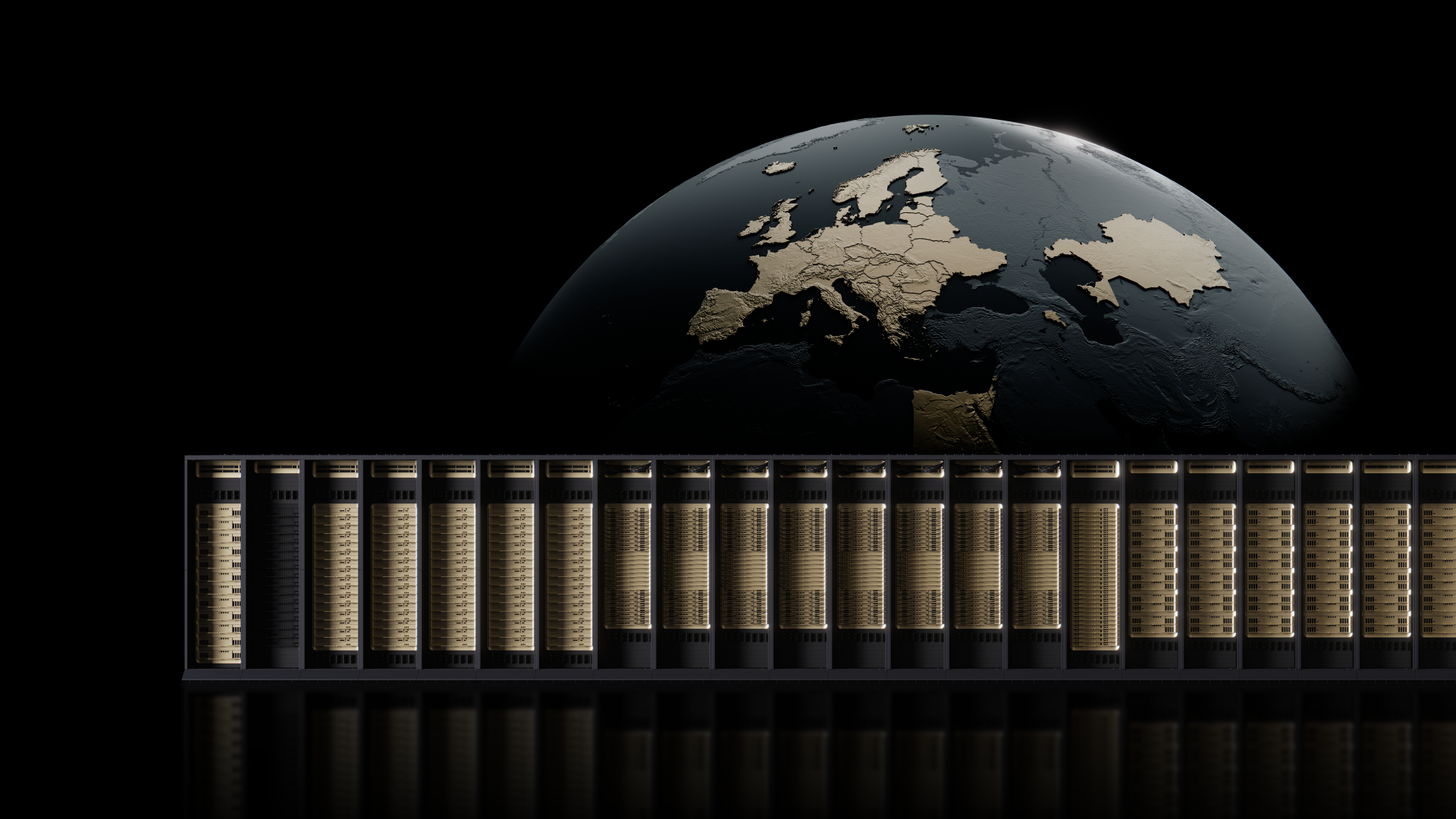
European AI cloud providers are expanding along three connected fronts: regional computing capacity, services for open models and controls for deploying AI agents. The push spans Europe, the Nordics, Africa and Central Asia, where providers are building infrastructure for training and inference closer to customers’ data and applications. The practical case is clear: more local capacity can give developers additional choices about where workloads run, while managed services and agent safeguards help carry projects into production.
The figures reported so far point to both infrastructure efficiency and task-specific model tuning. Nscale says tests with NVIDIA GB300 NVL72 systems showed that NVIDIA DSX MaxLPS enabled 37% more GPUs and nearly 50% higher aggregate inference throughput within the same provisioned power budget. Separately, CodeRabbit reports that fine-tuning a model for code-review routing raised routing agreement from 75.8% to 80.7% and cut estimated inference costs by 50% for the evaluated workload. These results describe particular tests and workloads; they aren’t direct comparisons across providers.
Regional capacity and power efficiency
Power availability is a constraint as AI factories grow, making workload coordination part of the infrastructure story. Nscale uses the NVIDIA DSX Platform to align power allocation with compute demand. It also plans to deploy NVIDIA Vera Rubin systems for frontier-model training and production workloads, expanding its full-stack platform across five European markets.
Crusoe is developing Spark, a set of liquid-cooled modular AI factories designed for the NVIDIA Vera Rubin platform. The aim is to place Crusoe Cloud capacity closer to users who need low-latency inference. Crusoe says its cloud serves model and application builders across Europe, the Middle East and Africa, including Base44, Gradium, LTX and Wonderful.
Other providers developing or expanding NVIDIA-powered infrastructure across the regions include Aleria, Cassava Technologies, Firebird, G42, Radiant, SWI Compute and Vultr. The infrastructure mix described includes NVIDIA Vera Rubin, BlueField data processing units and Spectrum-X Ethernet networking, alongside the NVIDIA DSX AI Factory platform. For customers, regional capacity can expand choices about where data and workloads reside; the source presents this as support for locally controlled computing services and economic growth.
Model services from training to inference
Cloud providers are pairing computing capacity with tools for training, fine-tuning and serving open models. Nebius, for example, has adopted NVIDIA Groq 3 LPX and plans to connect it to Vera Rubin NVL72 systems using Spectrum-X Ethernet. Its Token Factory will offer the combination through managed serverless services and dedicated endpoints, with familiar APIs. The stated target is faster token generation for latency-sensitive applications, including agent systems.
Nebius is also building services for robotics and physical AI through its Physical AI Workbench. Robotics companies Rhoda AI, RoboForce and Sereact are using the platform. The provider has put three retail agent blueprints into early access on its infrastructure, covering inventory, store operations and fine-tuning. Its Physical AI Living Lab is part of a wider service expansion across the continent; in Germany, Nebius is supplying computing for SPRIND’s Next Frontier Challenge.
The CodeRabbit example offers a more specific view of model customization. Baseten developed a code-review routing model using Nemotron 3.5 Lightning. Through supervised fine-tuning and reinforcement learning, CodeRabbit improved agreement from 75.8% to 80.7%, while estimated inference costs fell by 50% on the evaluated workload. That result suggests the value of adapting an open model to a bounded task, though the reported figures apply to this routing workload.
Fireworks and Era4 are combining model training and inference services with direct liquid-cooled capacity powered by NVIDIA Blackwell Ultra GPUs at Era4’s Chesterfield facility. They plan to support enterprise AI work in financial services, insurance and life sciences. Mistral is expanding its NVIDIA accelerated computing infrastructure for training, customization and inference, with Vera Rubin systems planned for delivery in 2027. Its Mistral Large 4 model was trained on 3,800 NVIDIA Grace Blackwell GPUs in Mistral-operated European data centers and is described as a frontier multimodal model for coding, agent workflows and multimodal understanding.
Verda plans to deploy Vera Rubin infrastructure and already has NVIDIA Nemotron and Cosmos models in production. It also uses NVIDIA Dynamo, an open-source framework for inference optimization. Across these offerings, the adoption question is not simply which model is available: teams also need to consider where it can run, how it can be adapted and what serving options fit their latency and cost needs.
Defining boundaries for agents
When models can call tools and interact with business systems, organizations need a way to limit their access and actions. NVIDIA’s OpenShell Reference Architecture, introduced at GTC Berlin with support from cloud partners, builds on OpenShell secure runtime software to provide controls across the stack.
The architecture assigns different roles to its components: Vera Rubin NVL72 handles model inference; Vera CPUs run agent harnesses and tool use with OpenShell; and BlueField-4 data processing units run NVIDIA Sentry for enforcement in silicon. The design aims to keep an agent’s actions within boundaries set by its operator. A listed group of supporting providers includes Aleria, Baseten, Cassava, CoreWeave, Crusoe, DigitalOcean, Firebird, Fireworks, Firmus, G42, GMI Cloud, IREN, Lambda, Lightning AI, Nebius, Nscale, Radiant, Verda and Vultr.
Taken together, the expansion links regional compute with model services and deployment controls. More capacity creates additional places to train and serve systems; tuning and inference products make that capacity usable for specific applications; and agent controls address how those applications interact with tools. The next practical measure will be how these services perform under customers’ real workloads, including their power, latency and operating-cost constraints.


