Fine-Tuning TRELLIS.2 for More Accurate 3D Footwear Geometry
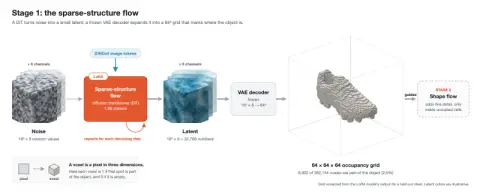
LoRA adapters improved footwear geometry on nine held-out objects, raising mean F-score from 0.276 to 0.803 while leaving texture generation frozen.
Latest stories
LoRA adapters improved footwear geometry on nine held-out objects, raising mean F-score from 0.276 to 0.803 while leaving texture generation frozen.

Mercor’s $20 billion valuation round will fund custom benchmarks and simulated business environments for training and evaluating enterprise AI agents.
Red Hat AI 3.4, Ansible 2.7 and new hardware and cloud collaborations target agent deployment, controlled automation and lower inference costs.
Google’s open-source Agent Substrate isolates agents on Kubernetes and suspends idle workloads to free compute until they’re needed again.
Mastercard’s cloud engineering approach highlights why agent platforms need protection for data in use alongside Kubernetes scale and enterprise guardrails.
Gemini Robotics 2.5 improves task speed and dexterity; AlphaGenome 2 adds cell-specific predictions and DNA methylation analysis.
Google’s Tabletop experiment lets groups create and edit shared tools for trips, meals and events by asking an AI agent in a shared space.
Gemini Decision 1 returns short, confidence-scored answers to three question types, with multimodal input support and a reported 50–100 ms median model compute...
OpenRL separates reinforcement learning experiments from Kubernetes infrastructure, while Agent Substrate provides isolated sandboxes for agent tasks.
Nebuly’s platform tracks how AI agents affect employee capacity, revenue and customer churn, giving large companies a way to assess returns.
Agents need direct, runtime access to data and create temporary databases, making traceability and governance core design requirements.
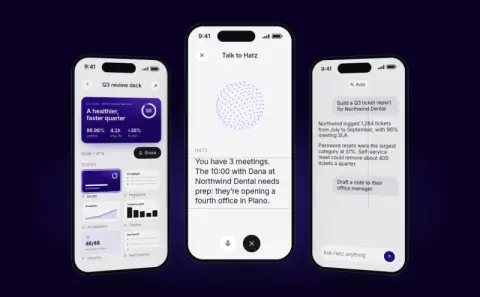
Hatz AI will use $24 million to expand its AI platform for managed services providers, with controls for model access, spending and customer deployments.
Qvyon’s Mimic Core converts camera, lidar and radar recordings into varied simulation tests for robots and autonomous vehicles.
Google’s Agent Substrate runs agents in Kubernetes sandboxes, while workload-specific cluster tuning targets resource waste and control-plane strain.
Block’s Builderlab connects named, auditable agents to team workflows, with cloud execution, model choice and security controls for delegated work.
AI agents can turn one task into thousands of inference calls, raising pressure on serving infrastructure, hardware use and agent security.
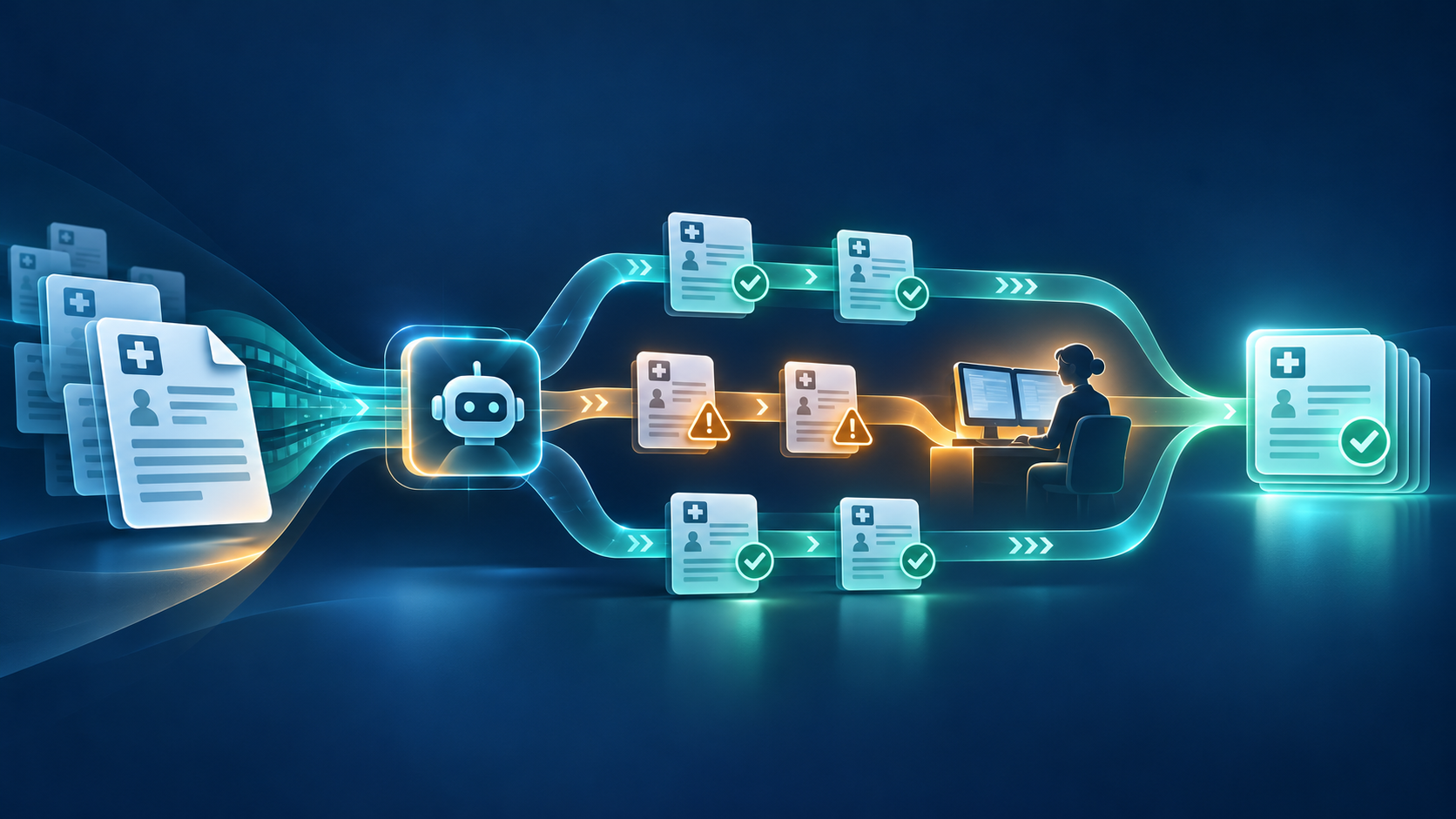
AI agents can handle repetitive claim follow-up, while health systems need clear ownership and human judgment for exceptions and complex appeals.
SC26 highlights how AI, accelerated computing and quantum systems are reshaping supercomputing, with data movement and system design central to results.
Nvidia’s Scale-In combines BlueField-4, DOCA and OpenShell to monitor agent activity and enforce boundaries across AI infrastructure.
Gemini 4 Hydrogen posts higher reasoning and coding scores than Argon at lower token prices, with a new high thinking setting and broad access.